Austrian Airlines was for many years purely a regional European national airline and although it had dabbled in long haul flights briefly during the 70s it wasn’t until the mid-1980s that it finally gained aircraft with the capability to operate long haul routes effectively. These were operated by Airbuses stubby A310, which successfully enabled growth and the acquisition of higher capacity stablemates.
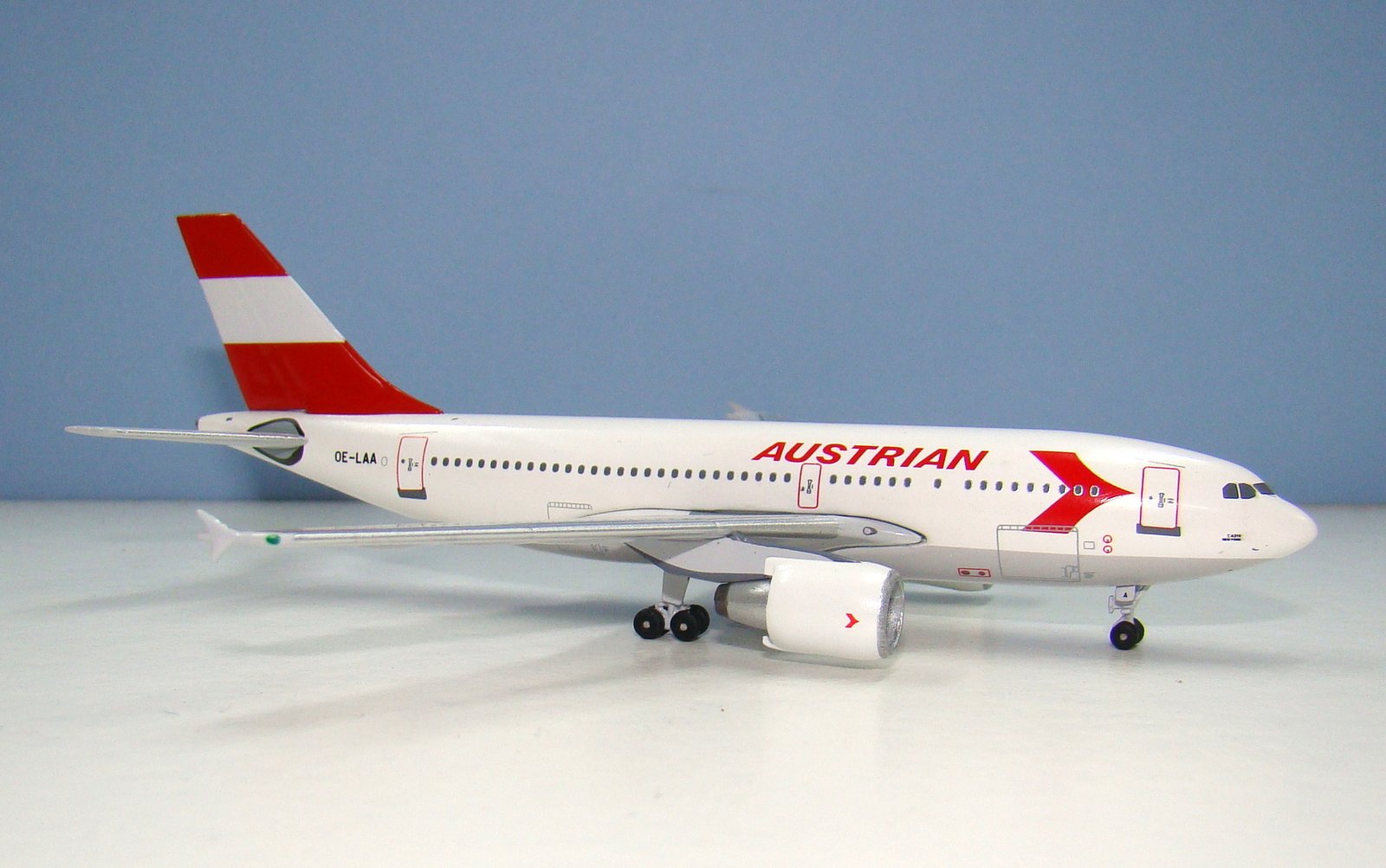
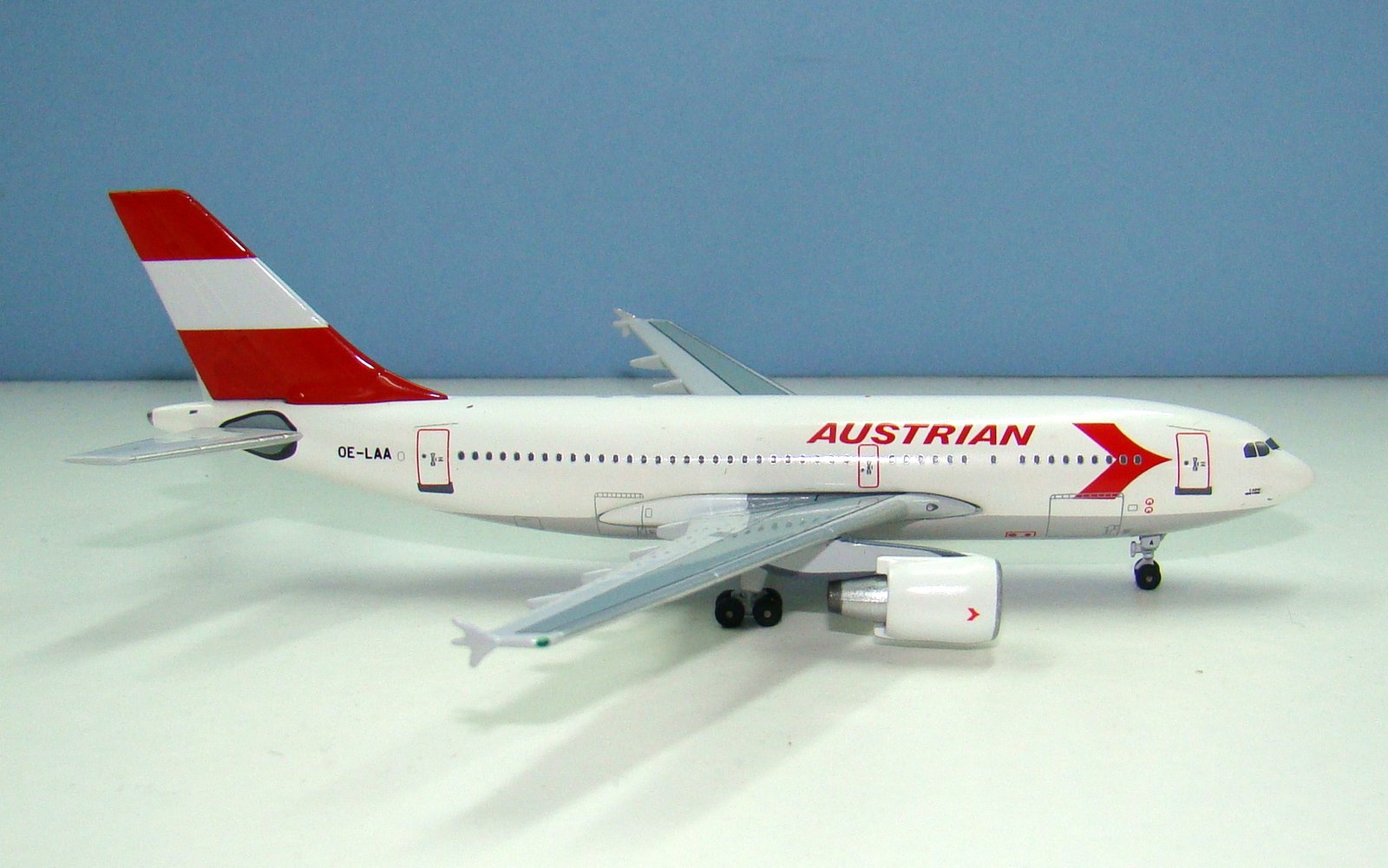
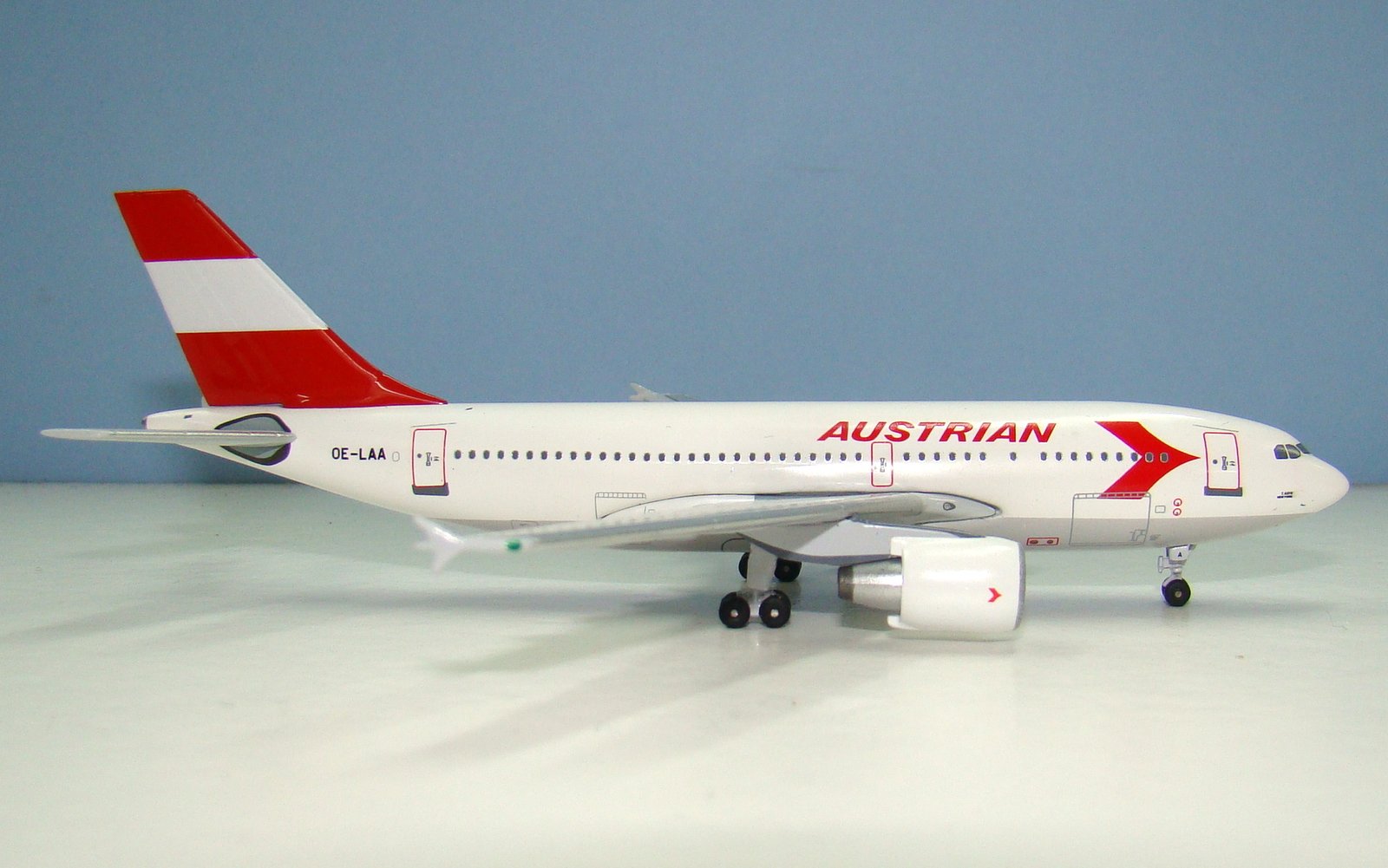
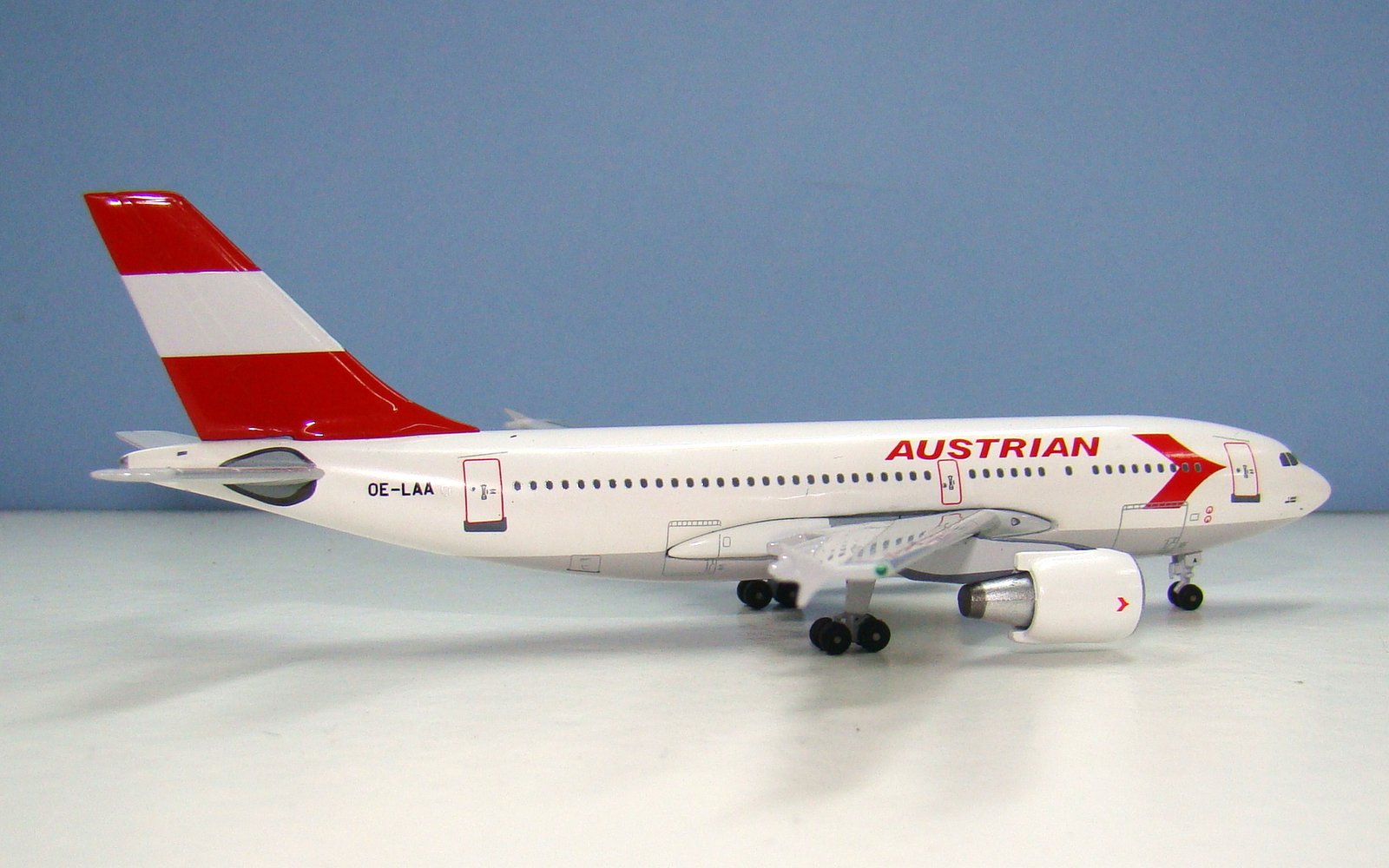
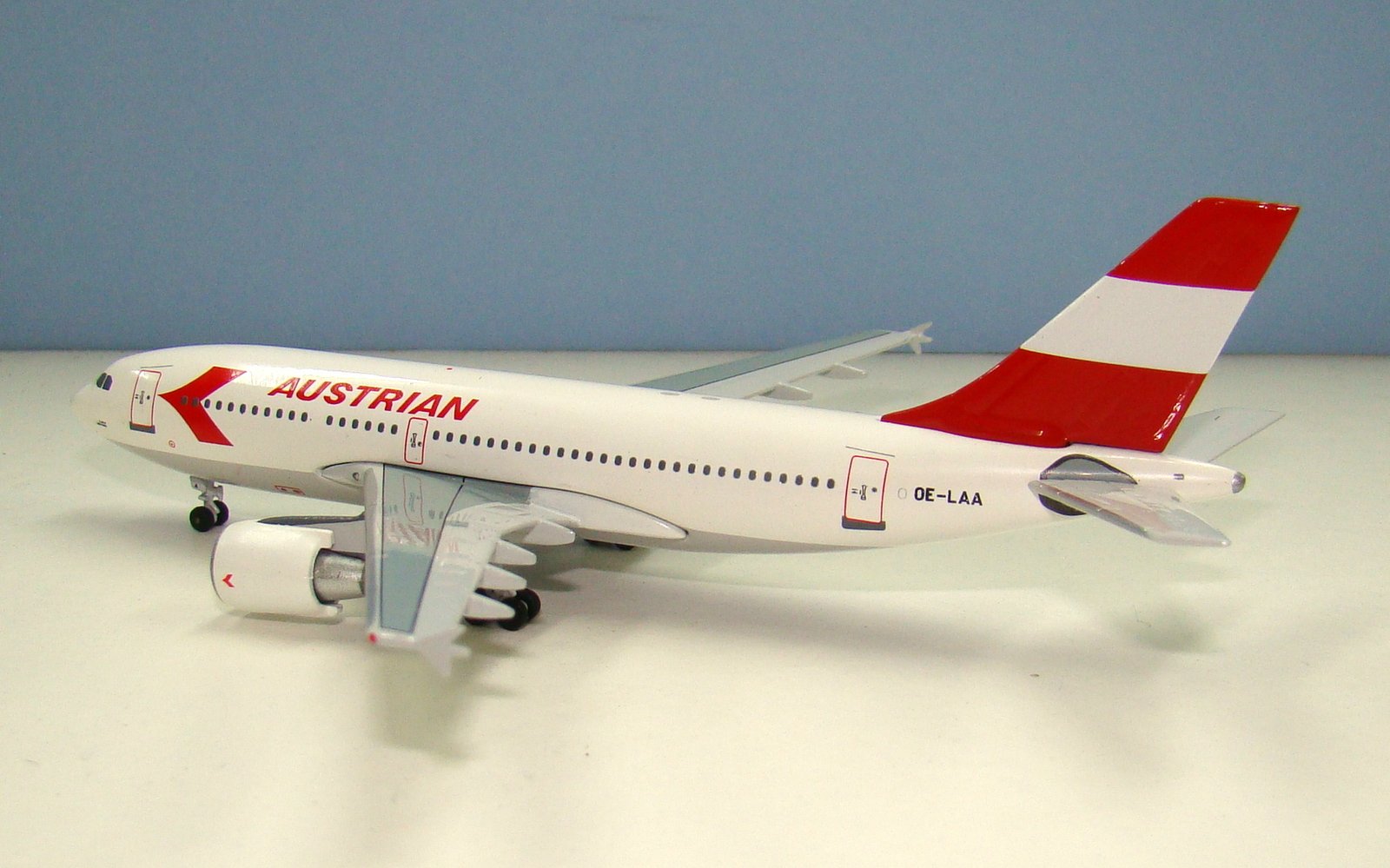
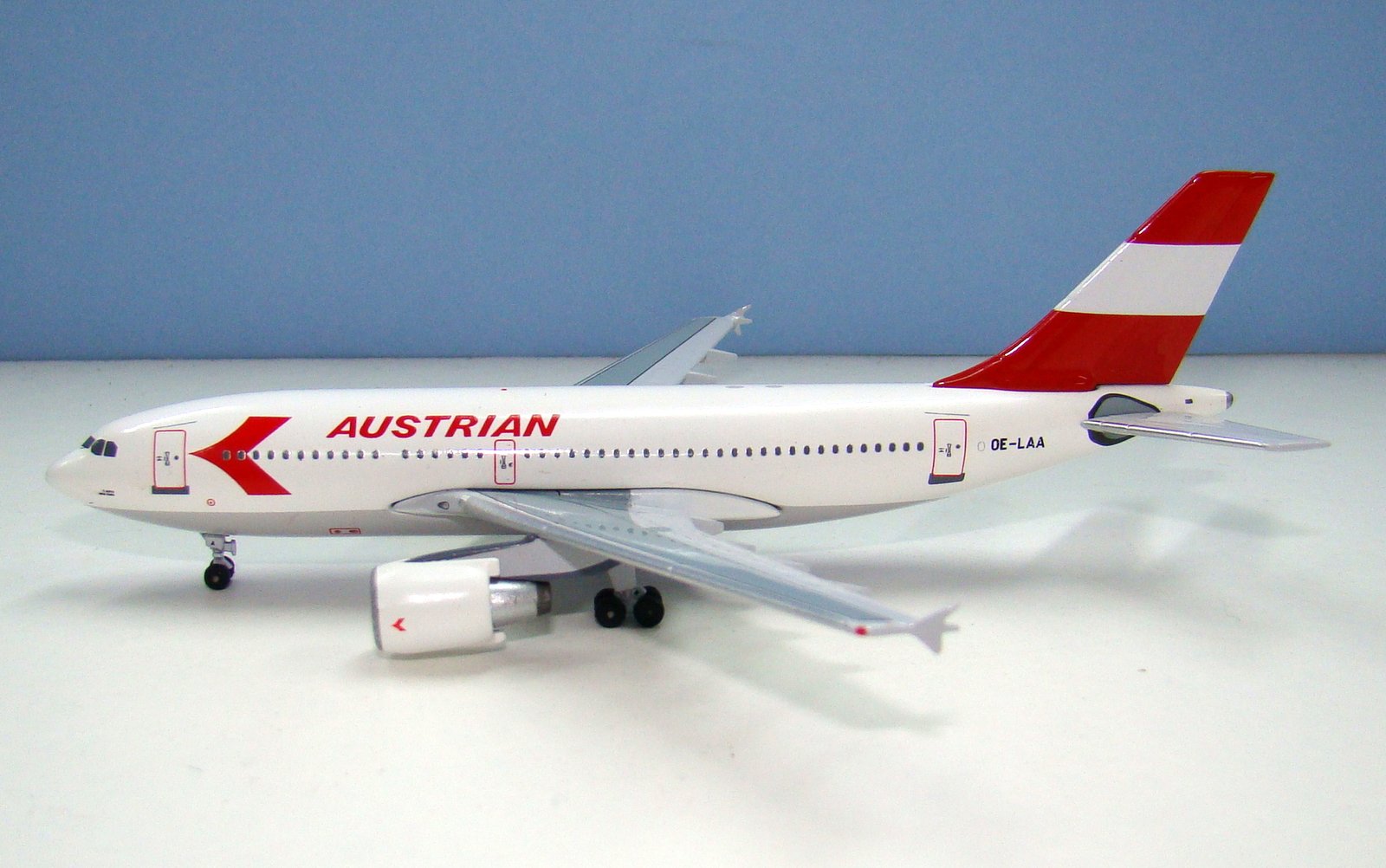
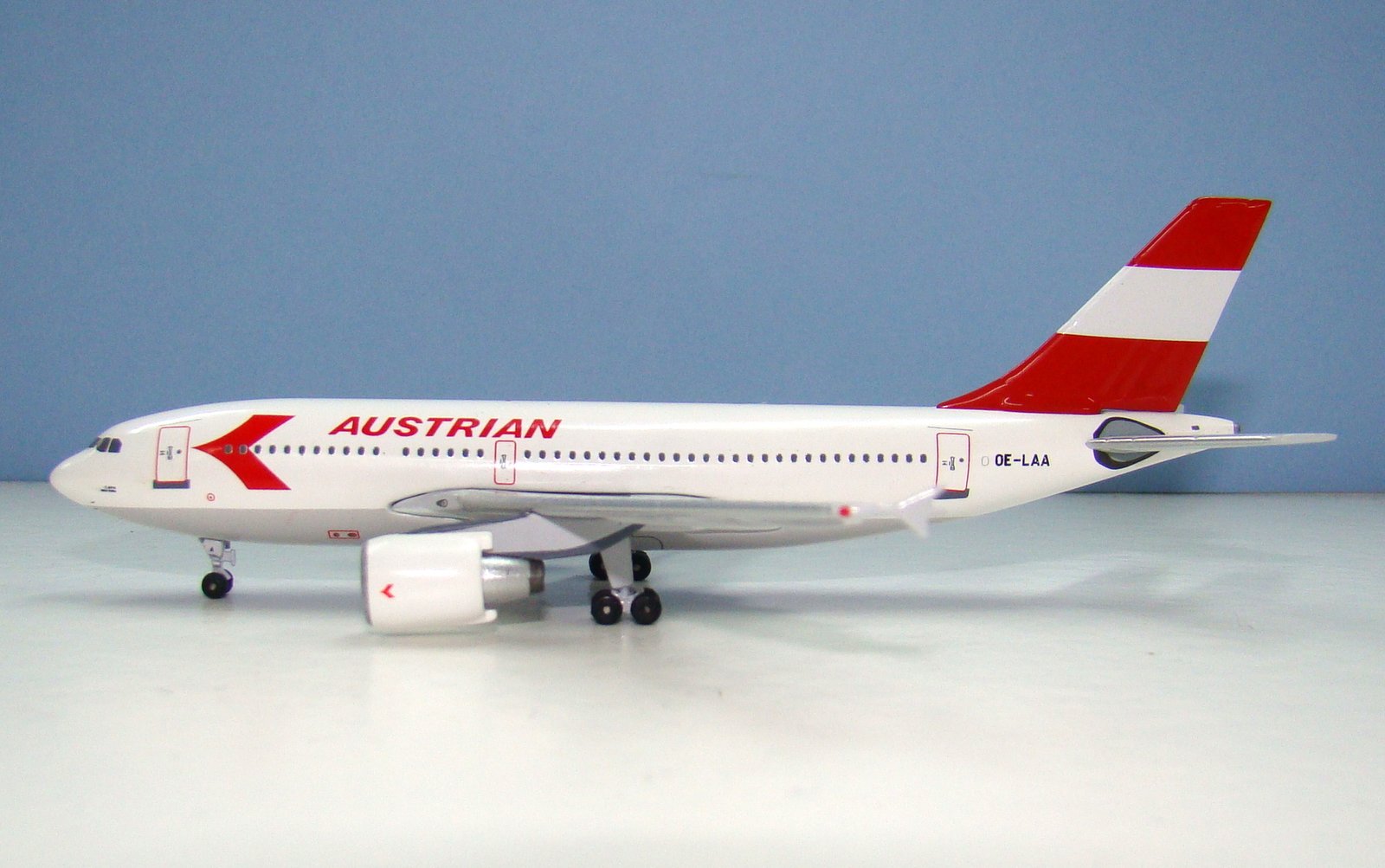
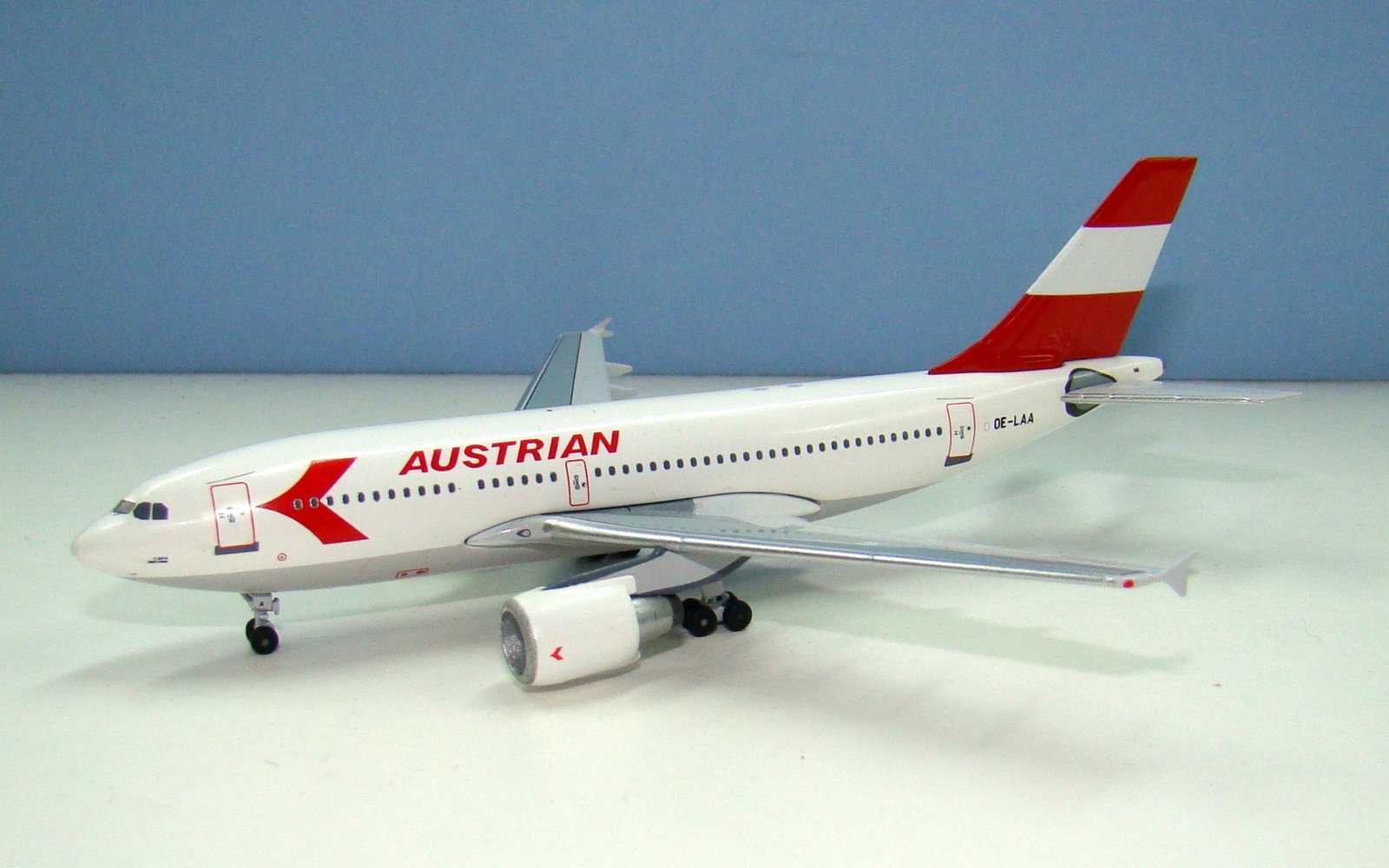
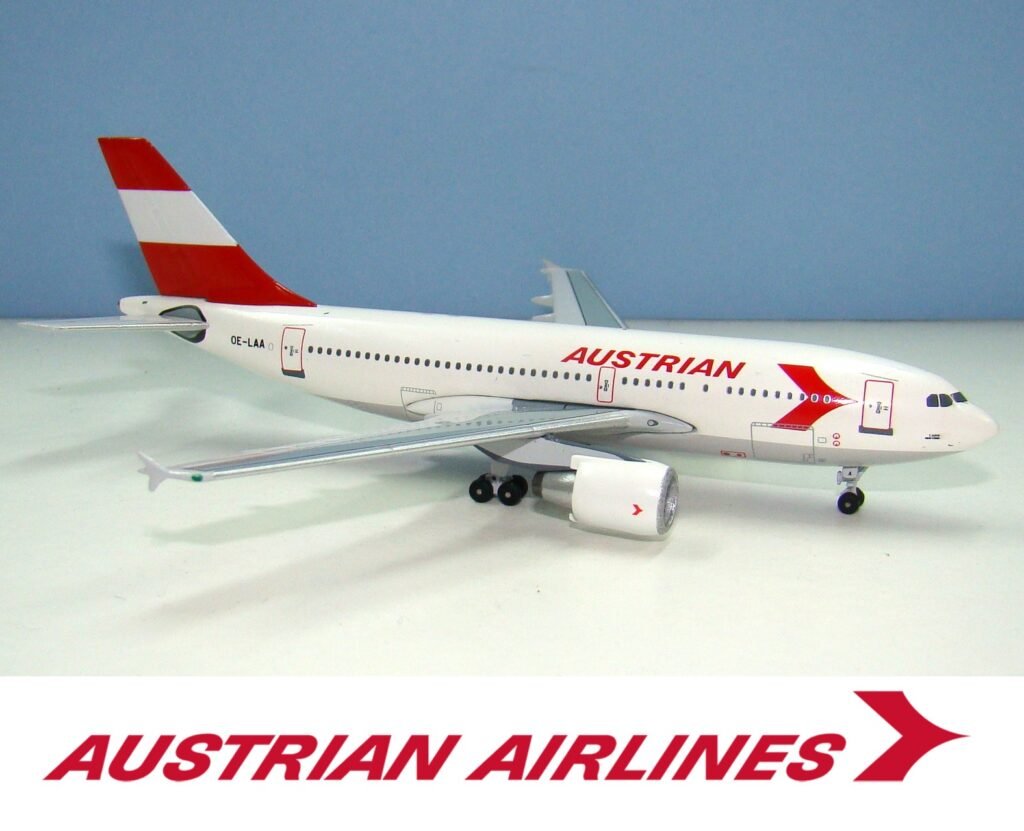
Austrian Airlines Airbus A310-324ET OE-LAA Aeroclassics 1:400 Scale Model Airliner
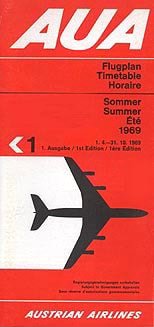
Austrian Airlines first foray into long haul services began on April 1, 1969 with a daily Vienna-Brussels-New York ‘Stratoliner’ service in partnership with the Belgian national carrier SABENA. The service is run as a 50:50 pool and utilises a pair of SABENA turbojet 707-329s one of which joined the Austrian fleet. OO-SJF became OE-LBA and gained the full Austrian Airlines livery whilst the other frame remained in SABENA colours. The 707 could also be seen on routes to Moscow, Tel Aviv and Beirut between intercontinental services.
At Brussels in 1969. Photo used with permission of Malcolm Nason from his Flickr site
Austrian’s primary contribution to the partnership was access to Eastern European and Middle Eastern passengers coming through the Austrian network, which was rescheduled to fit with the transatlantic service. Apparently the operation was profitable but traffic was not strong enough to see it continue beyond March 31, 1971 when the 707s rejoined the standard SABENA fleet.
Another attempt at long-haul services occurred in September 1973 when the ONA DC-8-63 N865F was leased as OE-IBO. This arrangement lasted until December 1974 although the aircraft appears to have mainly been used for cargo services to Hong Kong rather than passenger operations.
N865F at Vienna. Photo by Manfred Groihs from Airliners.net
It would not be until 1989 that long haul routes would again be flown by Austrian’s own aircraft. By this time ETOPS was beginning to come into fashion and technology had progressed to the point that a relatively small twin engine aircraft could be developed. The two contenders were the Boeing 767-200ER and the Airbus A310-300, the latter finding favour with many of Europe’s smaller flag carriers, especially following the fall of the Berlin Wall and subsequent collapse of the Iron Curtain.
OE-LAC departing FRA in 1995. Photo by JetPix from Wikipedia
Austrian had actually been well ahead of the game ordering a pair of the shorter ranged A310-200 in May 1982 as well as taking two options. Deliveries were planned for 1986 and 1987 but in June 1986 Austrian switched to the new long range A310-300 series. The first A310-324ET, OE-LAA, arrived on December 16, 1988 three months after a third aircraft had been firmed up.
Austrian Airlines Airbus A310-324ET OE-LAA Aeroclassics 1:400 Scale Model Airliner
Austrian Airlines Airbus A310-324ET OE-LAA Aeroclassics 1:400 Scale Model Airliner
Austrian Airlines Airbus A310-324ET OE-LAA Aeroclassics 1:400 Scale Model Airliner
Austrian Airlines Airbus A310-324ET OE-LAA Aeroclassics 1:400 Scale Model Airliner
Austrian Airlines Airbus A310-324ET OE-LAA Aeroclassics 1:400 Scale Model Airliner
Austrian Airlines Airbus A310-324ET OE-LAA Aeroclassics 1:400 Scale Model Airliner
Austrian Airlines Airbus A310-324ET OE-LAA Aeroclassics 1:400 Scale Model Airliner
Austrian Airlines Airbus A310-324ET OE-LAA Aeroclassics 1:400 Scale Model Airliner
Austrian Airlines Airbus A310-324ET OE-LAA Aeroclassics 1:400 Scale Model Airliner
Austrian Airlines Airbus A310-324ET OE-LAA Aeroclassics 1:400 Scale Model Airliner
The new A310s were fitted with Pratt & Whitney PW4152 engines and seated 12 passengers in first class, 37 in business class and 123 in economy. This configuration allowed for the fitting of more comfortable 84cm wide seats. Initially the A310s operated on some higher density regional routes like Istanbul, Tel Aviv, Athens, Amsterdam and Paris (and they continued to service these routes on and off), however they had been acquired for long-haul routes.
OE-LAB landing at Zurich in 1999. Photo by Aero Icarus from Wikipedia
The first Austrian service between Vienna and New York in 18 years recommenced on March 28, 1989 with a 5 times weekly A310 service. The second aircraft, OE-LAB, had joined in late January. A twice weekly service between Vienna and Tokyo, via Moscow, was inaugurated on July 16, 1989 in partnership with both All Nippon and Aeroflot 40:40:20. This route enabled Austrian to claim their service as the first twin engine commercial jetliner to cross Siberia.
With two of four eventual A310s in service Austrian could also add services to Kiev and Leningrad on March 31 plus Nairobi and Johannesburg on July 5. The third and fourth A310s joined the fleet on March 26, 1991 and March 9, 1992. The fourth aircraft was a PW4156A powered A310-325ET. The arrival of this aircraft allows the start of a 4 times weekly non-stop Vienna-Chicago service in co-operation with SAS.
An awesome shot of OE-LAB eparting Zurich again in 1999. Photo by Konstantin von Wedelstaedt from Wikipedia
The A310s in addition to flying scheduled routes could also be found operating for Austrians separate charter arm Austrian Air Transport, which although nominally independent used the mainline airline’s metal exclusively.
Photo by contri from Wikipedia
The A310s gave Austrian the confidence to build Vienna as a sustainable long haul hub using Austrian’s strong presence in Eastern Europe to funnel passengers onto the Airbus widebodies. The natural next step was to upsize its Airbuses and that is exactly what Austrian did and we shall investigate in part 2.
References
Austrian Airlines B707 Ops. Airliners.net Airplane Part 137, ORBIS press Shaw, R. Airbus Wide-Bodied Jetliners. Osprey Civil Aircraft Series World Airline Fleet News Issue 20, February 1989 Austrian Airlines. World History Biz