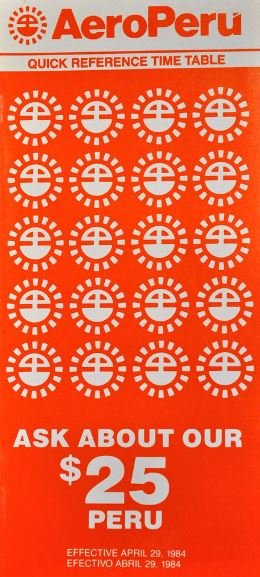
During the 1970s the Peruvian military government had successfully built up its new flag carrier AeroPerú into a seemingly well run airline reconnecting Peru with the world after APSA’s failure. Unfortunately it is almost impossible to keep an airline operating profitably if it must operate in a competitive environment with both economic and civil discord at home. Sadly AeroPerú would have to contend not only with economic instability but also growing civil war as it entered its second decade.
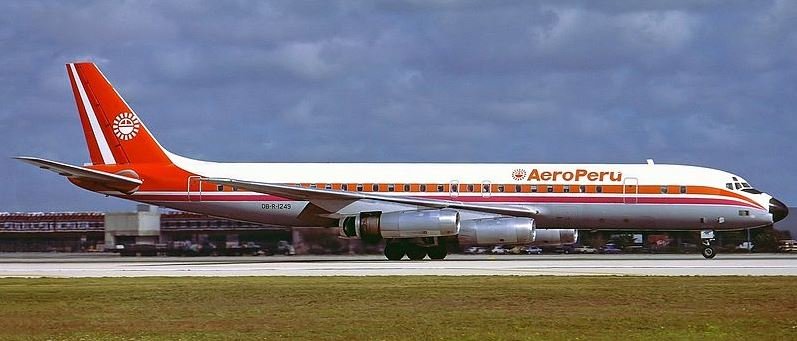
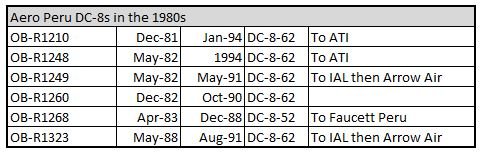
With the economic clouds darkening AeroPerú returned its two Tristars and instead acquired three ex-Alitalia Douglas DC-8-62s. These would form the long haul fleet into the 1990s along with an ex-Swissair DC-8-62 and an ex-United DC-8-52 added in 1982 and 1983 respectively. Nevertheless even with the new DC-8s arriving two of the three US routes (Los Angeles and New York) were dropped leaving Miami as the only US gateway.
OB-R-1249 in 1986. Photo by Perry Hoppe from Wikipedia
In July 1981 AeroPerú was largely privatised (the govt kept only a 20% share) and a merger was mooted with its private rival Faucett Perú. This got as far as the airline’s dropping competing routes but eventually came to nothing and the routes were restarted. The expiry of the bilateral agreement between Peru and the USA in 1983 and the resulting failure to negotiate a new one, led to the suspension of all US routes for a year from May 1984 and considering this was the flagship route the financial repercussions must have been quite serious.
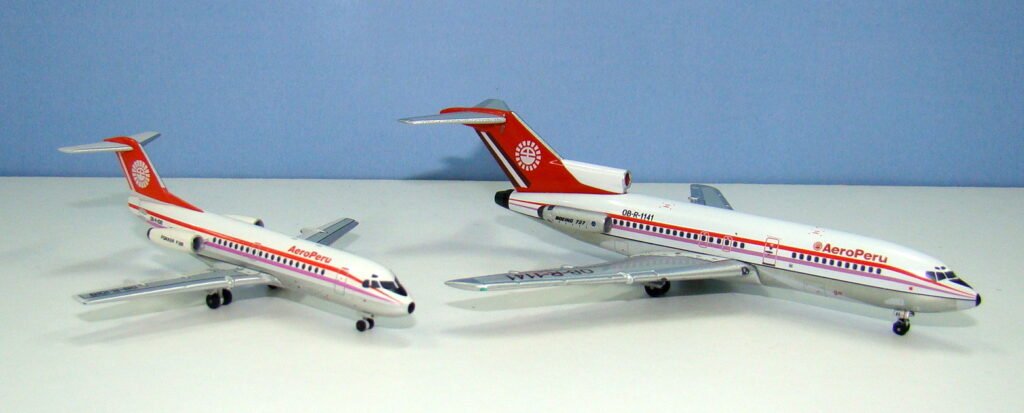
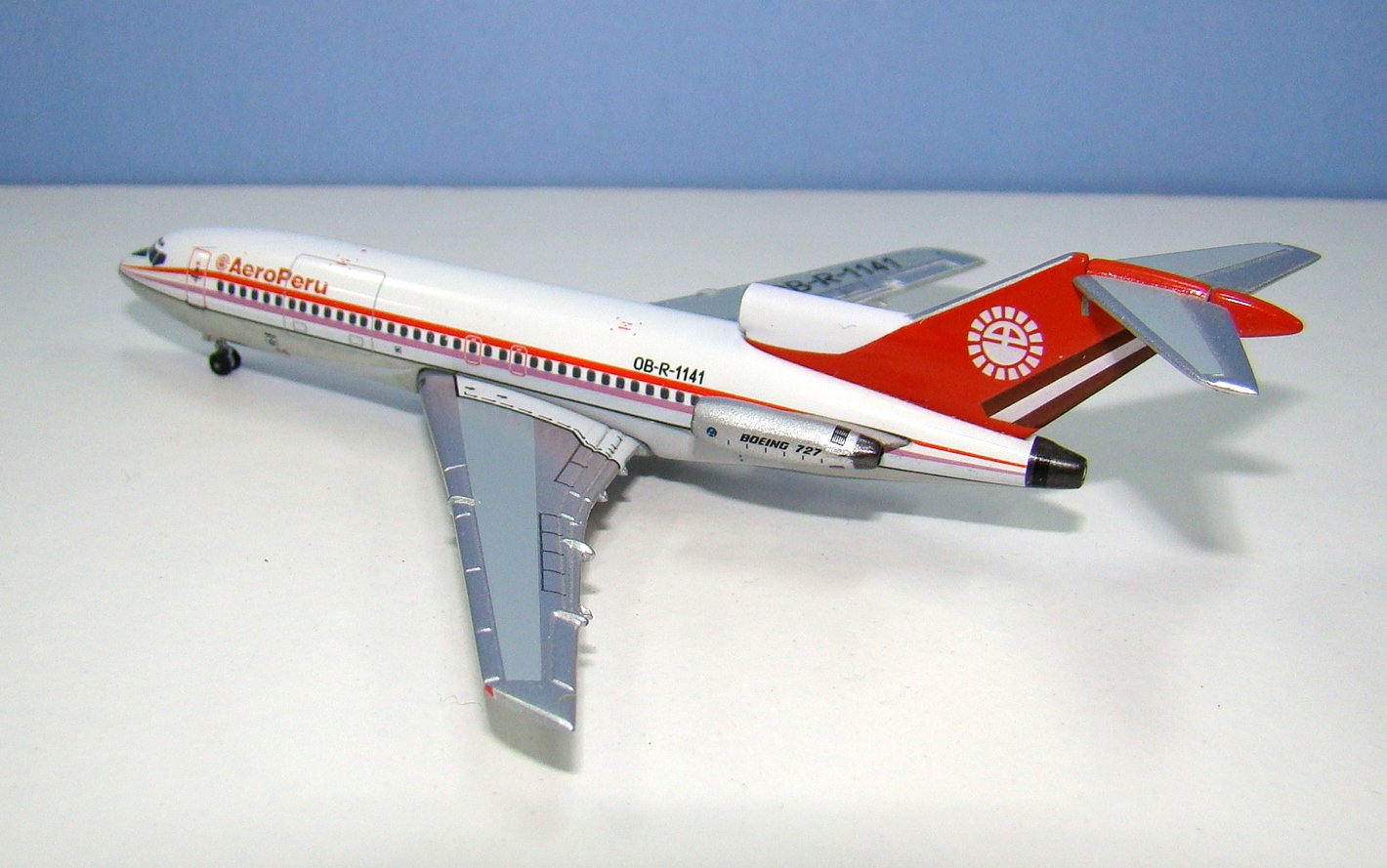
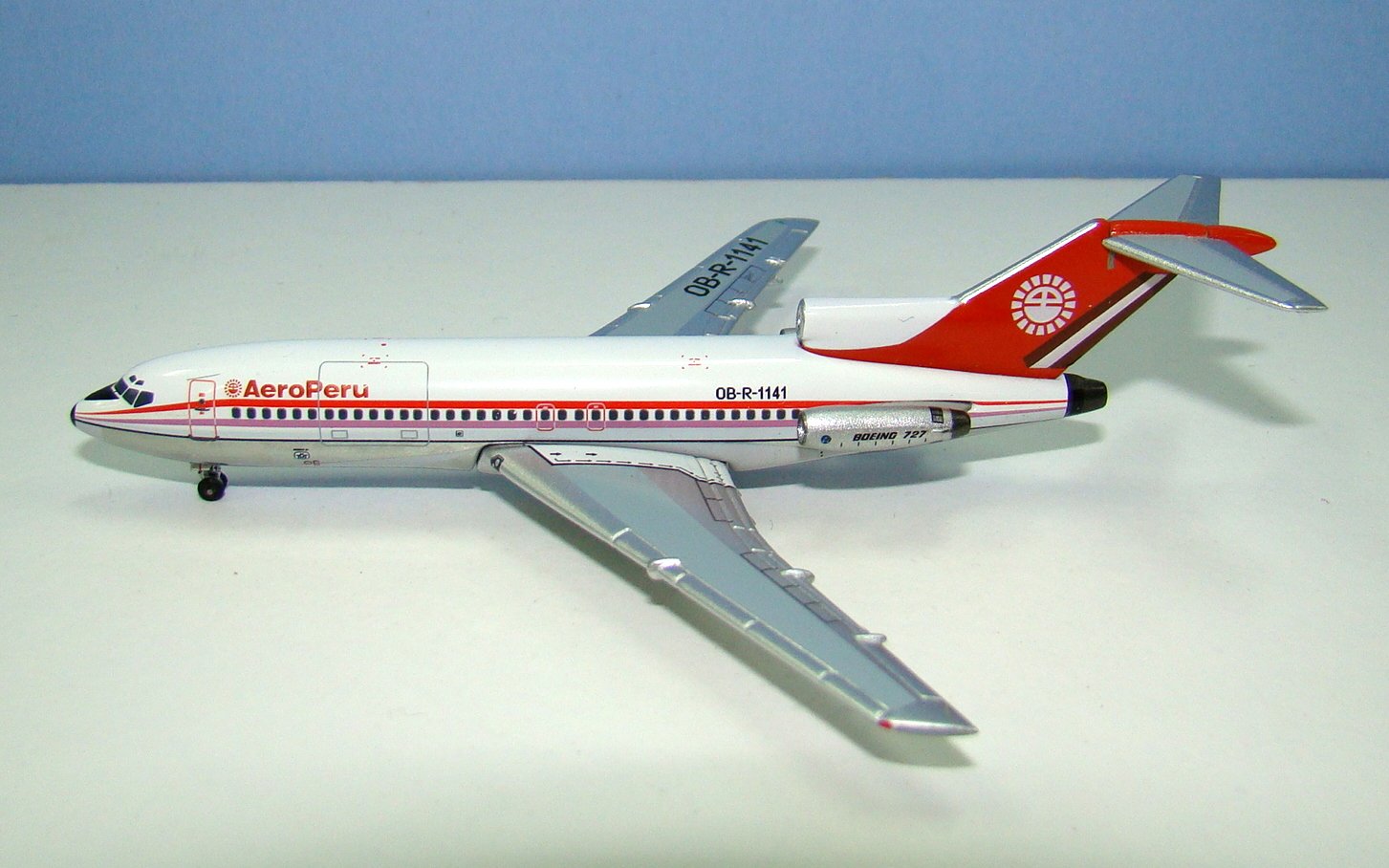
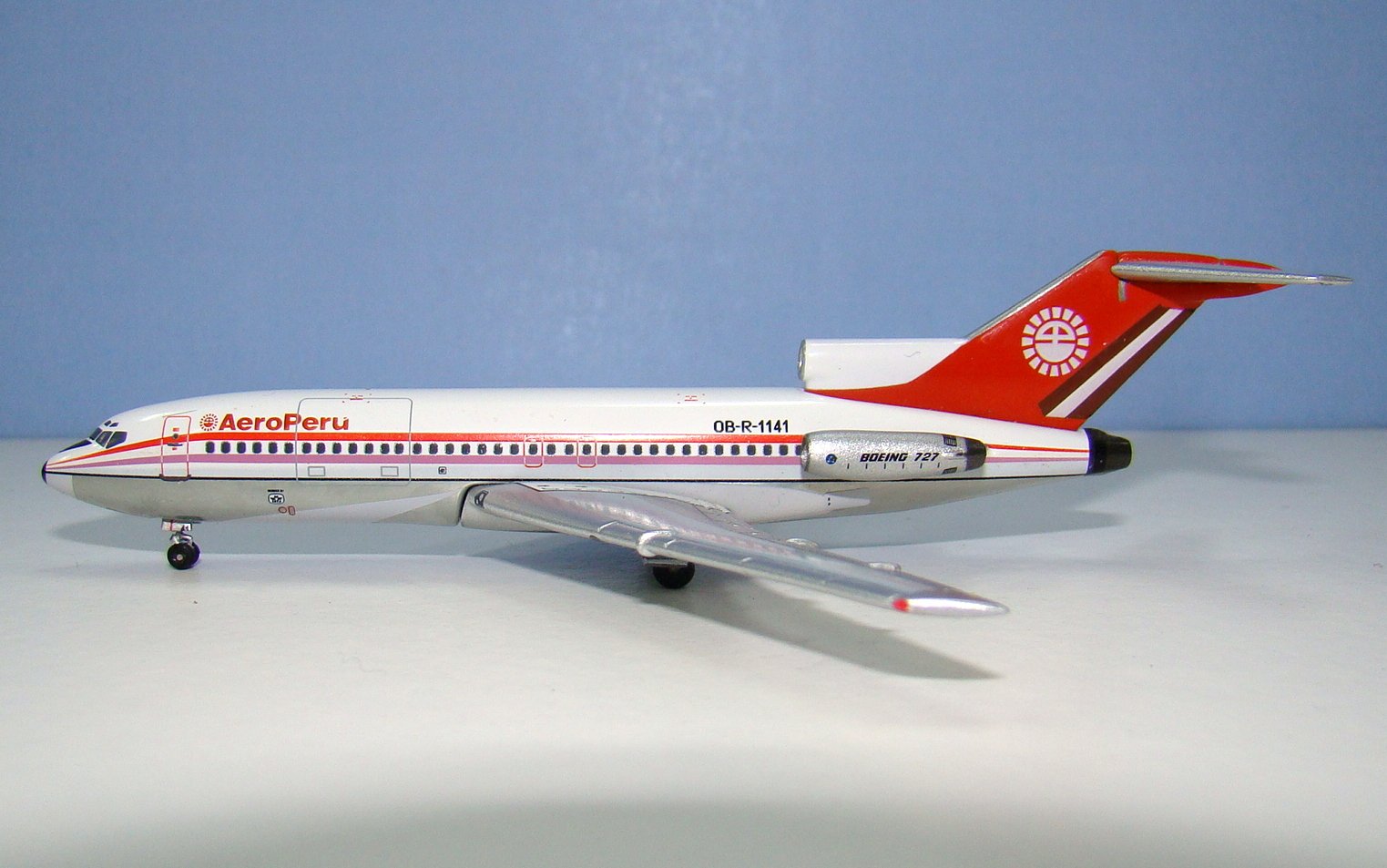
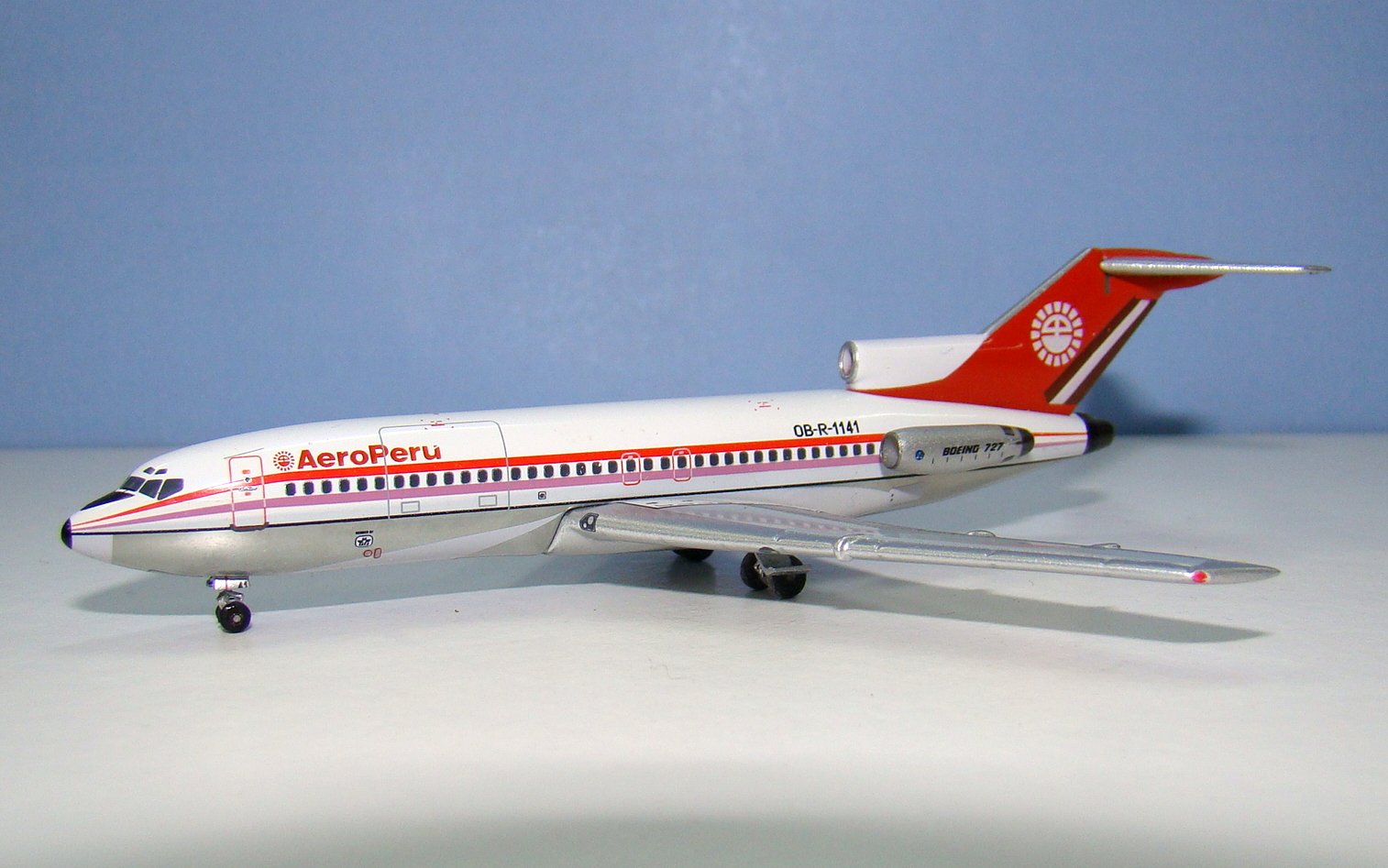
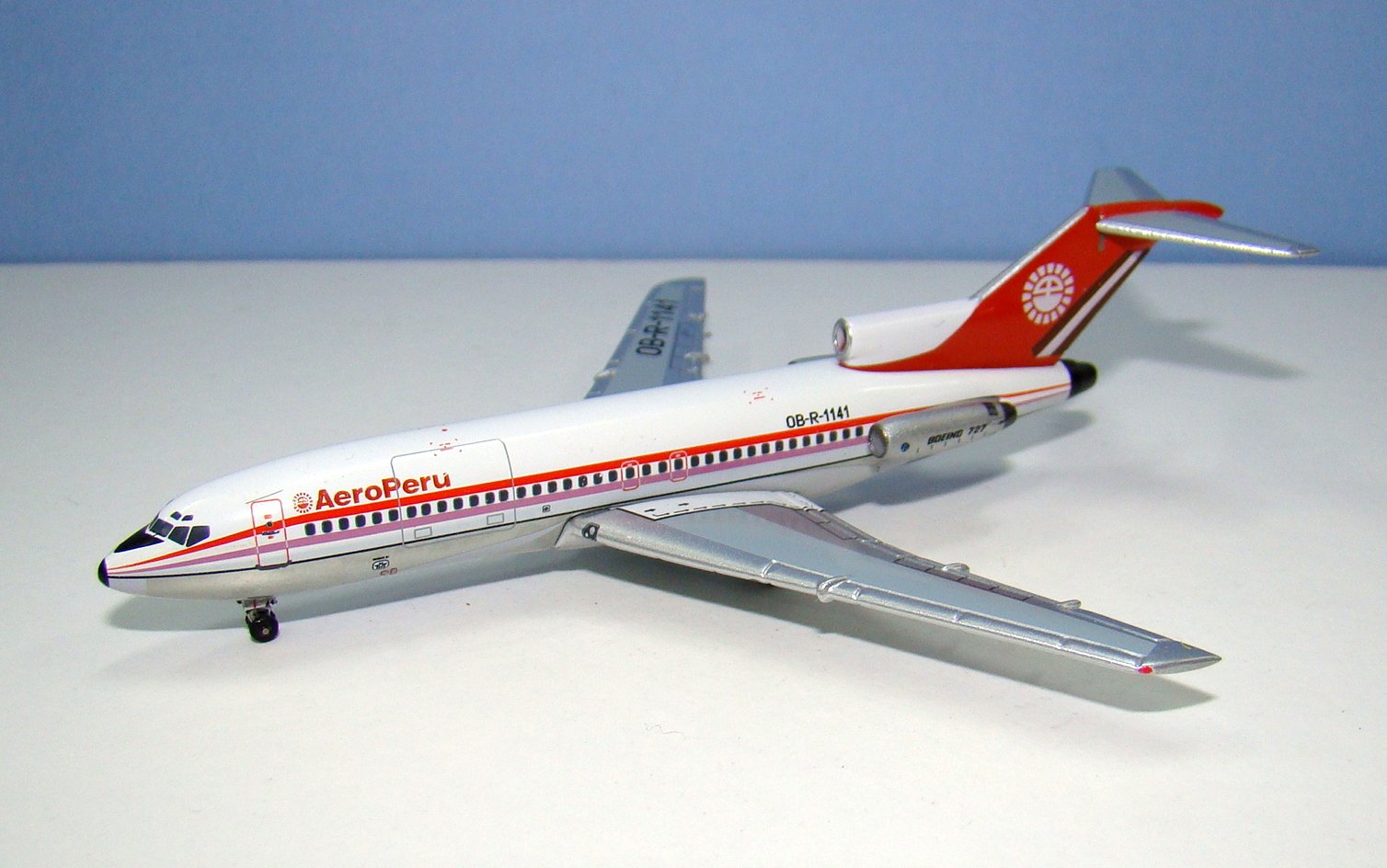
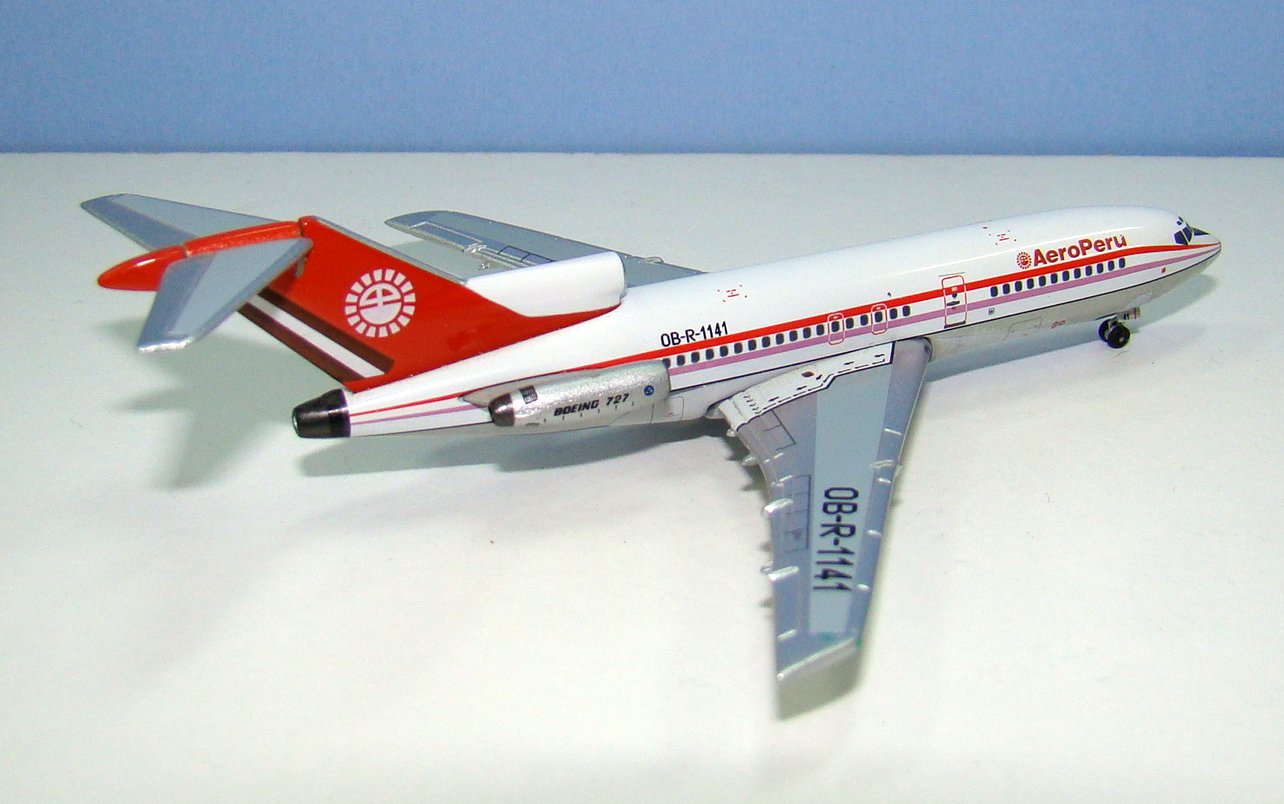
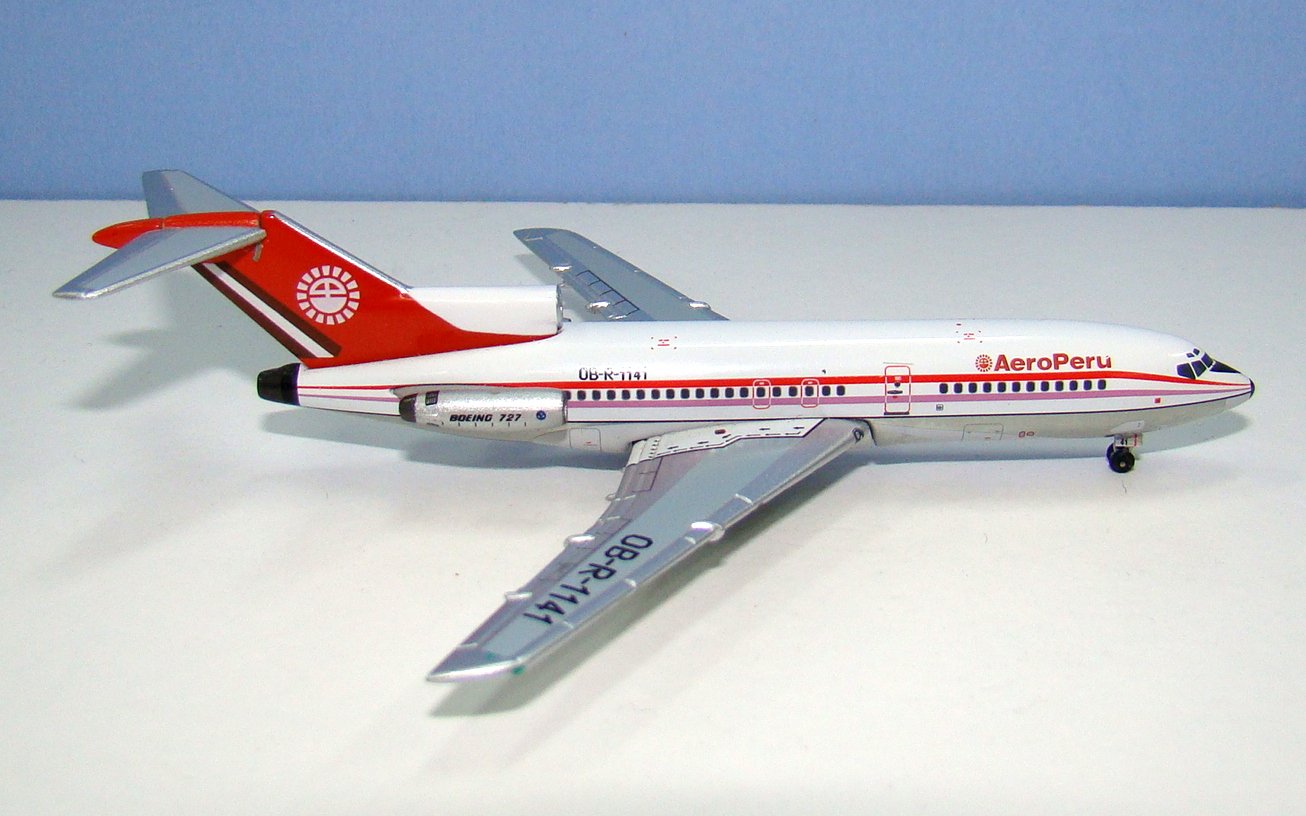
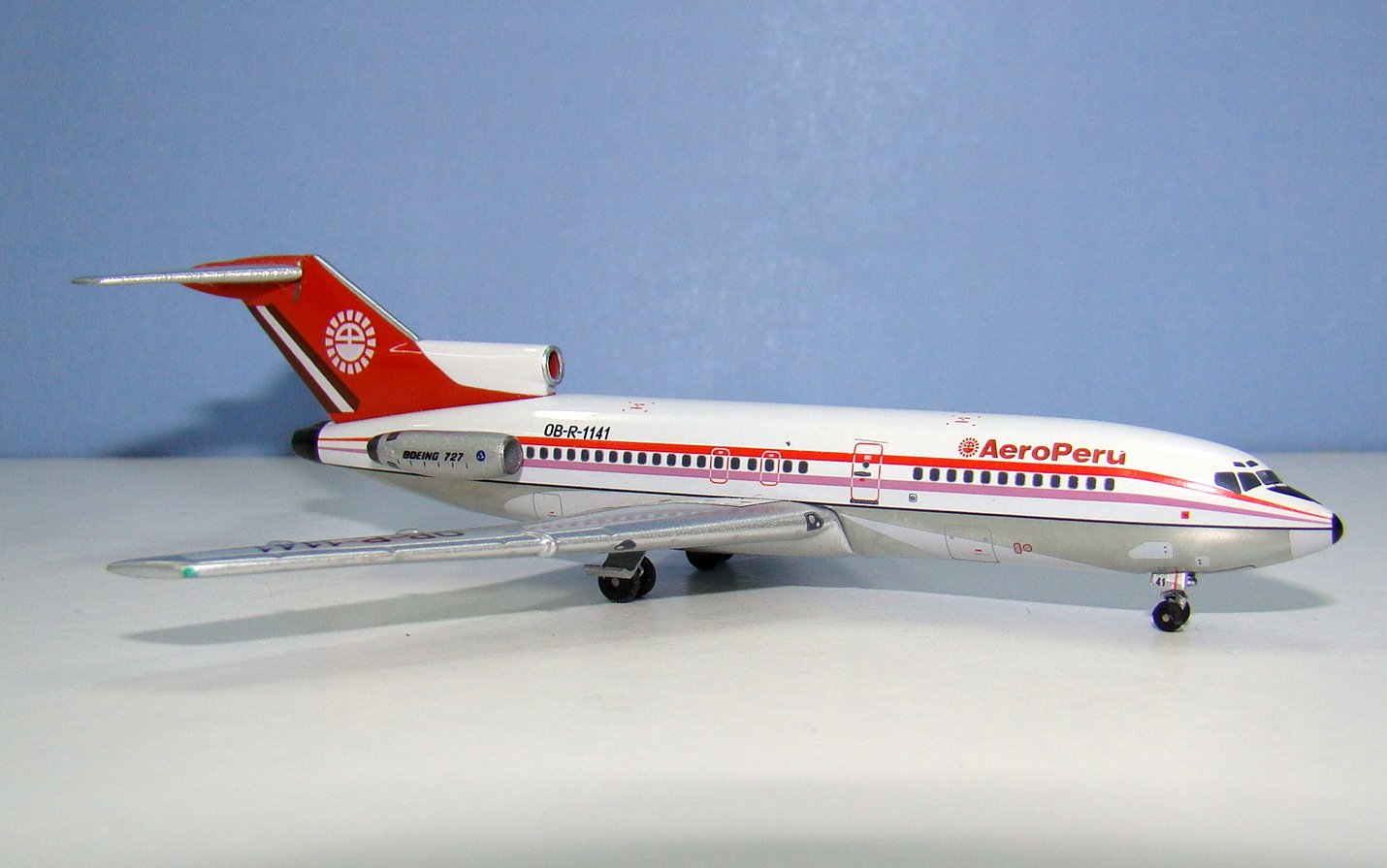
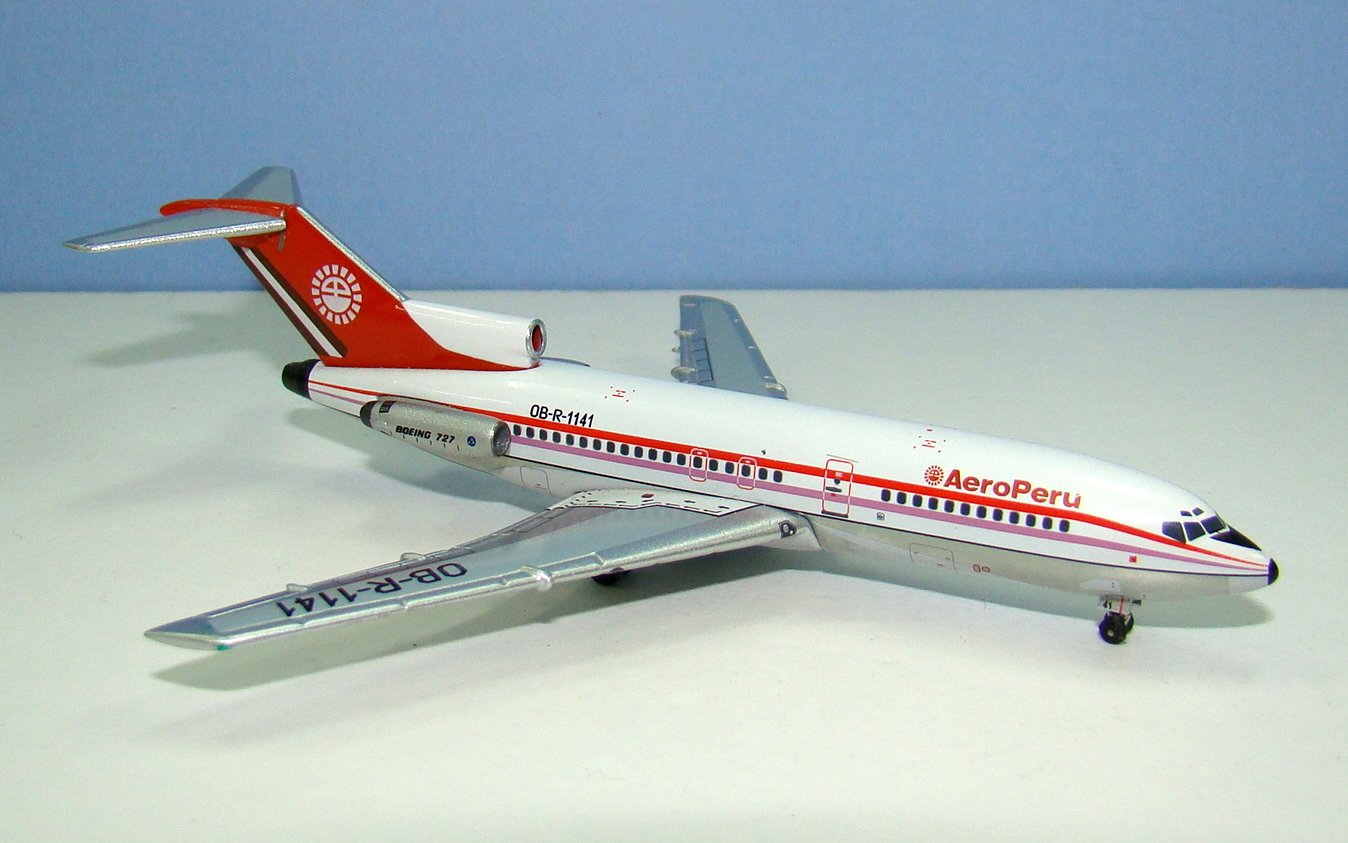
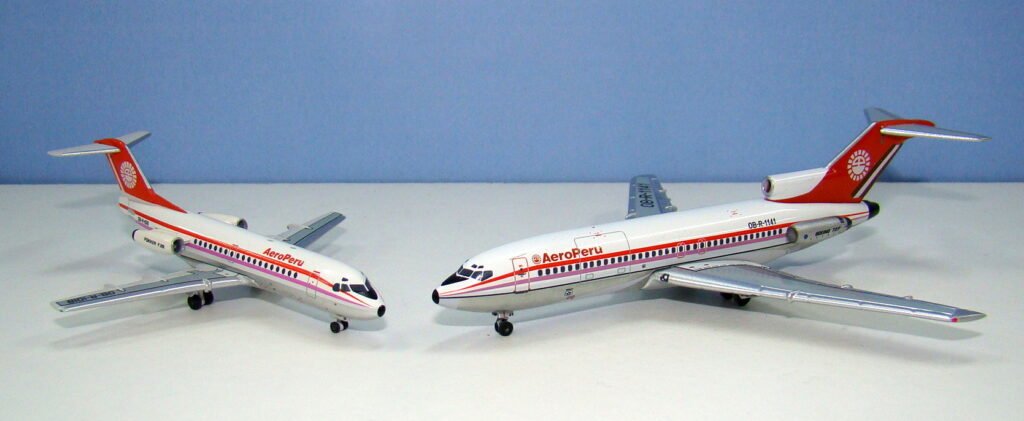
AeroPerú Boeing 727-30C OB-R-1141 Aeroclassics 1:400 Scale Model Airliner
AeroPerú Boeing 727-30C OB-R-1141 Aeroclassics 1:400 Scale Model Airliner
AeroPerú Boeing 727-30C OB-R-1141 Aeroclassics 1:400 Scale Model Airliner
AeroPerú Boeing 727-30C OB-R-1141 Aeroclassics 1:400 Scale Model Airliner
AeroPerú Boeing 727-30C OB-R-1141 Aeroclassics 1:400 Scale Model Airliner
AeroPerú Boeing 727-30C OB-R-1141 Aeroclassics 1:400 Scale Model Airliner
AeroPerú Boeing 727-30C OB-R-1141 Aeroclassics 1:400 Scale Model Airliner
AeroPerú Boeing 727-30C OB-R-1141 Aeroclassics 1:400 Scale Model Airliner
AeroPerú Boeing 727-30C OB-R-1141 Aeroclassics 1:400 Scale Model Airliner
The 1980s were not kind to Peru. When the military government allowed elections in 1980 it also had the unintended consequence of unleashing the Maoist political group Shining Path, which began a guerilla war, funded by the proceeds of drug cultivation. The conflict quickly escalated, when the military intervened, into a full blown civil war with atrocities on both sides. This wasn’t the nation’s only problems as economic mismanagement along with a powerful El Nino in 1982/83 combined to cause both flooding, drought and rampant inflation.
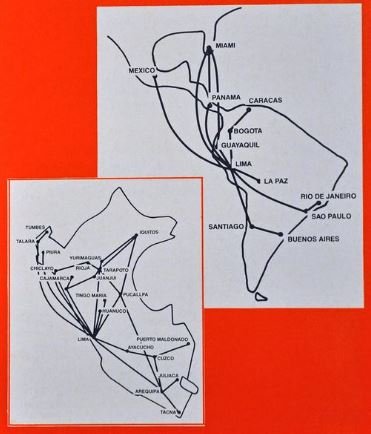
The 1984 route map
By June 1985 AeroPerú’s active fleet consisted of 3 F28, 3 727-100, 1 DC-8-52 and 4 DC-8-62. Considering the 1973 build F28s were the newest aircraft in the fleet it is clear money was in short supply. The only new addition to the fleet during the second half of the 1980s was a 5th DC-8-62, which replaced the remaining DC-8-52. This aircraft, which became OB-R1323, was a 1968 build ex-Japan Air Lines aircraft. Unfortunately the overall fleet size did not increase as on October 25, 1988 one of the trusty F28s (OB-R-1020) was destroyed when she failed to get properly airborne from Juliaca and crashed a few kilometres beyond the runway. Twelve of the 69 passengers were killed.
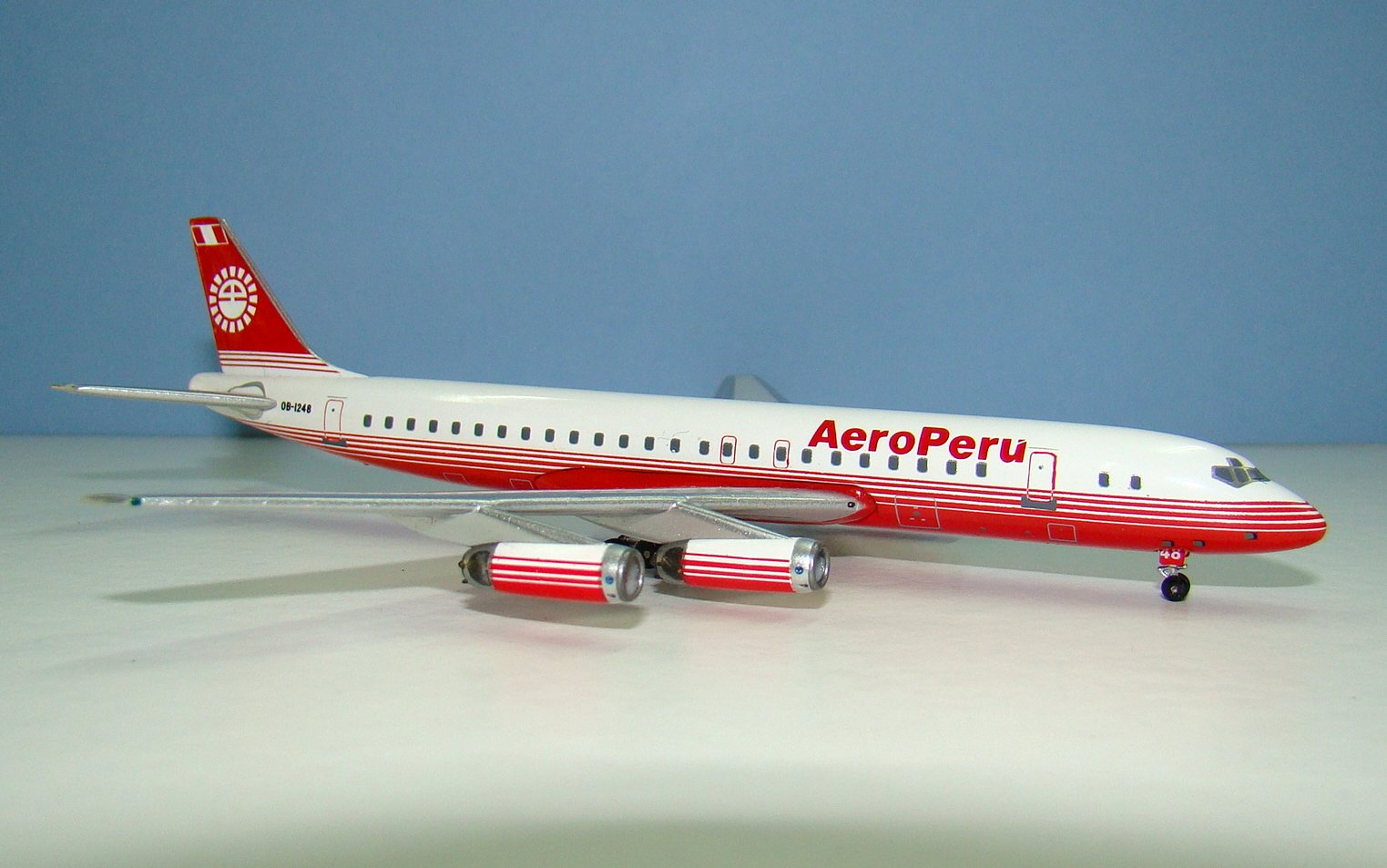
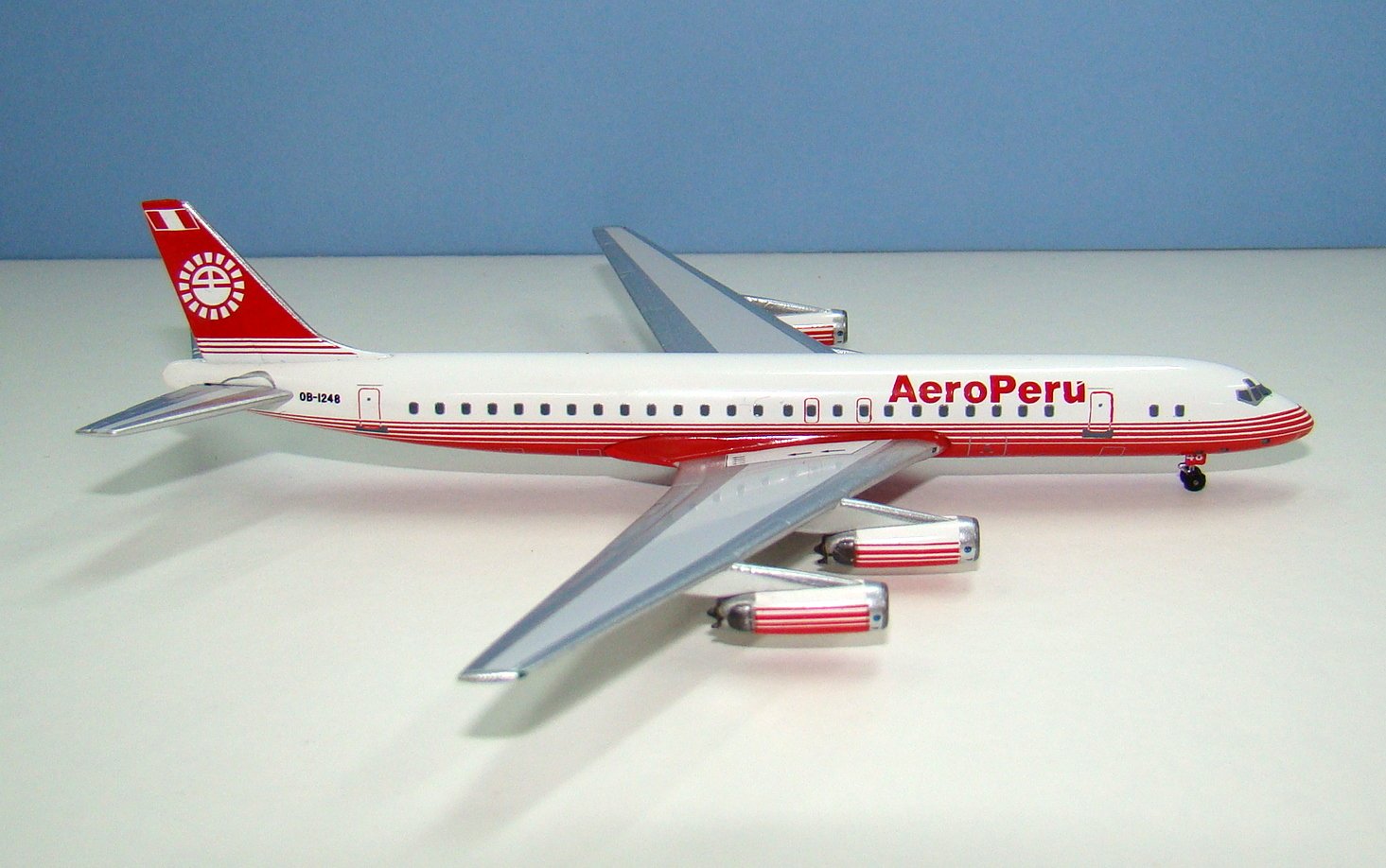
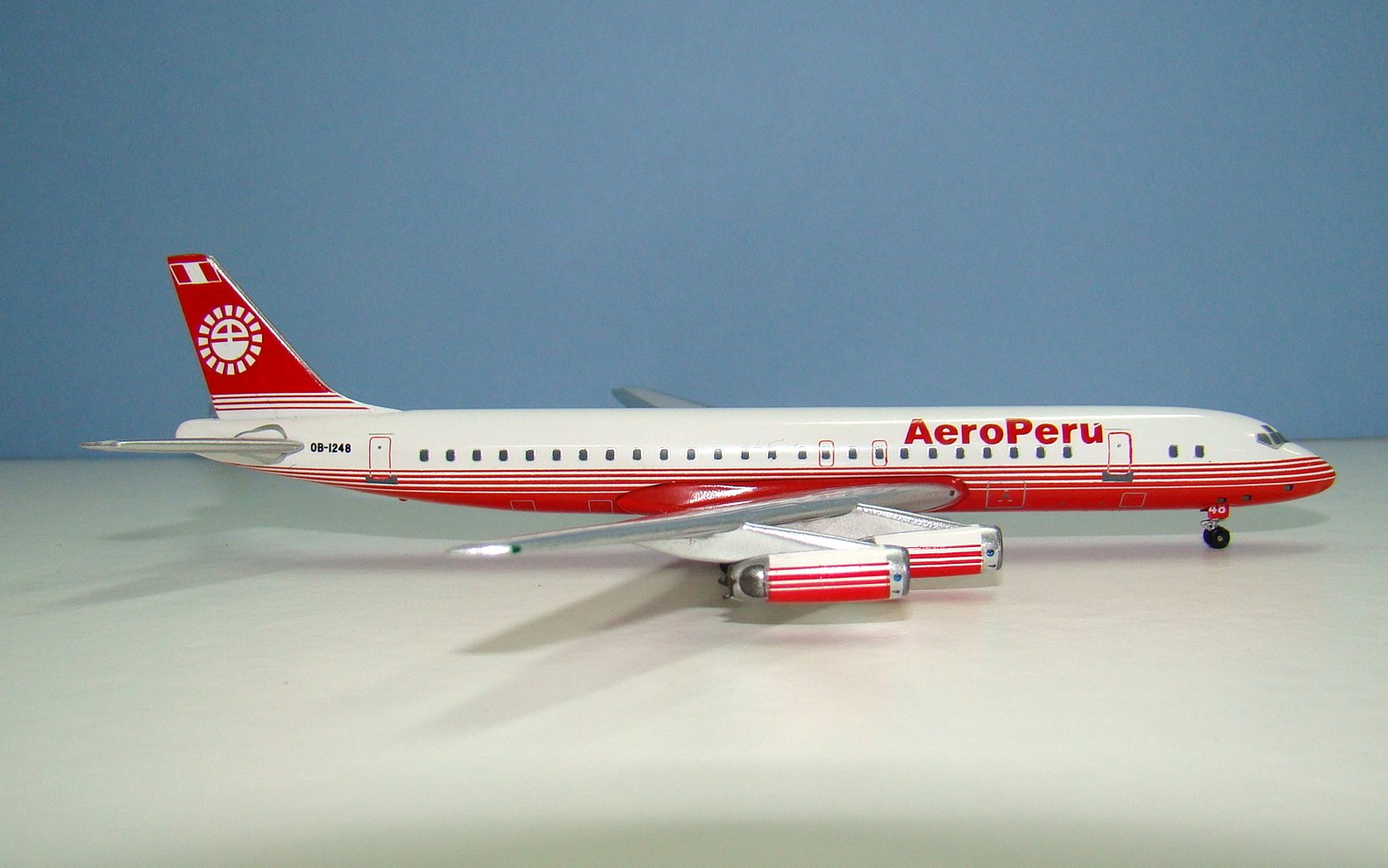
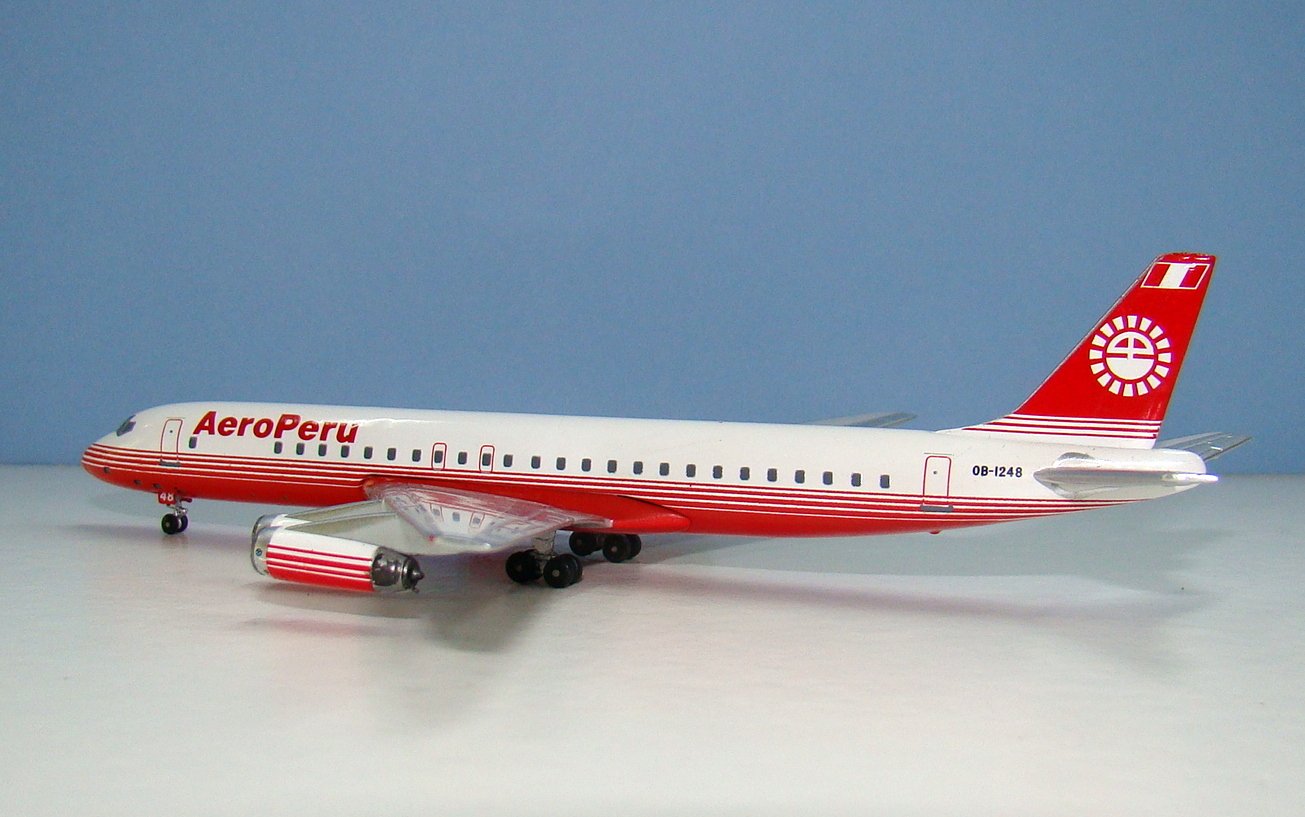
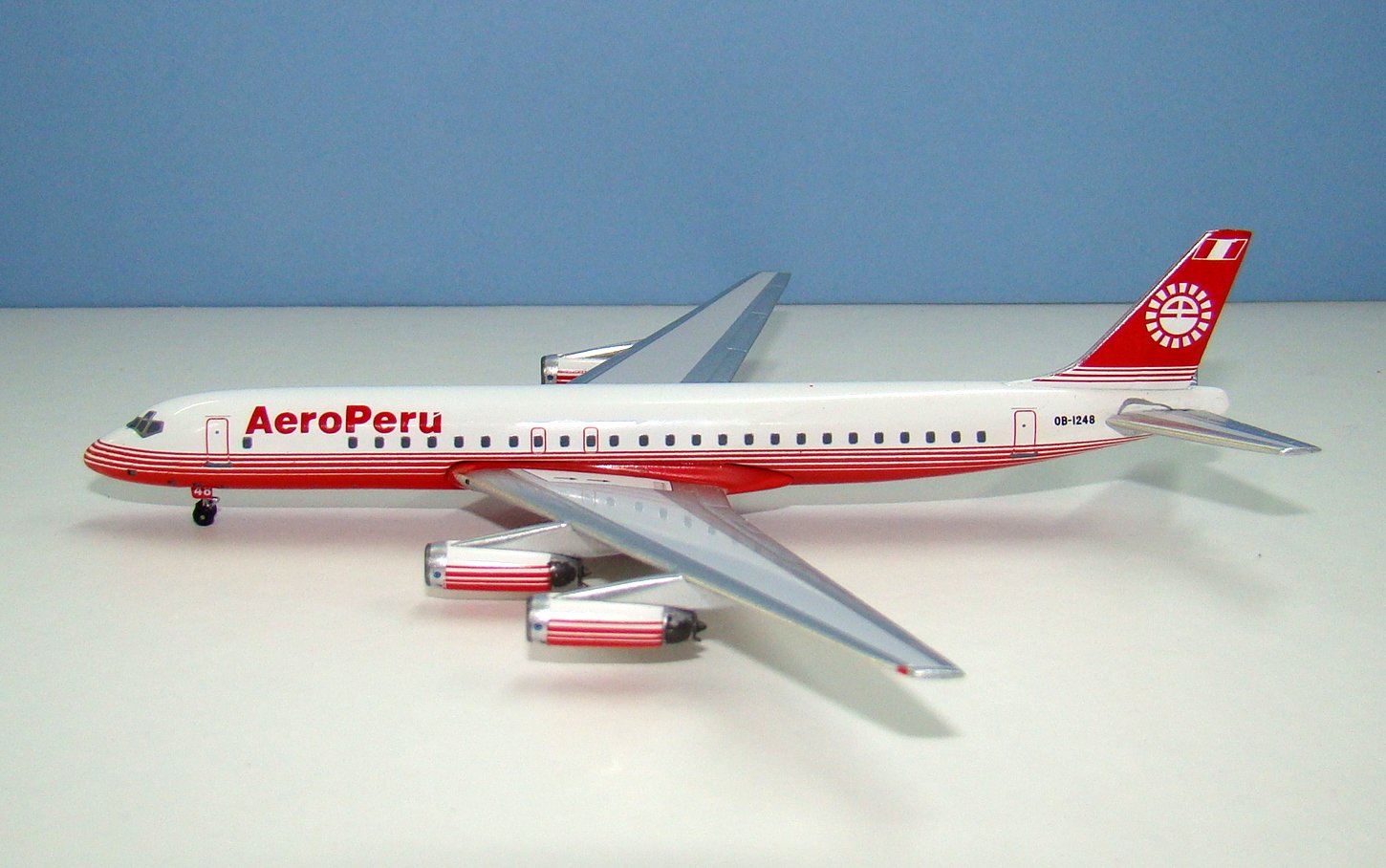
AeroPerú Douglas DC-8-62 OB-1248 Aeroclassics 1:400 Scale Model Airliner
AeroPerú Douglas DC-8-62 OB-1248 Aeroclassics 1:400 Scale Model Airliner
AeroPerú Douglas DC-8-62 OB-1248 Aeroclassics 1:400 Scale Model Airliner
AeroPerú Douglas DC-8-62 OB-1248 Aeroclassics 1:400 Scale Model Airliner
AeroPerú Douglas DC-8-62 OB-1248 Aeroclassics 1:400 Scale Model Airliner
AeroPerú Douglas DC-8-62 OB-1248 Aeroclassics 1:400 Scale Model Airliner
The Peruvian economy continued to suffer between 1985 and 1990 with several changes of currency due to the frequent bouts of hyperinflation. The nation’s GDP dropped by 20% and the per capita annual income of Peruvians fell to a lower level than in 1960. Unsurprisingly even at the best of times a government led national carrier from a relatively poor nation would struggle to be profitable but given the economic and political turmoil of Peru at the time it was effectively impossible for AeroPerú to make money, especially when it competed against relatively rich and well run US carriers on the all important Lima-Miami route.
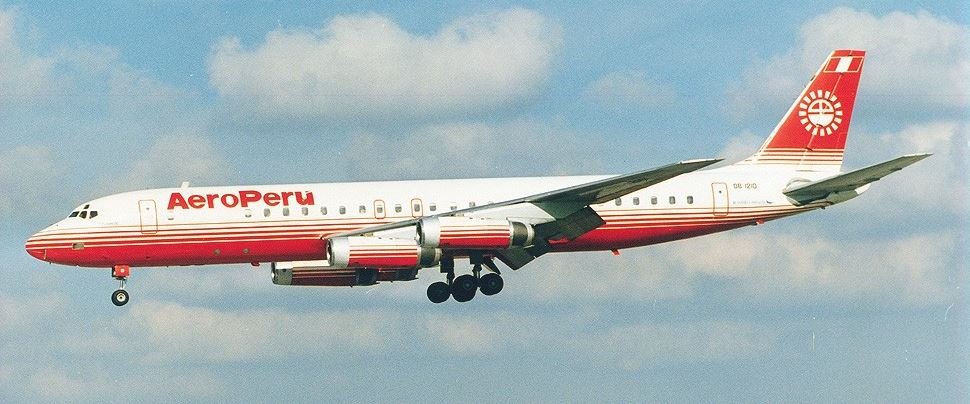
DC-8-62 OB-1210 landing at MIA in 1992. Photo by Torsten Maiwald from Wikipedia
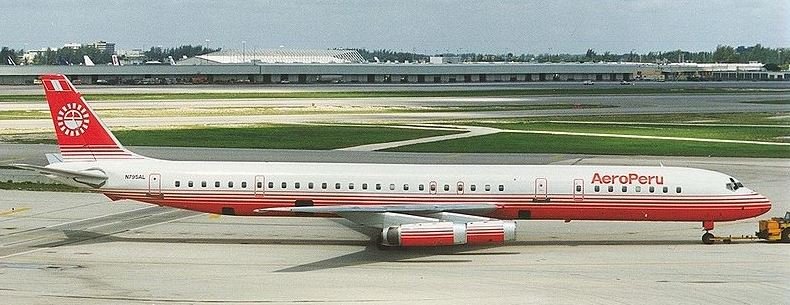
DC-8-63 N795AL at Miami in June 1990. Photo by SkyPics from Wikipedia
The best AeroPerú could do was lease old aircraft, although it did acquire its largest aircraft since the Tristars in the form of an ex-SAS DC-8-63 in early 1990. This aircraft looks like it introduced a new livery. Gone were the cheatlines replaced by a business like but still attractive red bellied scheme. This was gradually applied to the DC-8-62s even as they neared the end of their careers with the airline. By now the DC-8-62s, all of late 1960s vintage, were well beyond their prime as passenger airliners and AeroPerú had acquired a reputation for poor service and reliability. AeroPerú needed new equipment and for that it either needed to pool its resources or get new investment. It would try both approaches as we’ll see in part 3.