By 1960 Seaboard and Western had seen both the highs and lows. It had grown from a charter airline to the USA’s selected scheduled freight airline across the Atlantic, a market that it dominated. Unfortunately however it was also in a perilous financial state. Fortunately under new leadership the 1960s would prove to be a prosperous time for the carrier, which constantly led the field in all freight operations.Intro.
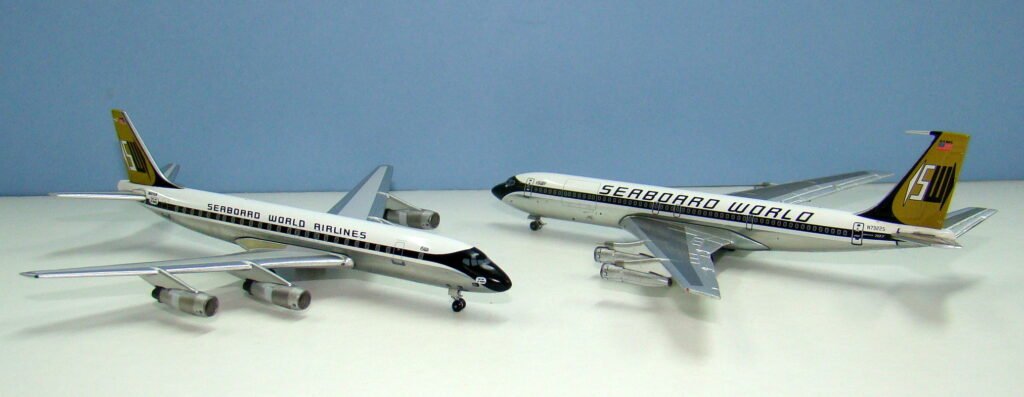
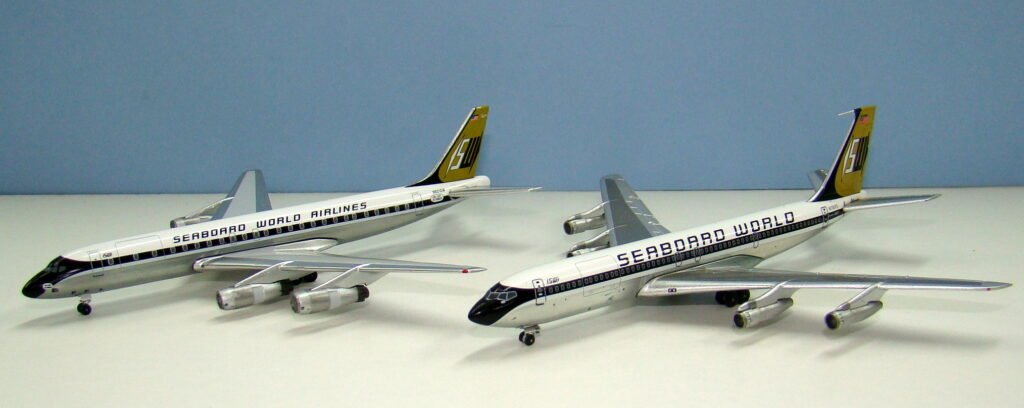
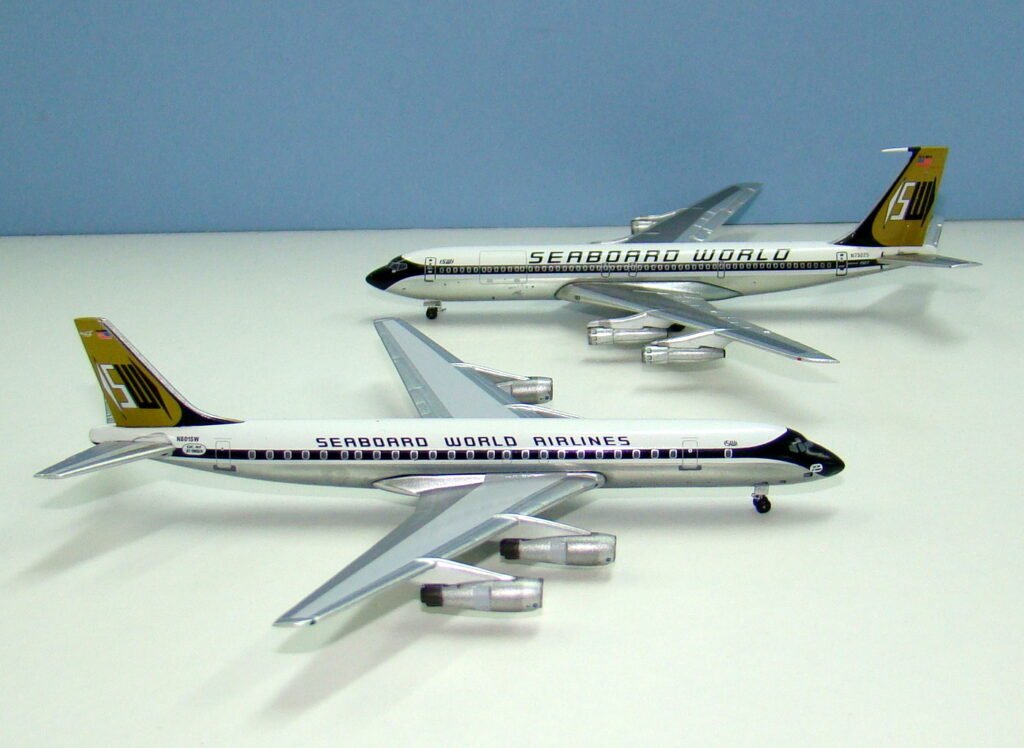
Seaboard World Airlines Douglas DC-8F-55 & Boeing 707-345C Aeroclassics 1:400 Scale Model Airliners
Seaboard and Western was started on September 11, 1946 by Arthur and Raymond Norden as just another of the hundreds of non-scheduled startup airlines (popularly known as non-skeds), that sprung up in a postwar environment full of cheap aircraft and fresh out of the air force pilots, it prospered, unlike so many of its kin. It built a reputation for on time and excellent service whilst getting involved in military charters and both the Berlin airlift and the transportation of Jews to Israel.
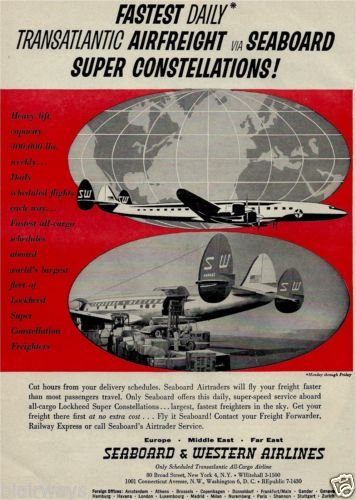
During the 1950s it assisted other airlines, like Luxembourg Airlines and Aerlinte Eireann, when they need equipment but it was the 1951 purchase of four new Lockheed L-1049D Super Constellations that brought it into the big time. Unusually this hard work was rewarded when in June 1955 the airline was granted permission to fly scheduled freight services across the Atlantic by the CAB. These led to the purchase of even more Super Connies, some of which were even flown for BOAC despite their limited number of windows.
Seaboard World Airlines Douglas DC-8F-55 & Boeing 707-345C Aeroclassics 1:400 Scale Model Airliners
Nonetheless expansion came at a price, which was not helped by a major downturn in the freight market combined with a drop in military contracts and other charter activity. The airline lost $6 million between 1959 and 1961 alone and the mounting debts saw the Norden brothers lose control of their airline. The new chairman and president was Richard M. Jackson and under his leadership the airline would enter into a new golden age, quite literally.
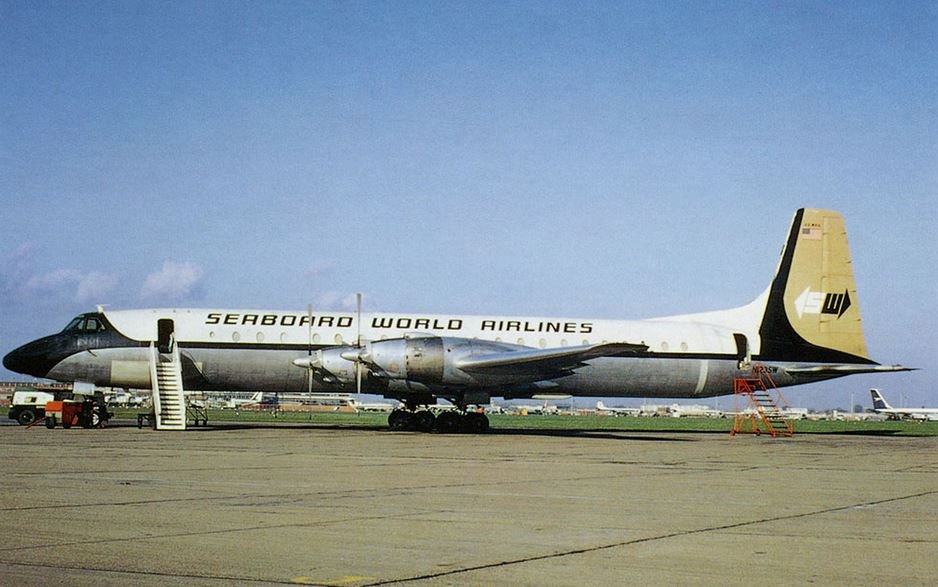
A Seaboard CL-44 showing the fairings that enabled the swing tail
Refinancing got the carrier back on its feet and on April 4, 1961 the airline changed its name to the more impressive sounding Seaboard World Airlines. Along with the name change came a new black and gold livery. This would also be the period when Seaboard World began pioneering work as the launch customer for multiple new freighter types pushing the envelope in freight as one of the world’s two scheduled all freight airlines. Flying Tigers may have had the Pacific but Seaboard World owned the Atlantic.
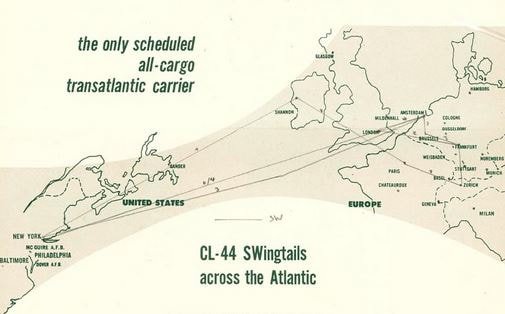
The first brave leap into a new age was provided by the Canadair CL-44D-4 a major Canadian development of the Bristol Britannia, which was fitted with an innovative hinged swing tail. This enabled bulky loads up to 26m long to be fitted. Compared to the Connie the CL-44 could carry 13 tonnes more freight (28:15) and offered over twice the internal capacity (204:90 cubic metres).
Seaboard ordered eight of the type and the first CL-44 was delivered on July 7, 1961. The new CL-44s proved an immediate success and by 1962 the airline was firmly profitable again. It refurbished its New York headquarters and built a new cargo terminal and operations centre.
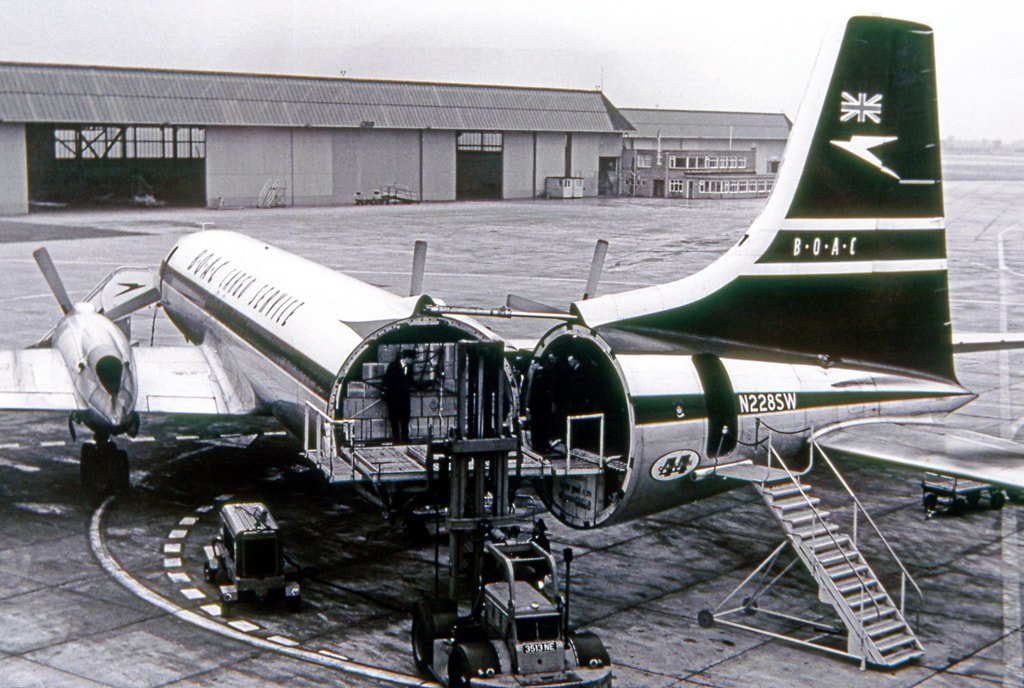
The CL-44s also allowed Seaboard to introduce a new ‘block space agreement’, which meant that non-freighter airlines could buy a permanent allocation of space aboard the aircraft. This gave them the flexibility they needed in an age when limited payload/range characteristics meant that cargo capacity could not always be relied upon. BOAC for example leased an entire CL-44 for a two year period flying three times weekly between Heathrow and New York via Prestwick. Other airlines that took advantage of this kind of arrangement included Lufthansa, Swissair and Air Canada.
N228SW in BOAC colours at Manchester in 1963. Photo by RuthAS from Wikipedia
By April 1963 the fleet consisted of 7 CL-44s. Eight Super Connies were still technically on charge but seven were leased to Capitol. The smallest aircraft in the fleet was a single C-46 Commando. The CL-44 was an excellent aircraft but Seaboard was keen to speed up the air cargo business and the future was clearly to be pure jets. As early as 1961 Douglas was touting the DC-8F Jet Trader and as the leader in the transatlantic cargo field it was no surprise that Seaboard chose the DC-8-55JT (more commonly known as DC-8F-55s).
N801SW on a test flight. Photo from Douglas
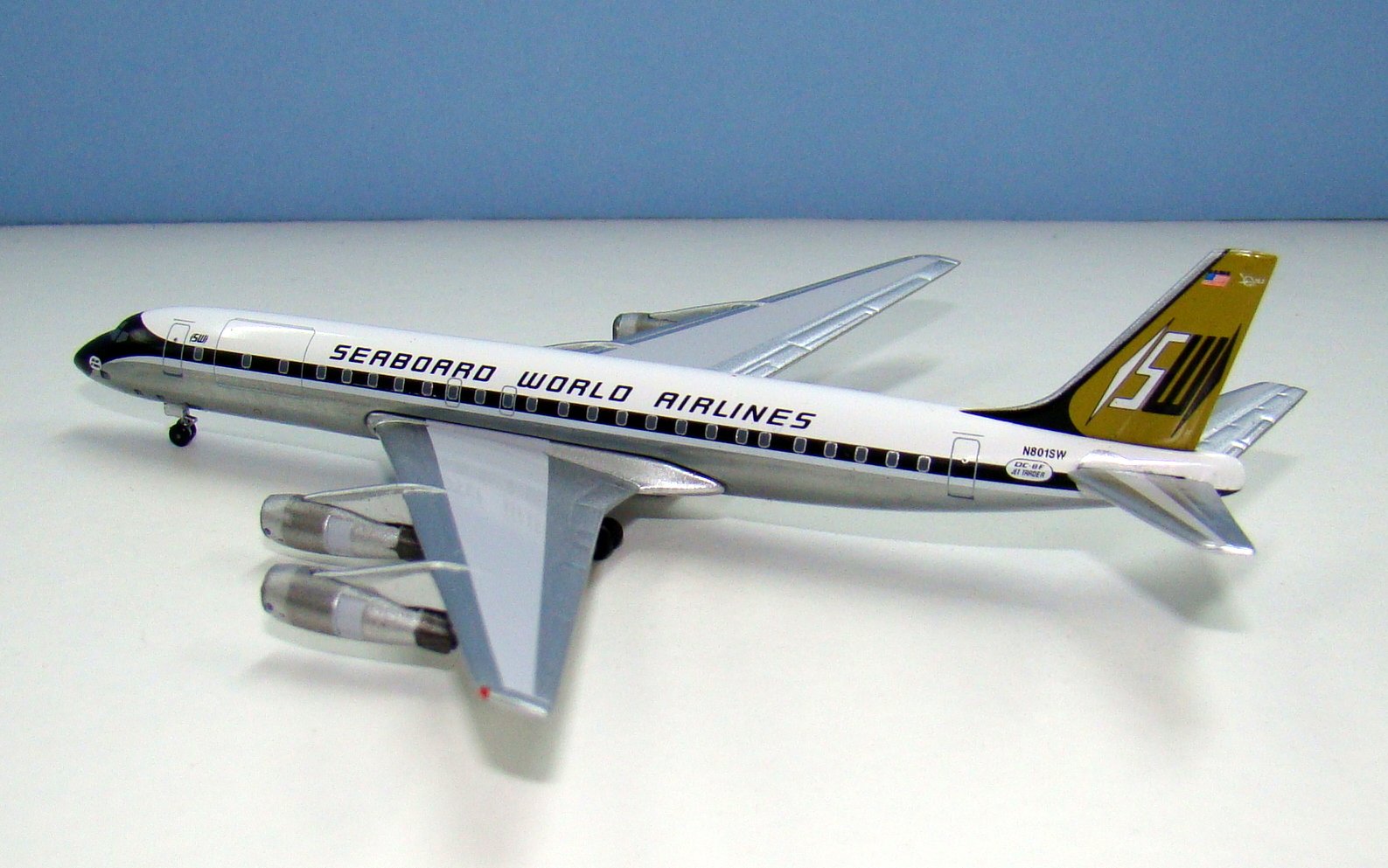
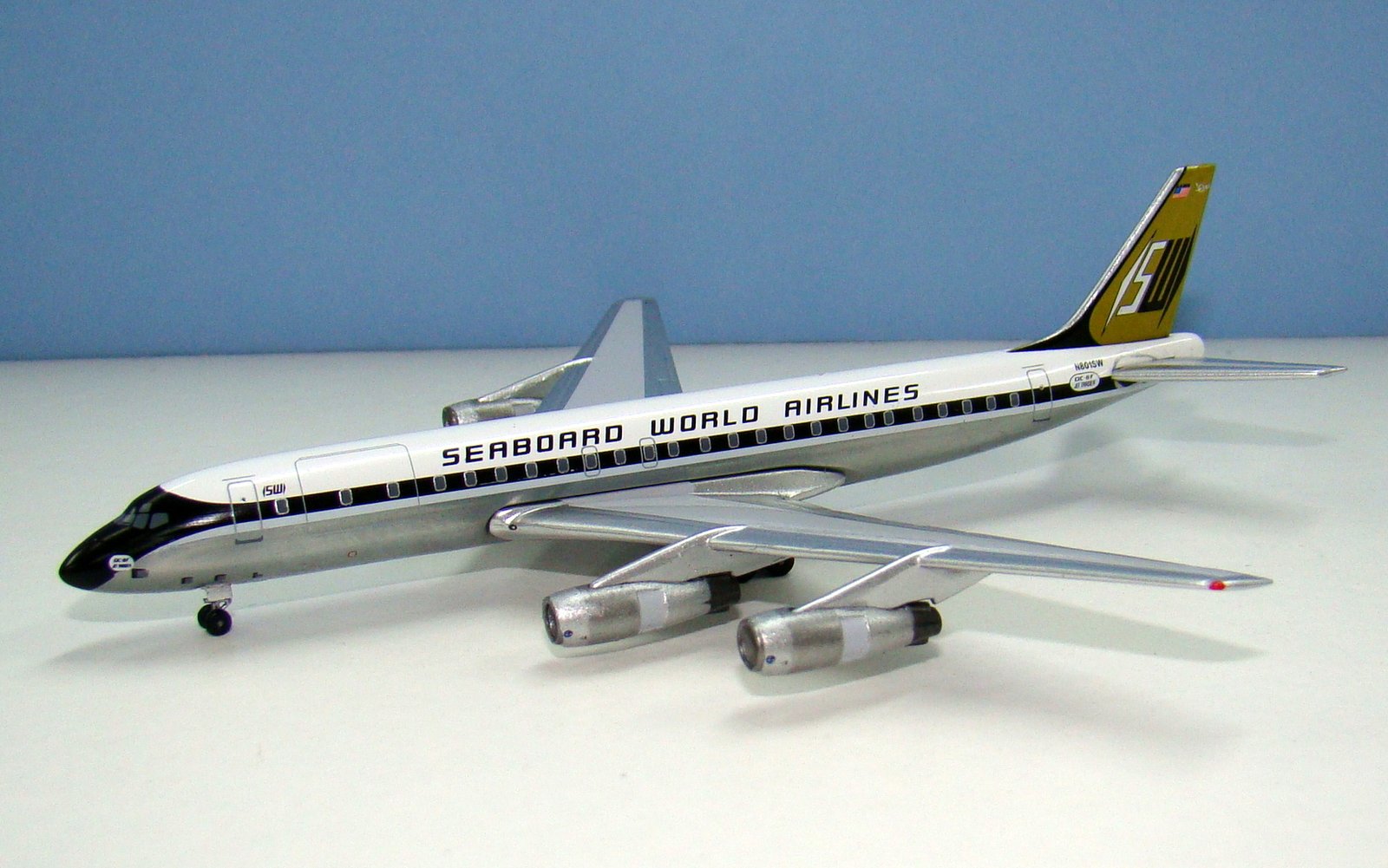
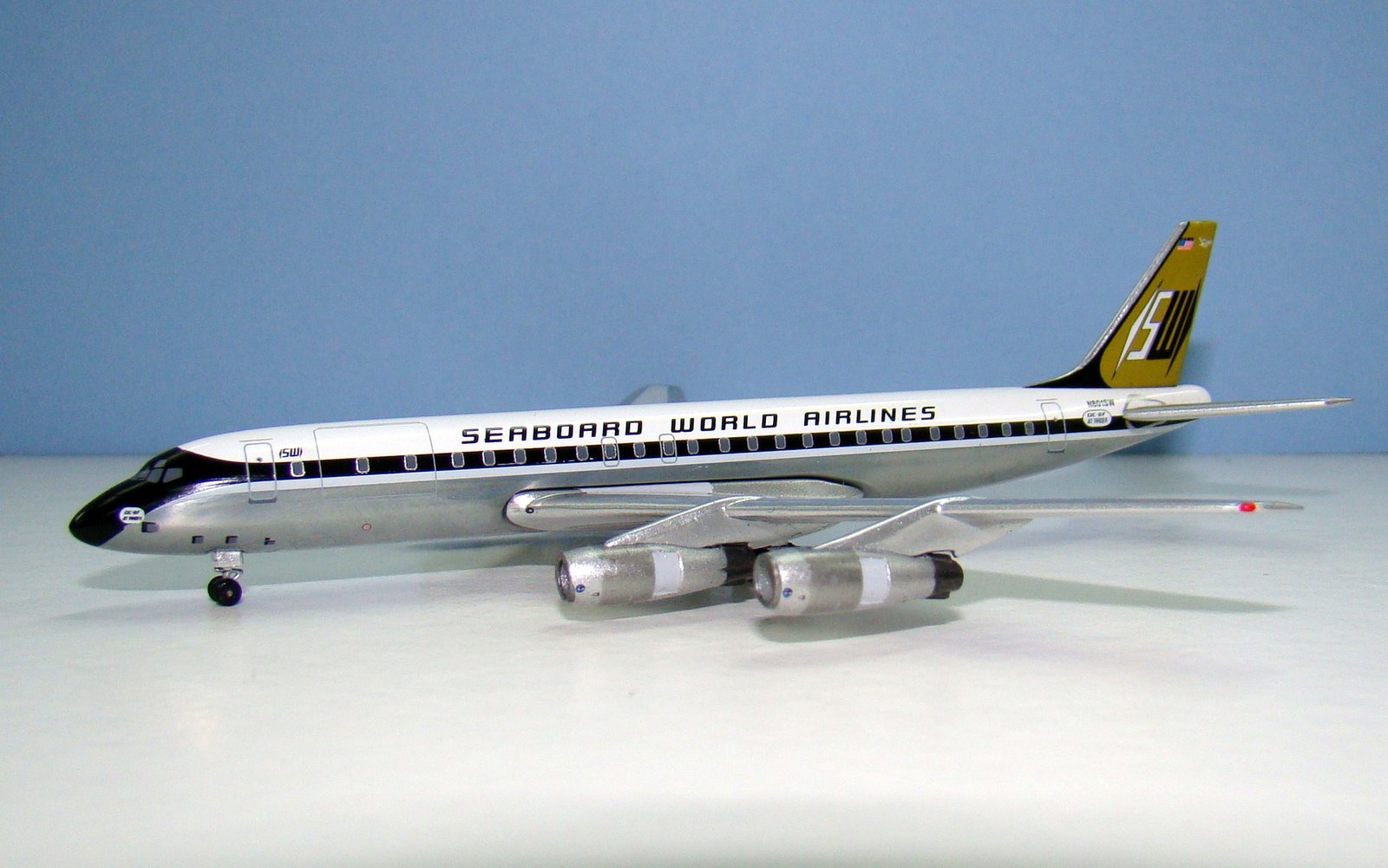
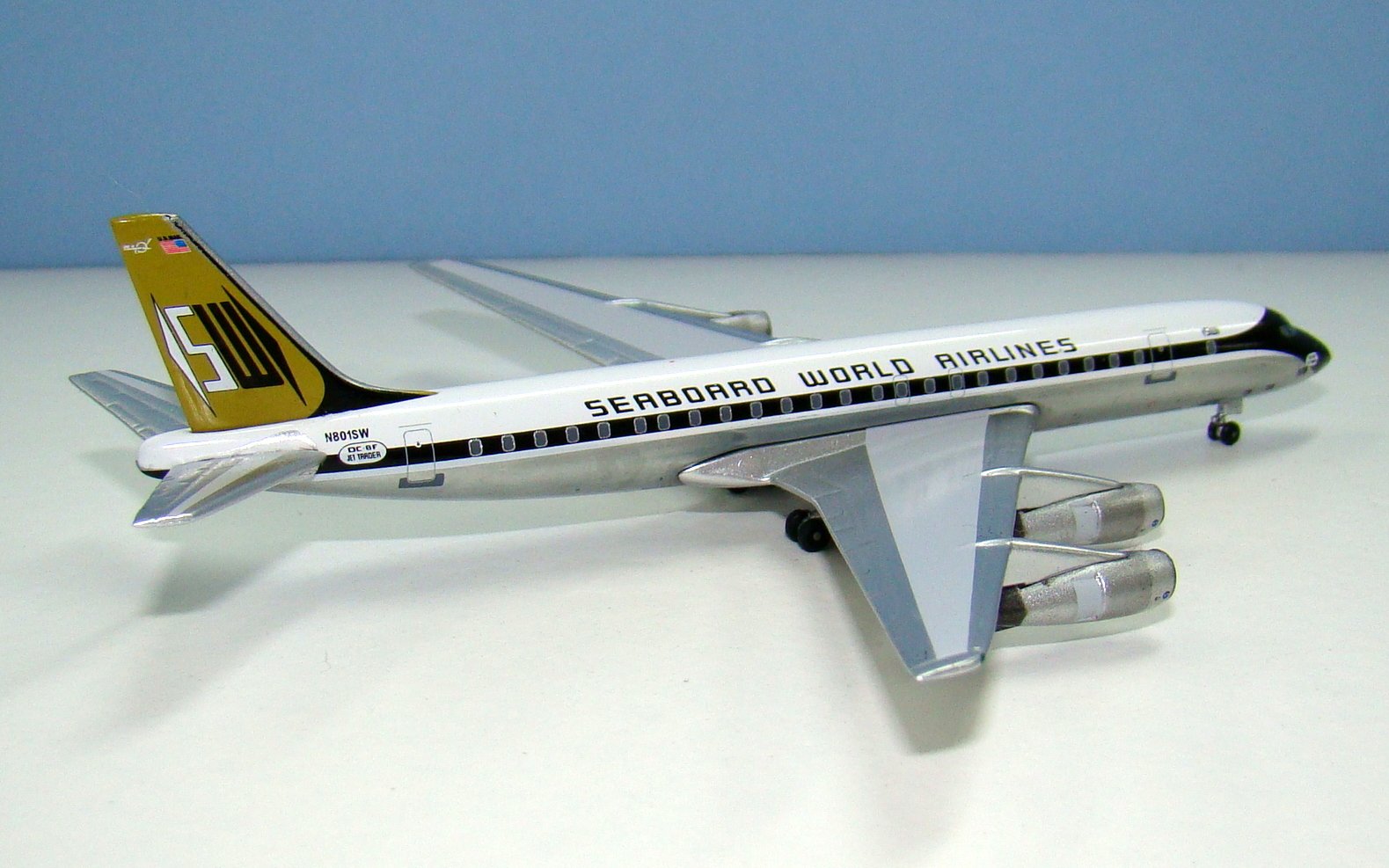
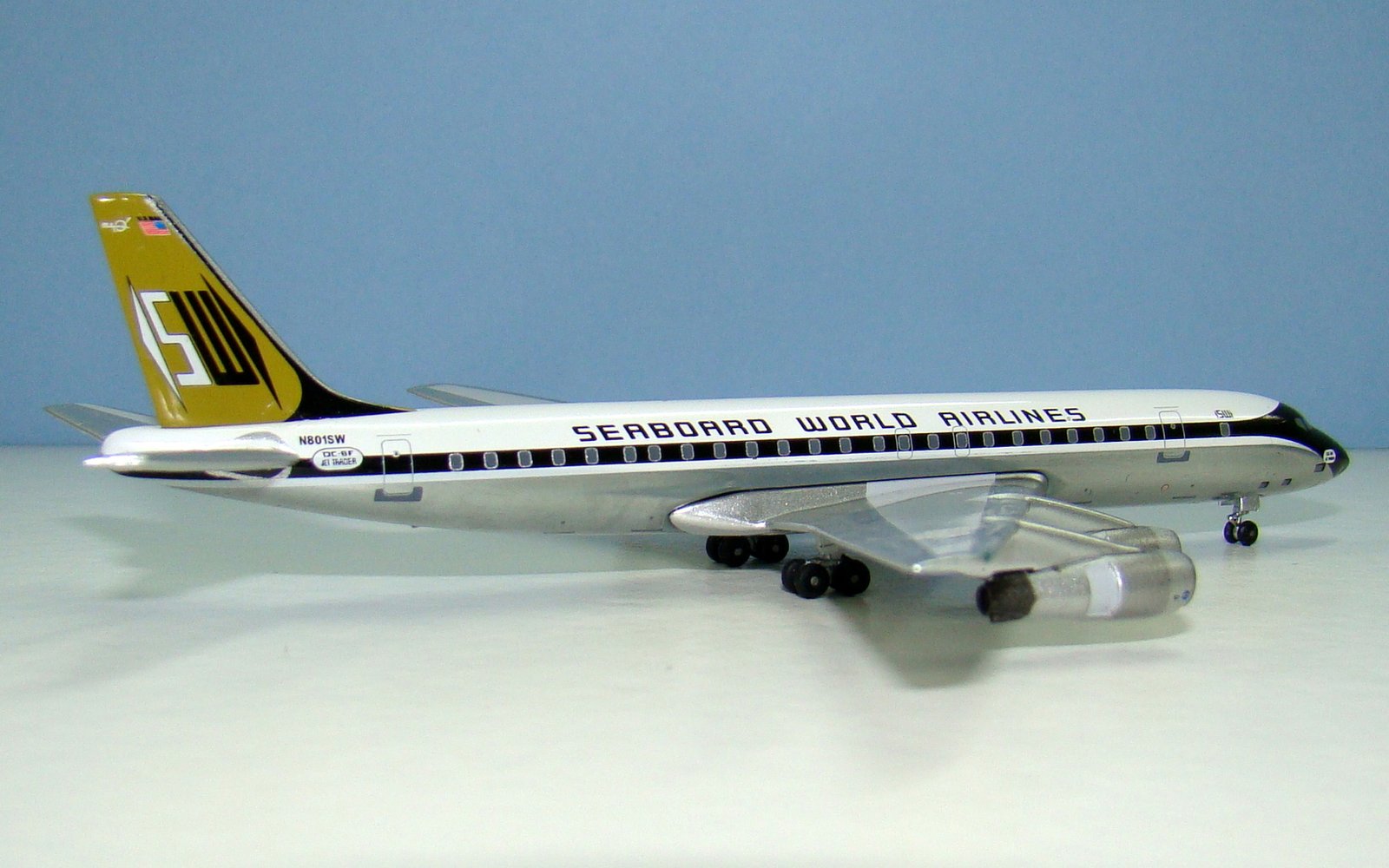
Seaboard World Airlines Douglas DC-8F-55 N801SW Aeroclassics 1:400 Scale Model Airliner
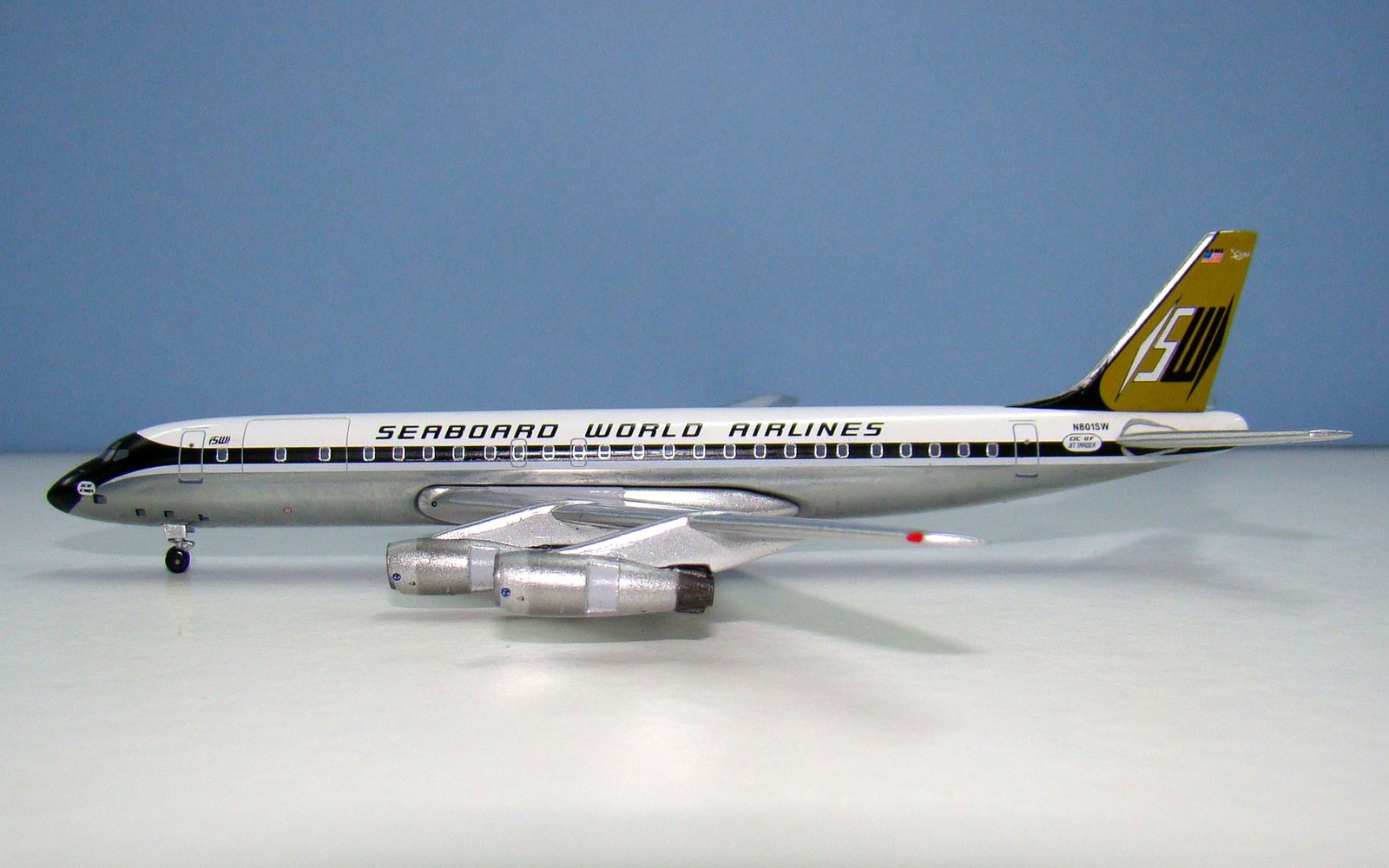
Seaboard World Airlines Douglas DC-8F-55 N801SW Aeroclassics 1:400 Scale Model Airliner
Seaboard World Airlines Douglas DC-8F-55 N801SW Aeroclassics 1:400 Scale Model Airliner
Seaboard World Airlines Douglas DC-8F-55 N801SW Aeroclassics 1:400 Scale Model Airliner
Seaboard World Airlines Douglas DC-8F-55 N801SW Aeroclassics 1:400 Scale Model Airliner
Seaboard World Airlines Douglas DC-8F-55 N801SW Aeroclassics 1:400 Scale Model Airliner
Seaboard World Airlines Douglas DC-8F-55 N801SW Aeroclassics 1:400 Scale Model Airliner
Seaboard World Airlines Douglas DC-8F-55 N801SW Aeroclassics 1:400 Scale Model Airliner
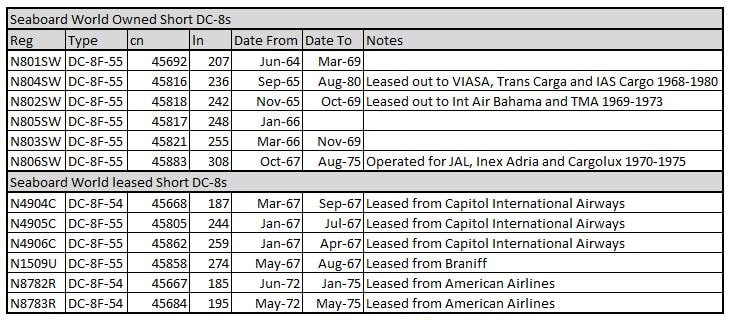
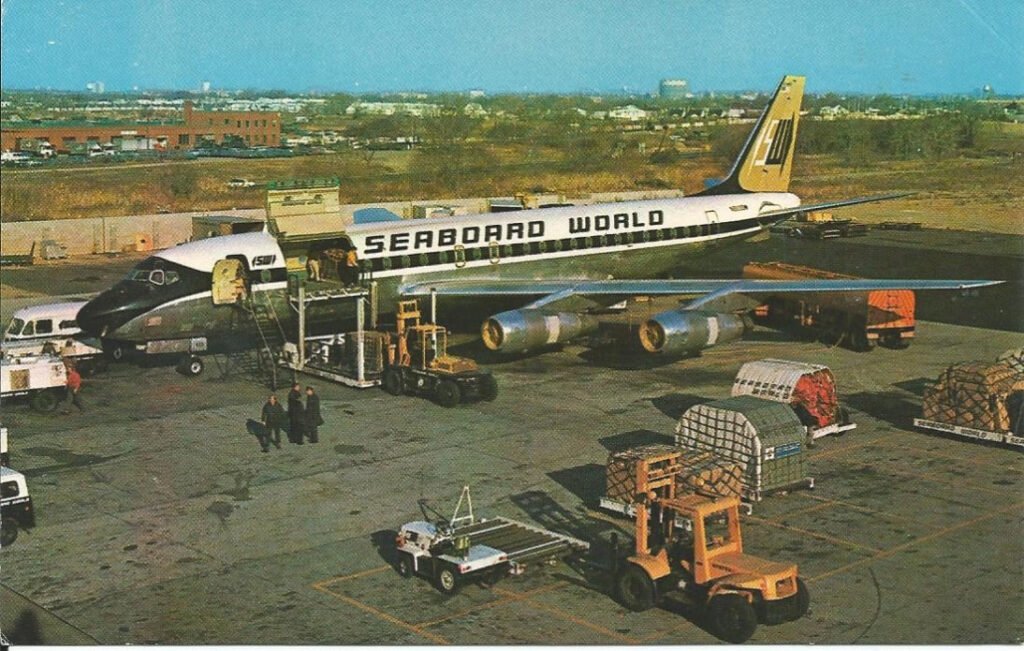
The first DC-8, N801SW, joined the fleet on June 21, 1964 on a lease from Douglas. Again the new type provided a major capacity boost over the type it was replacing. The DC-8s could carry over 40,800kg. The DC-8 proved a success and the fleet grew to 5 units by mid-1967. The CL-44s gradually left Seaboard’s colours but not its ownership as they were wet-leased to other operators such as the Lebanese TMA, the UK’s Transglobe Airways and also Cyprus Airways. The CL-44s left the fleet officially by May 1969.
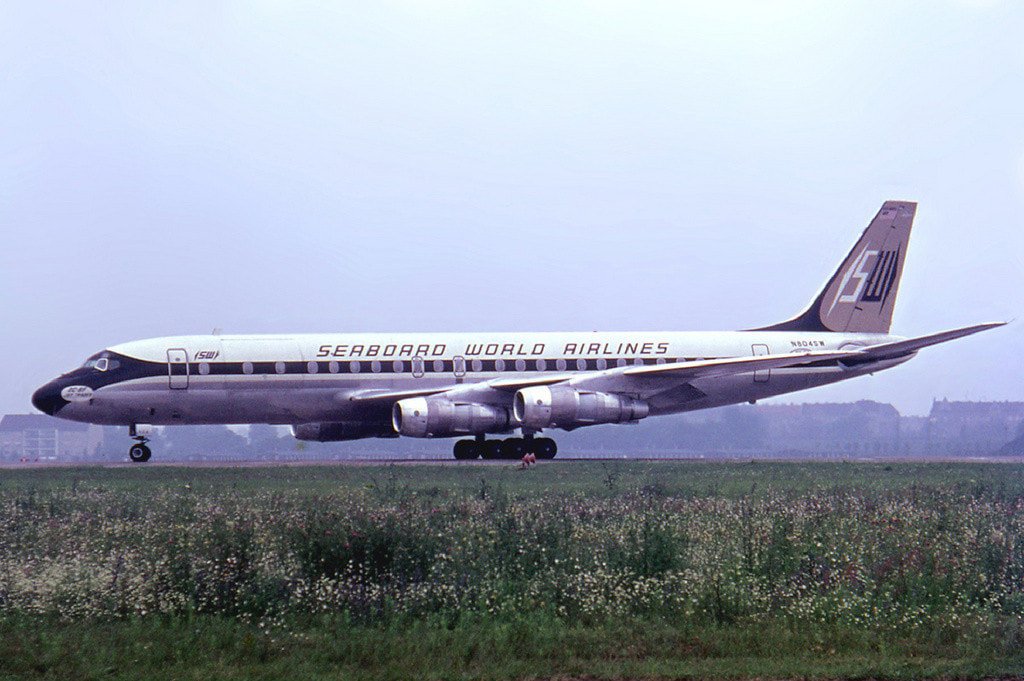
DC-8F-55 N804SW. Photo from Wikiwand
The success of Seaboard’s block space cargo work, ACMI operations plus wet-lease cargo and passenger services demanded even larger freighters as the 1960s came to a close. Further as the war in Vietnam hotted up Seaboard gained its share of military charter work. This led the airline back to Douglas’ door and an order for 12 new stretch DC-8-63CFs. Deliveries began in June 1968 and the new huge aircraft allowed the gradual replacement of the smaller DC-8s.
Note Seaboard World shortened their titles during the late 1960s
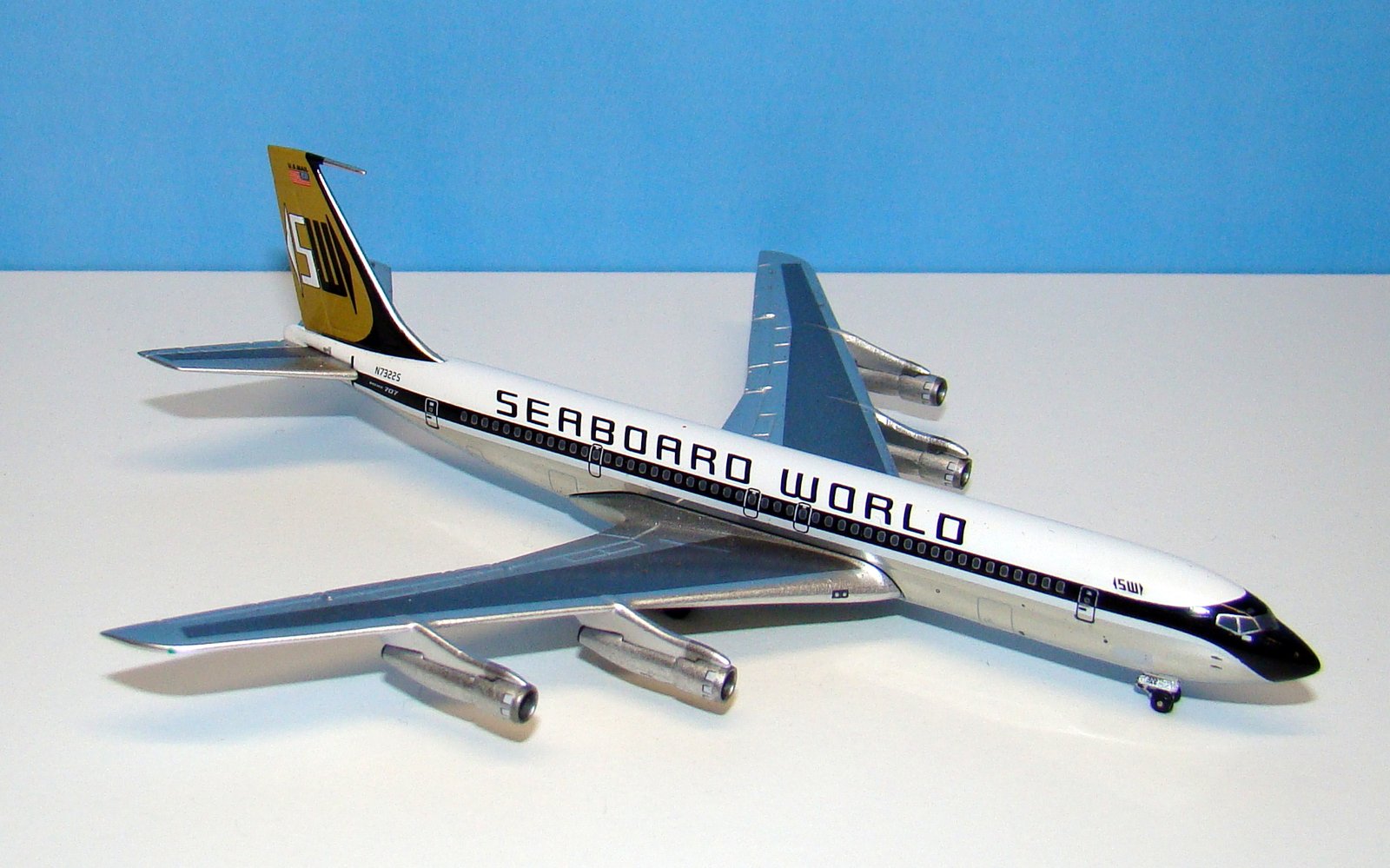
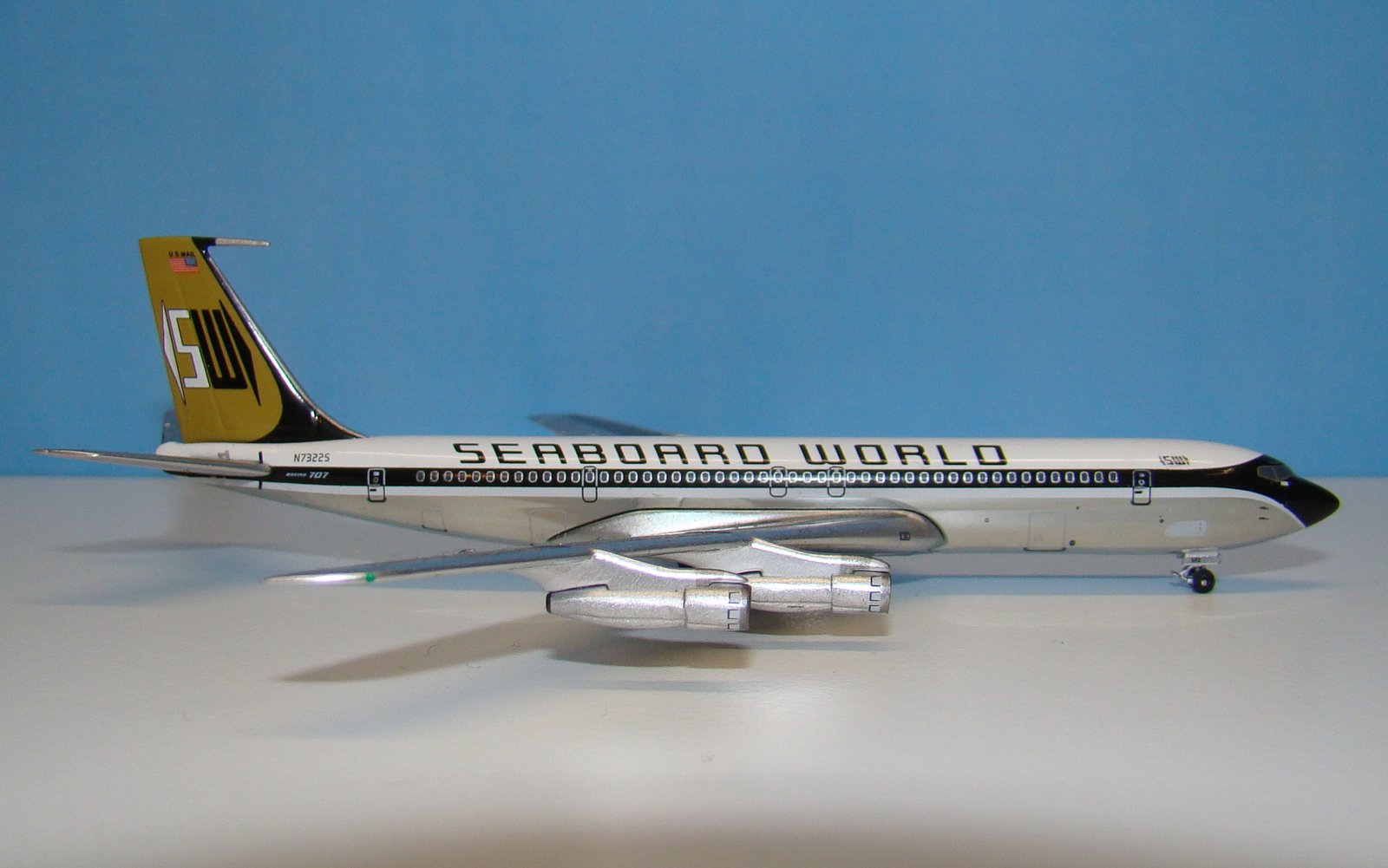
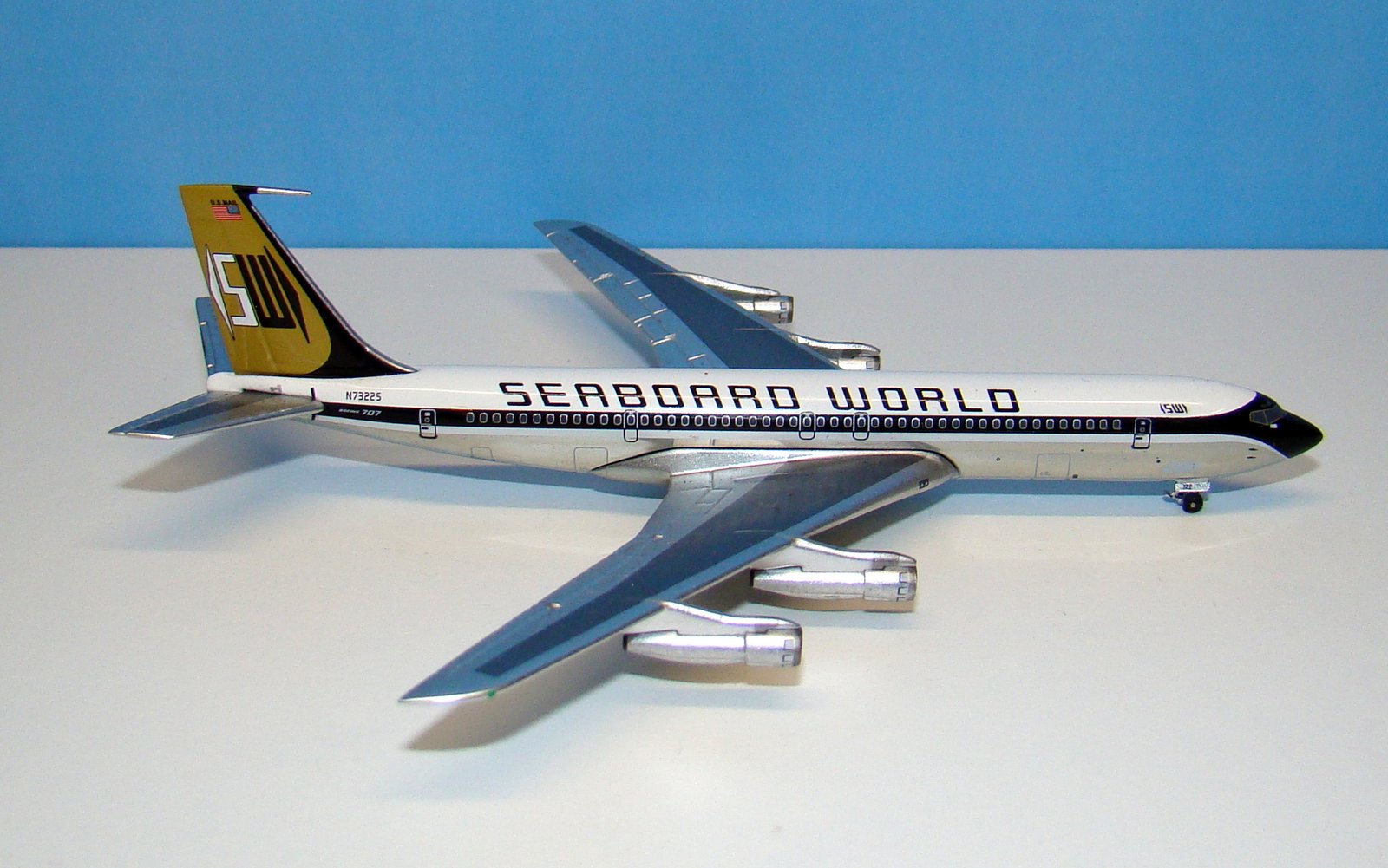
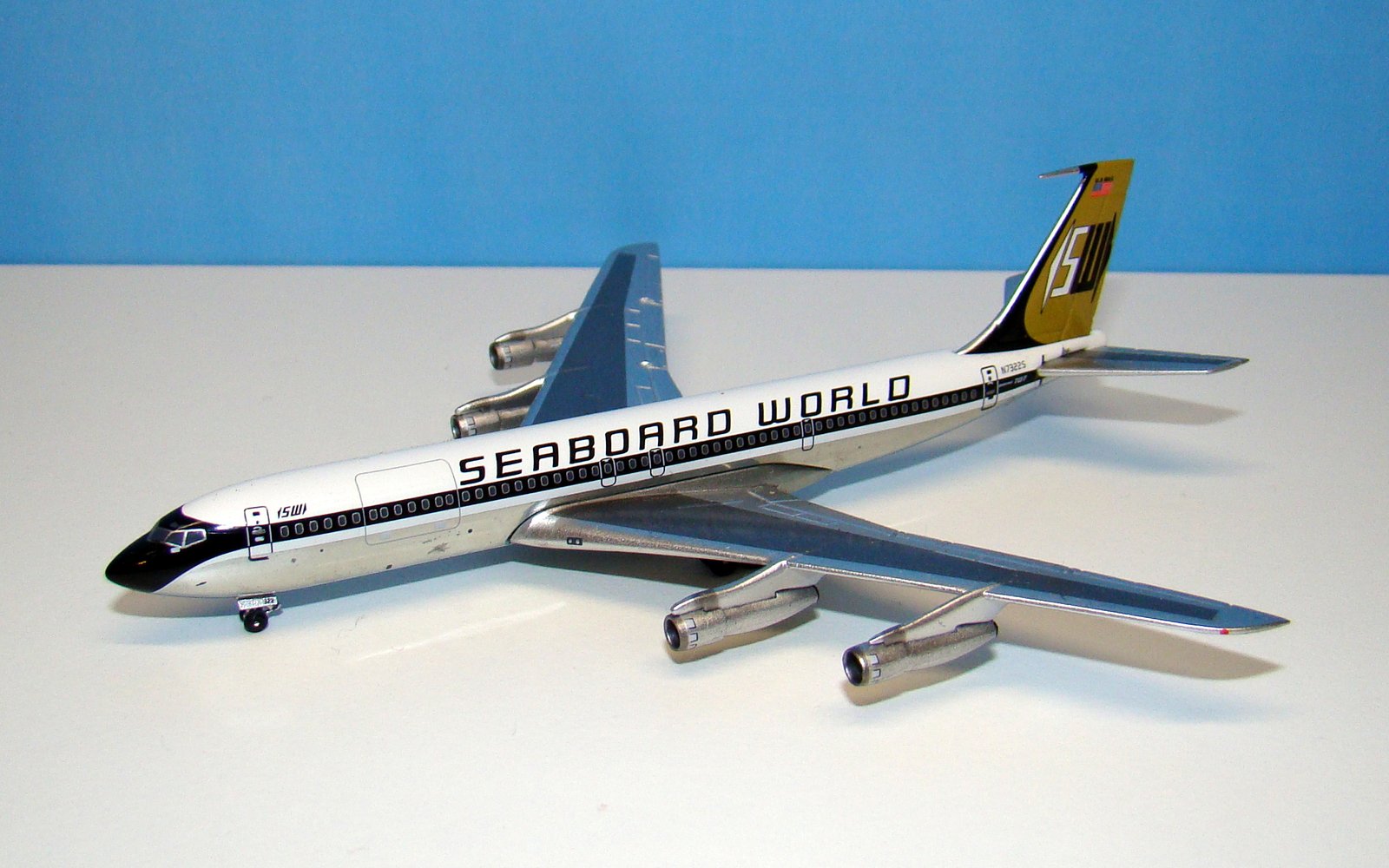
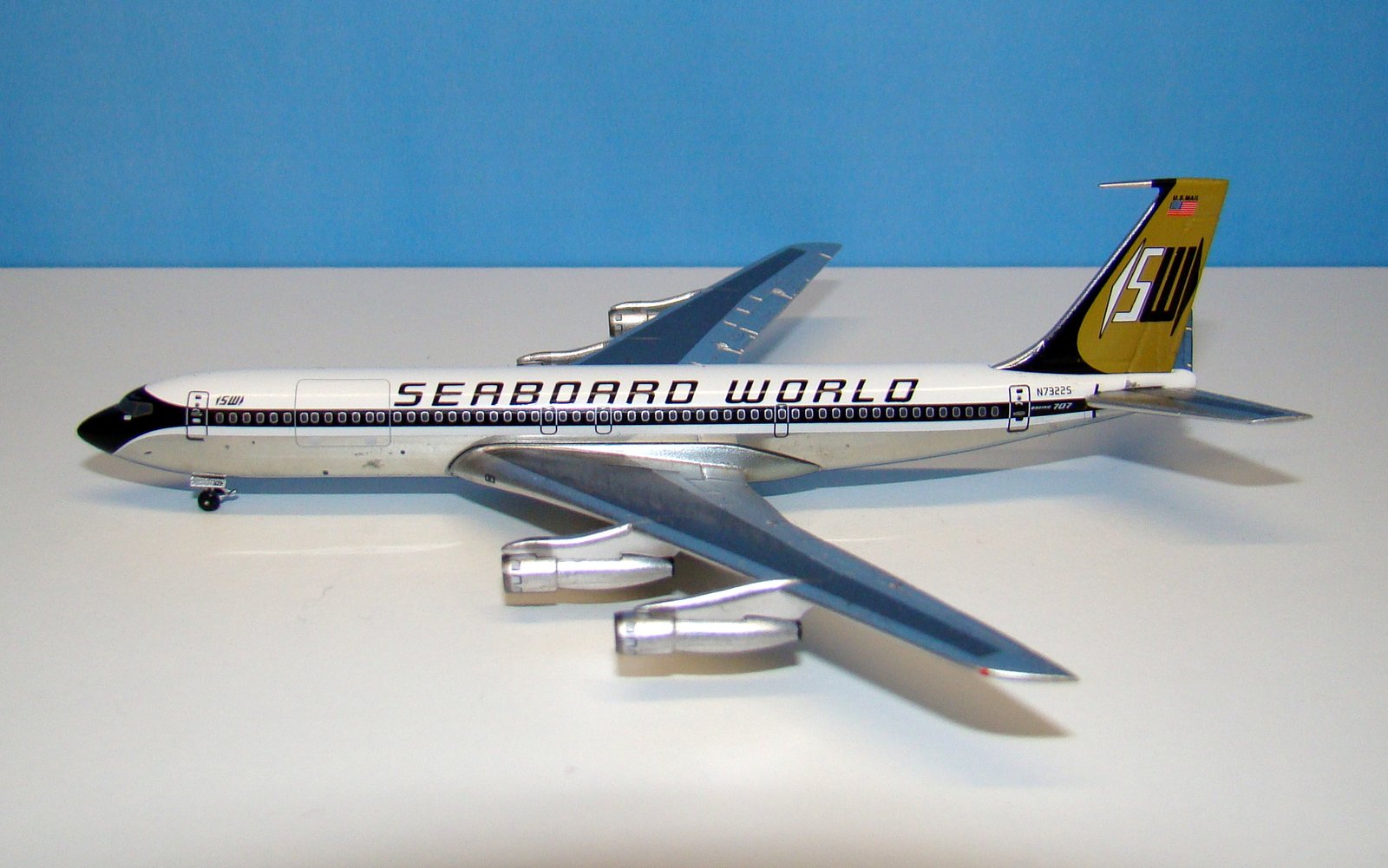
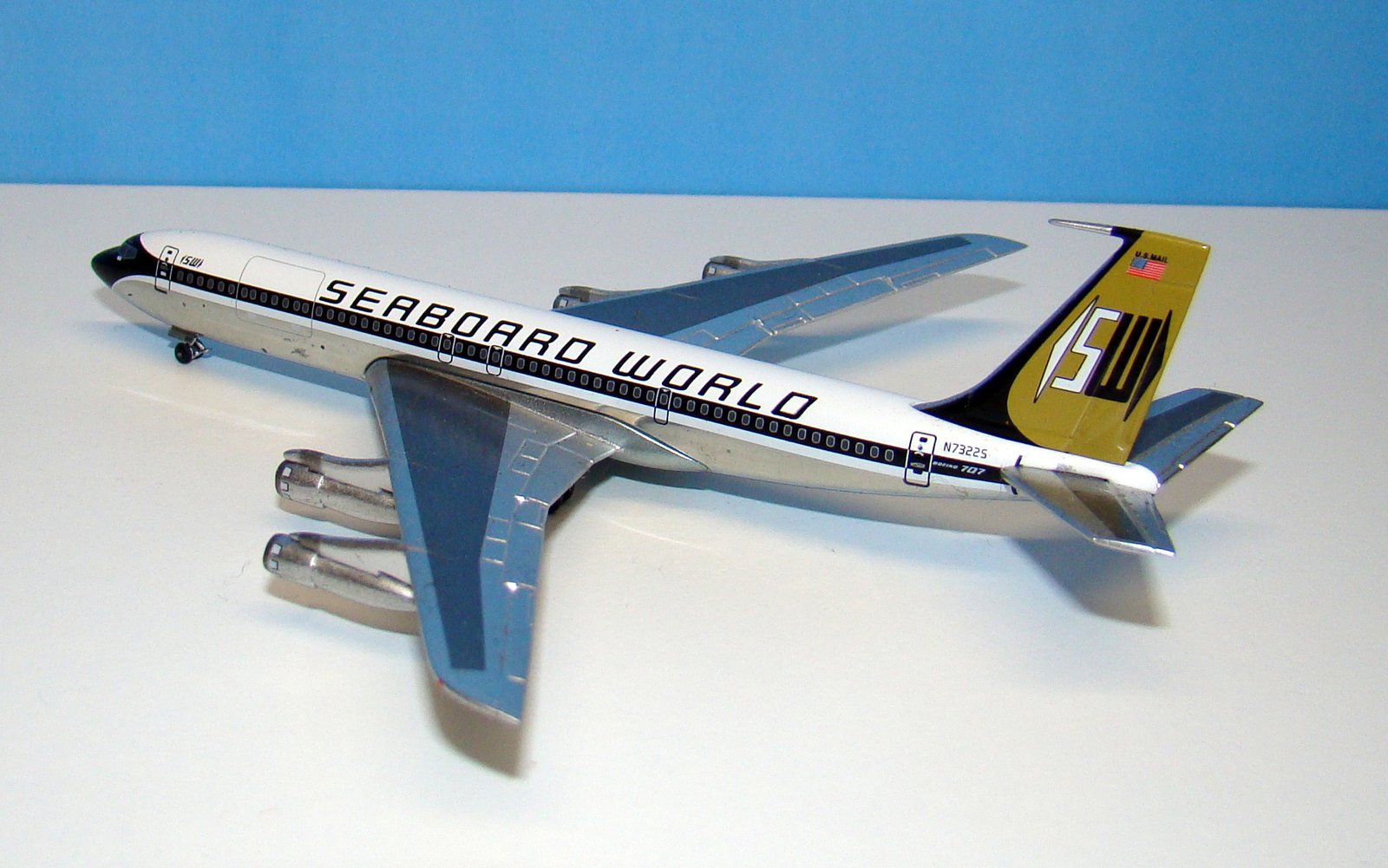
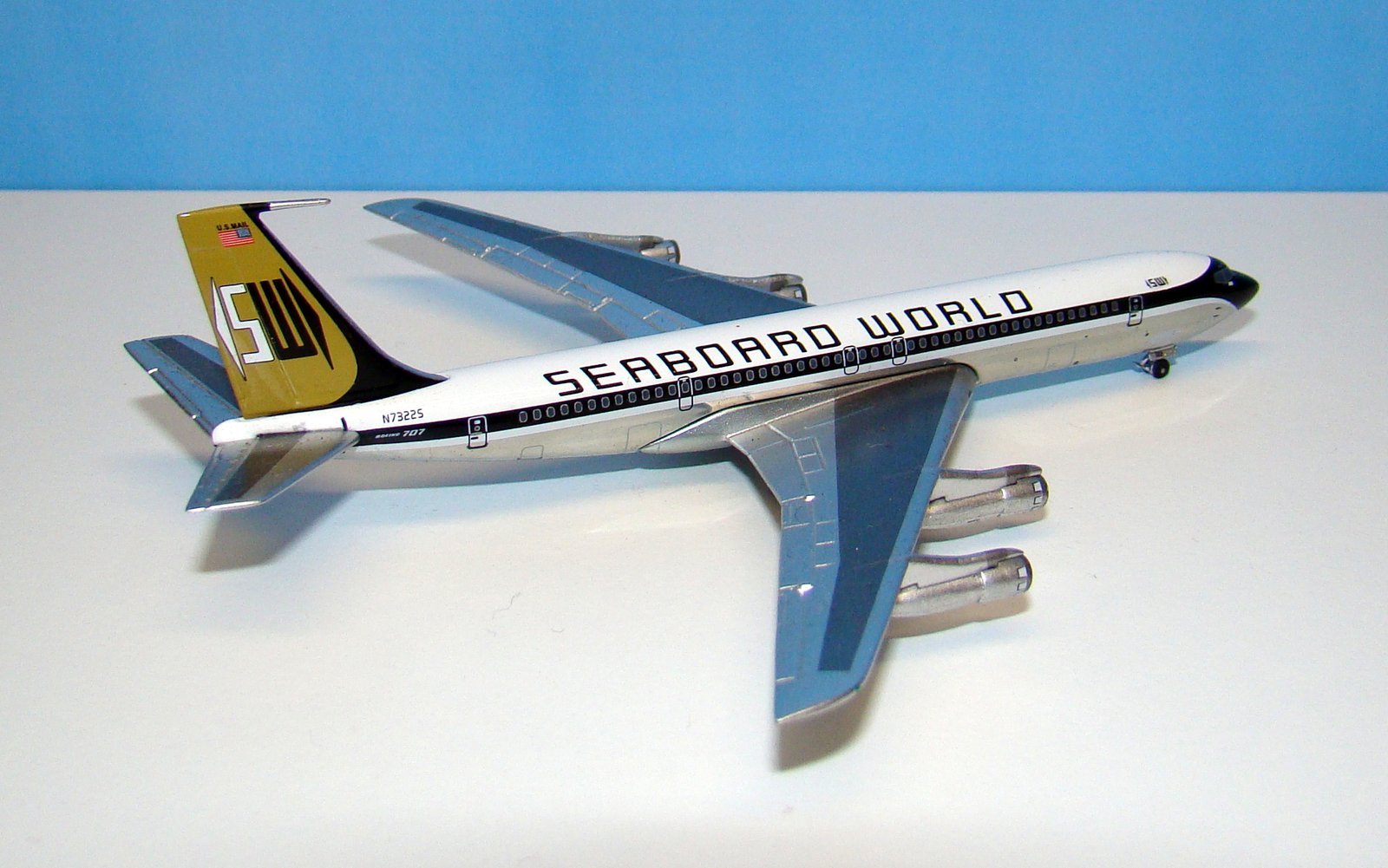
Seaboard couldn’t wait for the the new type however and interestingly went to Boeing and in the interim leased a pair of new 707-345Cs from VARIG. The aircraft joined the fleet as N7321S and N7322S in February and March 1968. They gained full Seaboard colours but remained in the fleet only until February and March 1969 respectively.
Seaboard World Airlines Boeing 707-345C N7322S Aeroclassics 1:400 Scale Model Airliner
Seaboard World Airlines Boeing 707-345C N7322S Aeroclassics 1:400 Scale Model Airliner
Seaboard World Airlines Boeing 707-345C N7322S Aeroclassics 1:400 Scale Model Airliner
Seaboard World Airlines Boeing 707-345C N7322S Aeroclassics 1:400 Scale Model Airliner
Seaboard World Airlines Boeing 707-345C N7322S Aeroclassics 1:400 Scale Model Airliner
Seaboard World Airlines Boeing 707-345C N7322S Aeroclassics 1:400 Scale Model Airliner
Seaboard World Airlines Boeing 707-345C N7322S Aeroclassics 1:400 Scale Model Airliner
The growth of the airfreight market meant that Seaboard’s own fleet was constantly changing during this period. The new DC-8-63s would provide some stability but even bigger things would come to pass during the 1970s.
References
2003, Dec. Seaboard & Western. Airliner World Woodley, C & Woods-Turner, B. 2013, June. Seaboard World: Global Freight Mover. Airliner World Waddington, T. Great Airliners Series Volume 2: Douglas DC-8