Iceland sits in a fortuitous position in the middle of the Atlantic Ocean. Wow Air is currently leveraging this benefit but it is hardly the first airline to do so. That accolade goes to Loftleidir Icelandic, which for many years found a way around the strict regulated transatlantic market to provide the world’s first low cost long haul scheduled service.
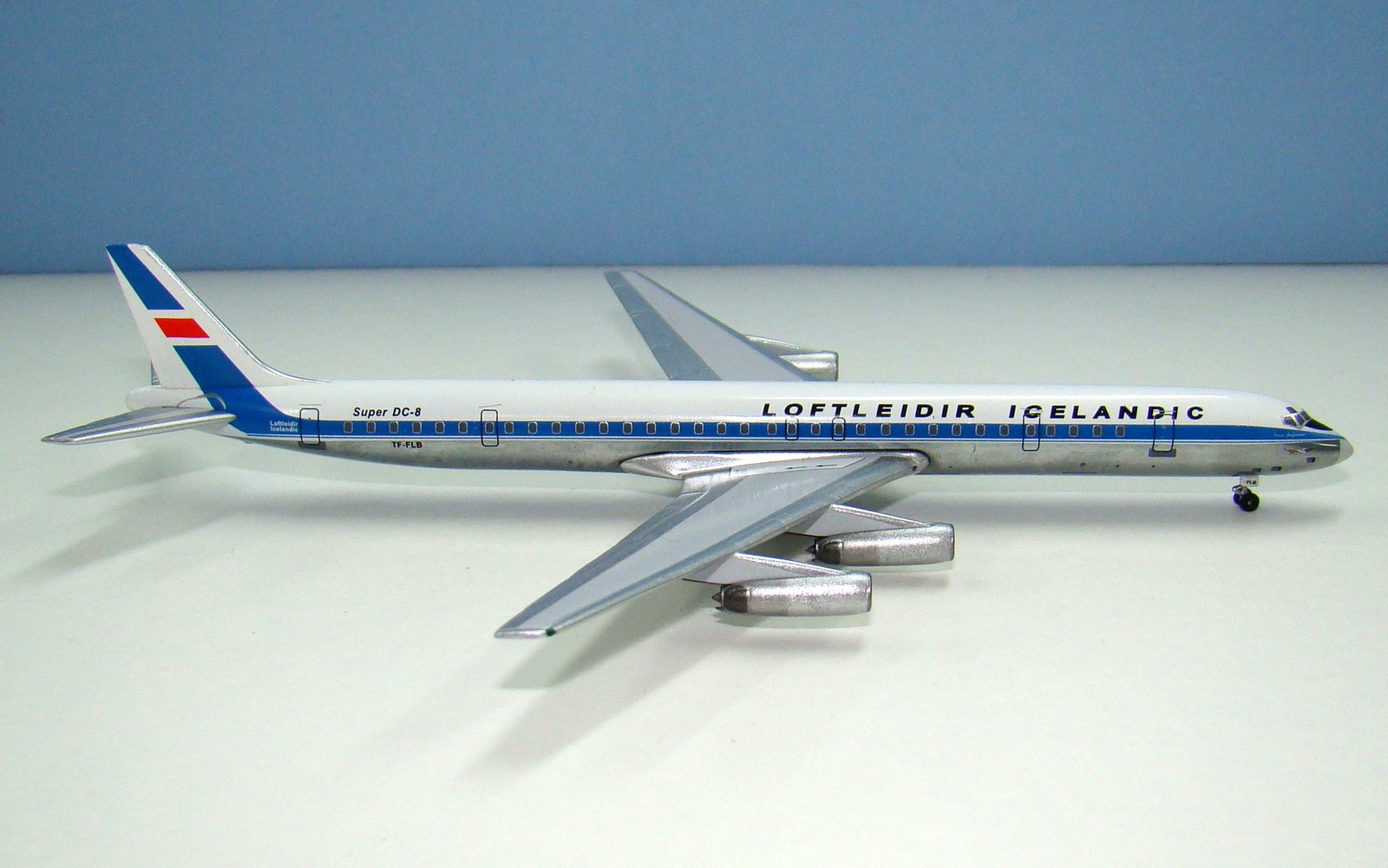
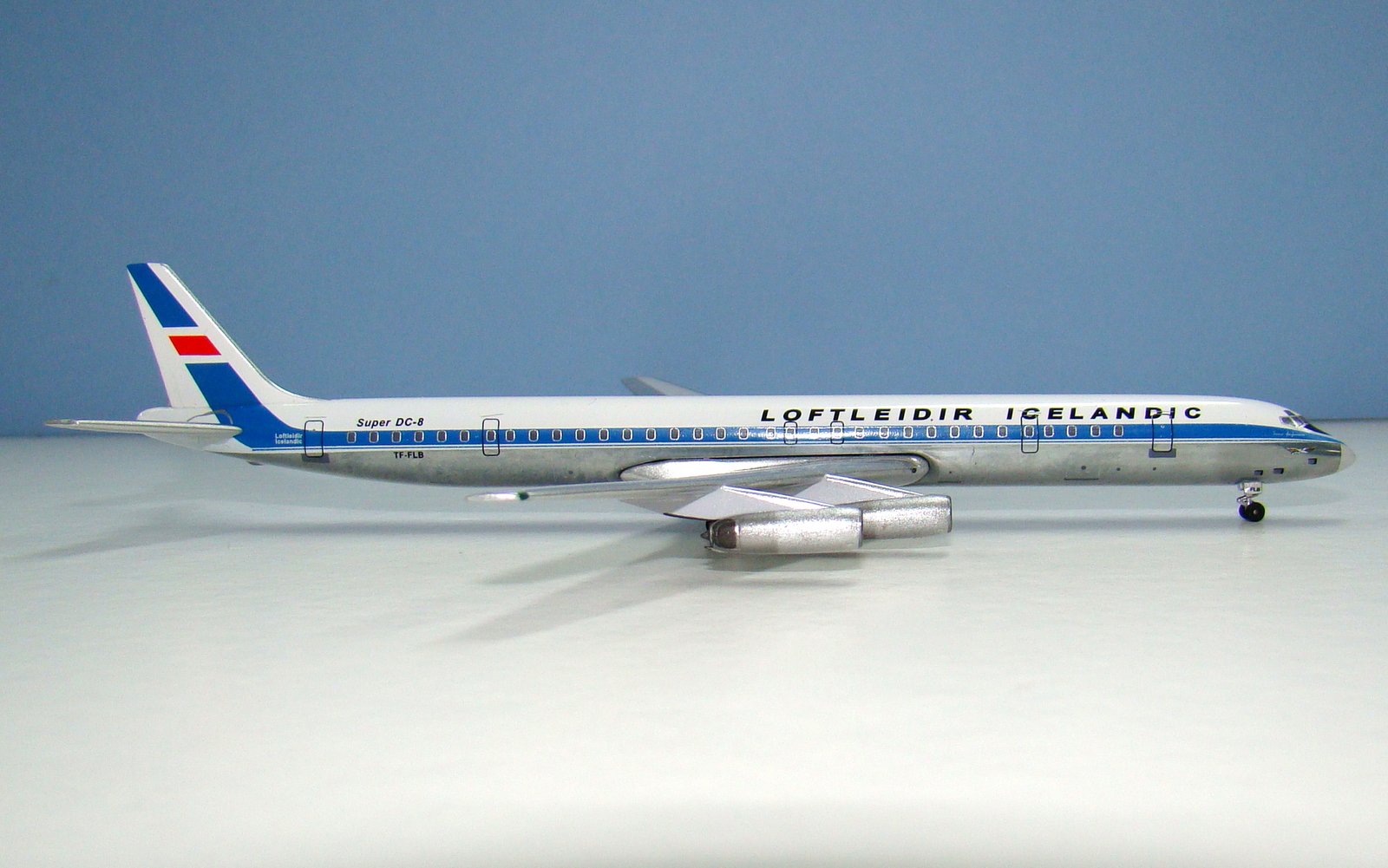
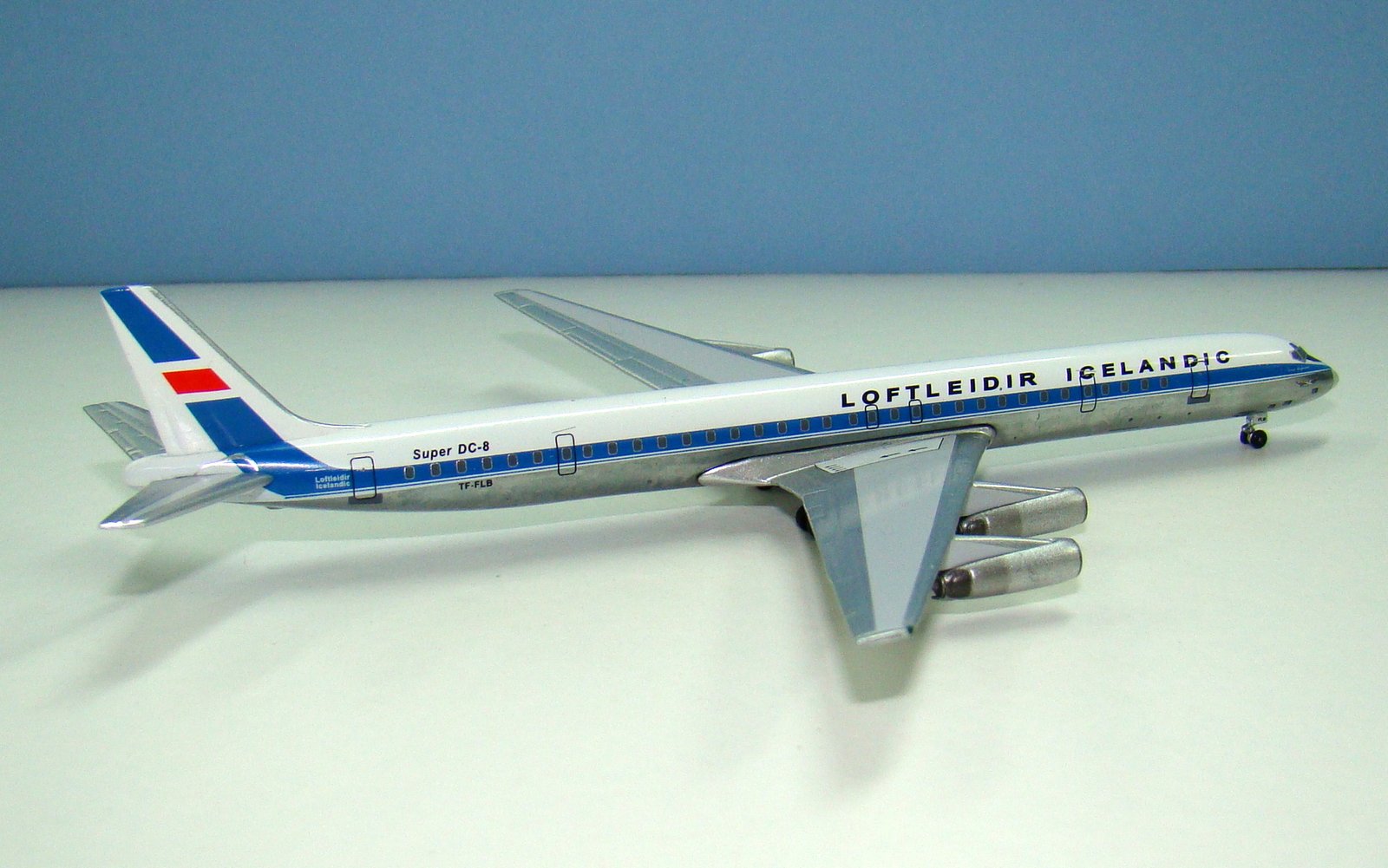
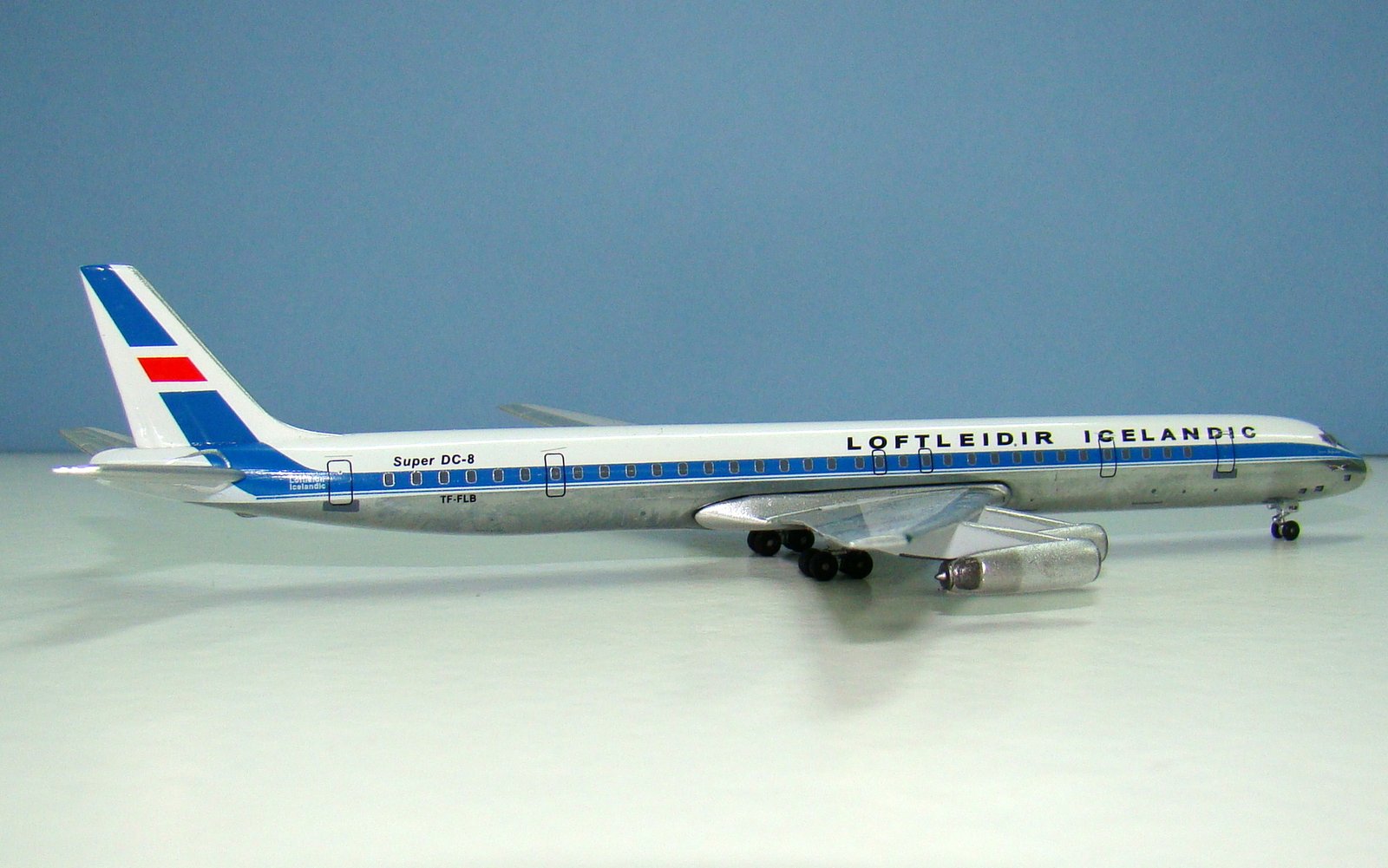
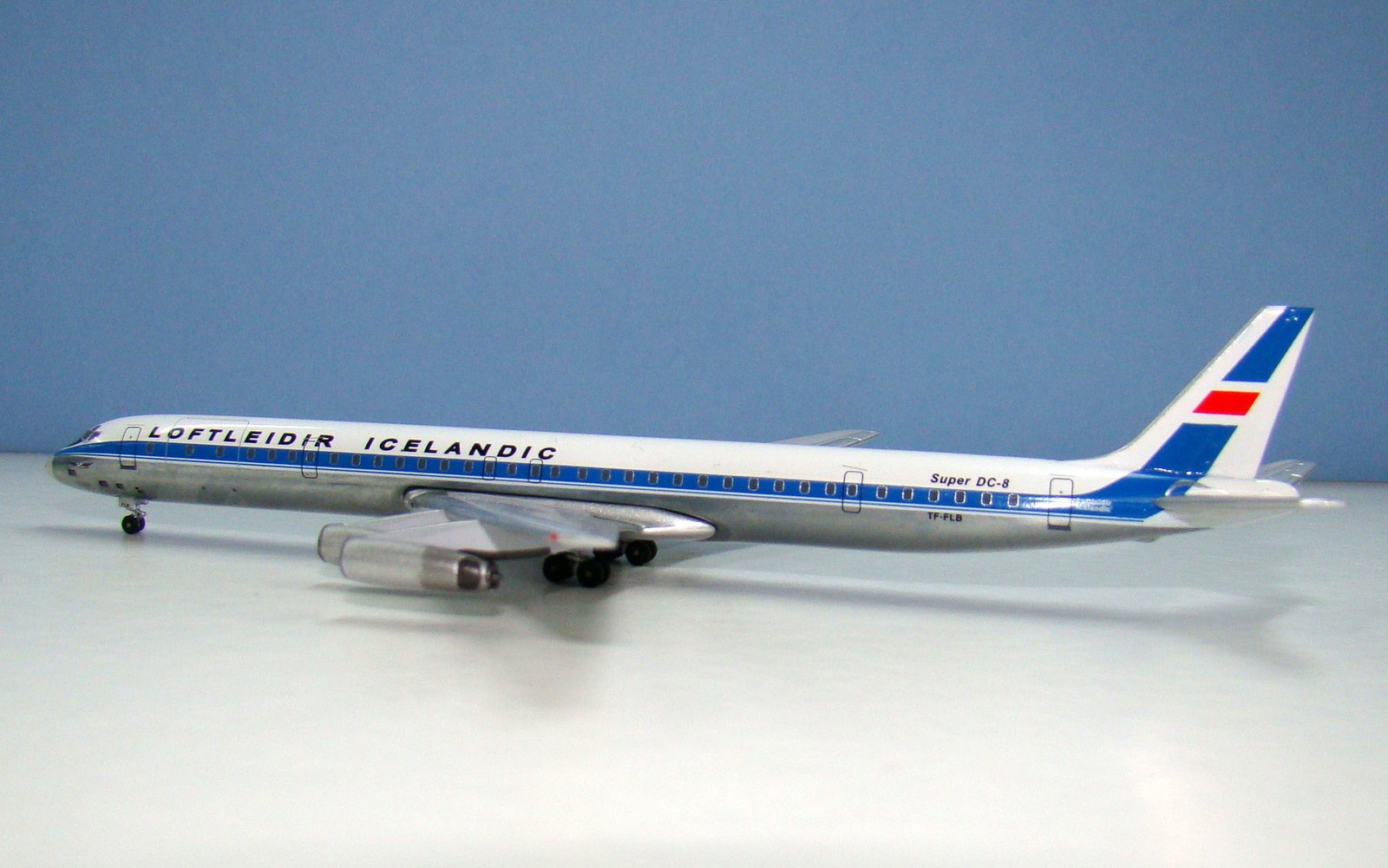
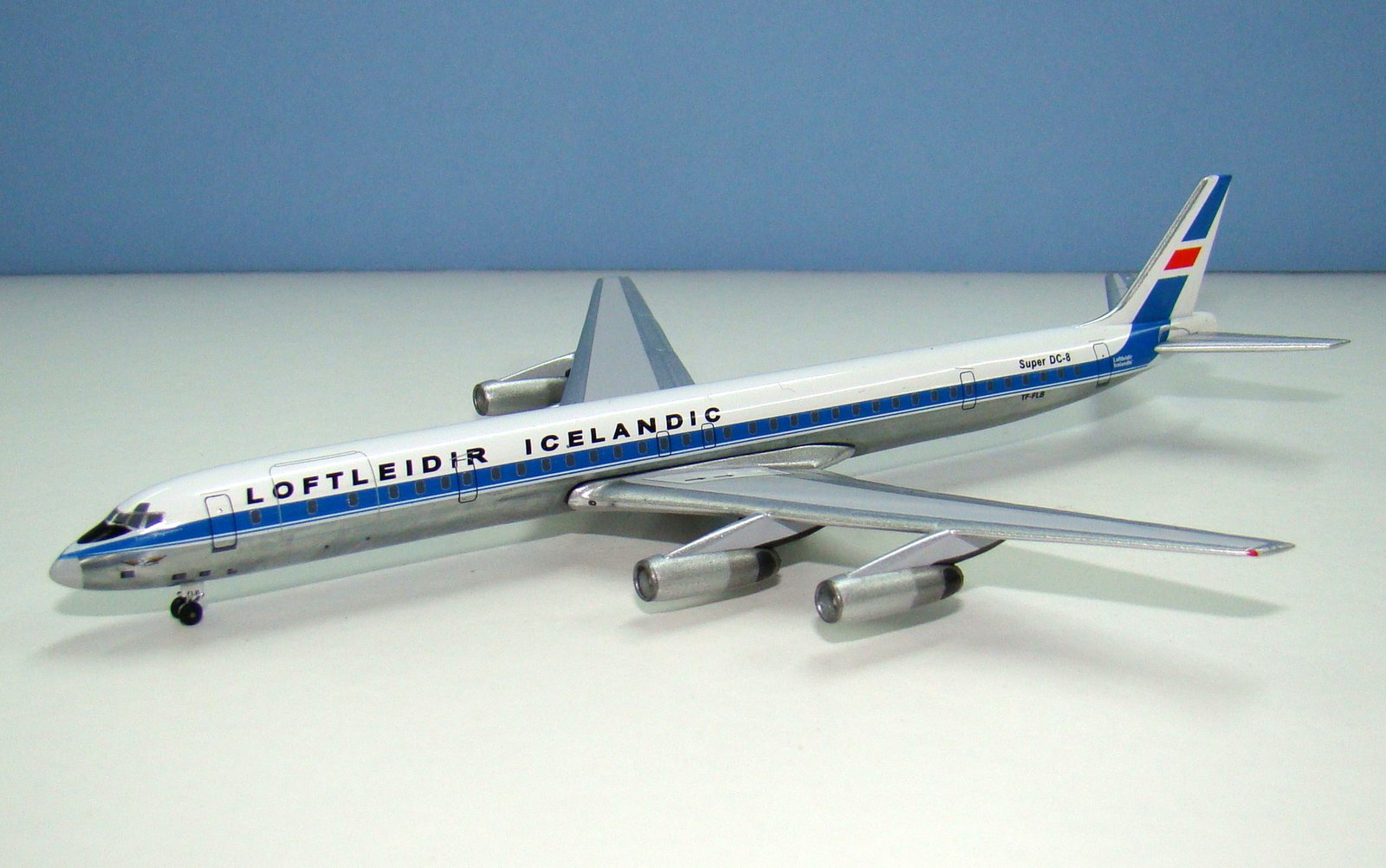
Loftleidir Douglas DC-8-63CF TF-FLB Aeroclassics 1:400 Scale Model Airliner
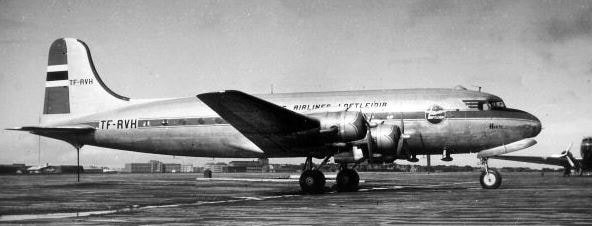
Loftleidir (advertised internationally simply as Icelandic Airlines) was formed as far back as 1944 by a trio of young pilots fresh out of training in Canada. They had by 1946 acquired a DC-4 and on June 17th 1947 the company started its first international route between Reykjavik and Copenhagen. It was the 1948 granting of permission to fly to New York from Copenhagen via Reykjavik that opened the door for the opportunity that would make the airline both famous, and notorious. Loftleidir’s success in dealings with the US FAA was aided by its president Hjalmar Finnson who had extensive experience doing business in the USA.
A Loftleidir DC-4. From the awesome Ed Coates collection
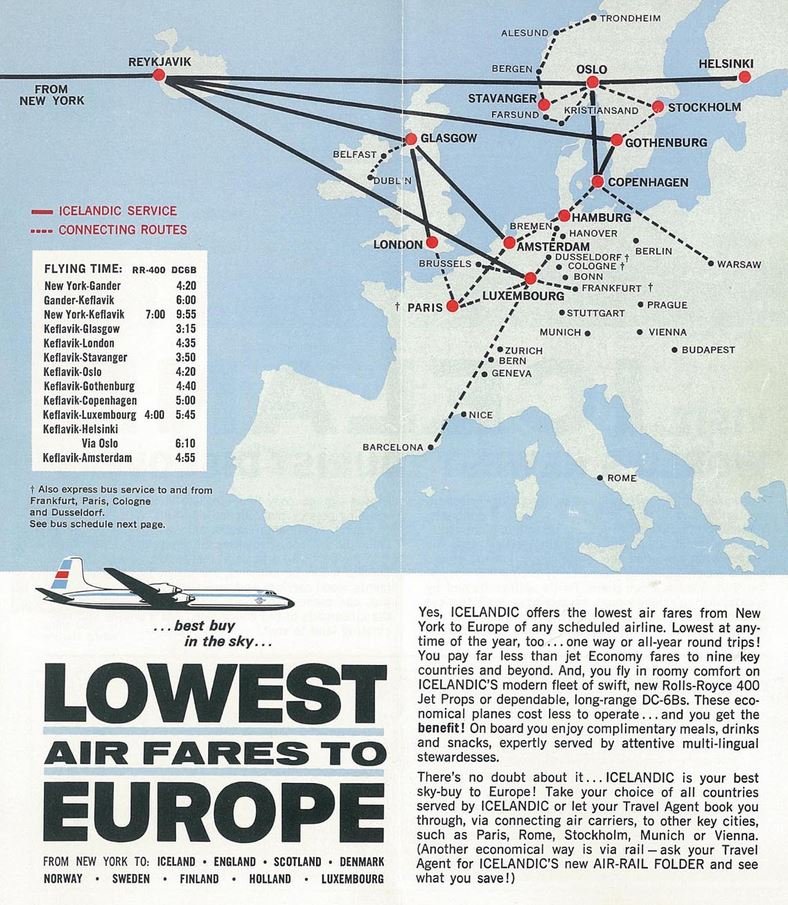
What was perceived as unfair treatment by the Icelandic government, vis a vis their domestic rival Flugfélag Íslands, led to Loftleidir’s cessation of all domestic services in 1952 and the concentration on long haul routes from Hamburg or Luxembourg via Reykjavik to New York. Later Amsterdam, Glasgow, Helsinki and Oslo were added.
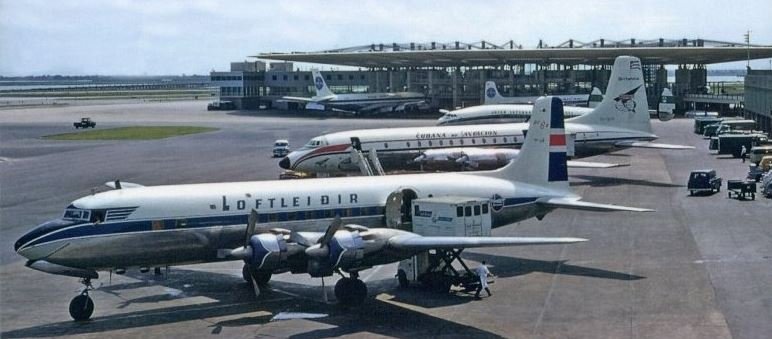
What a lineup at Idlewild! Front is a Loftleidir DC-6B
Sigurdur Helgason joined the board in 1953 and he was a strong proponent of the airline’s future strategy. As a non-IATA member Loftliedir did not have to obey the strict fare and service rules of the organisation and so could charge fares well below the norm.
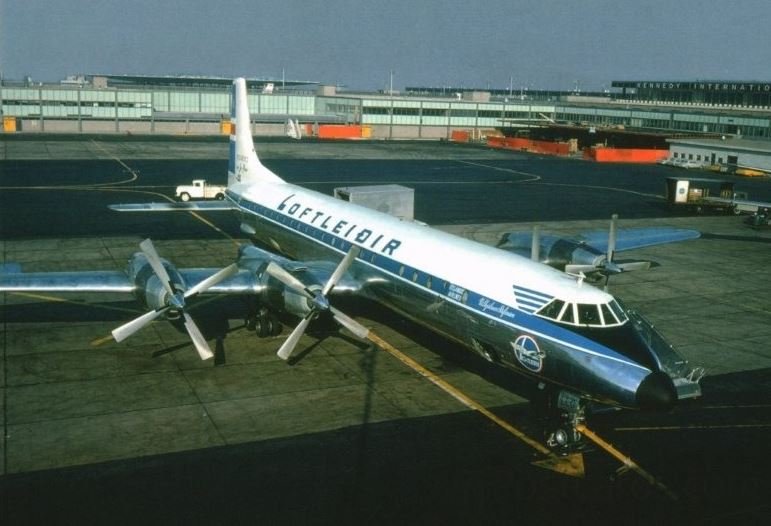
Success enabled the replacement of the DC-4s with 5 DC-6Bs acquired from Pan Am in 1960, however the airline’s star rose impressively in 1964 with the acquisition of its first Canadair CL-44. This giant turboprop development of the Bristol Brittania had not been a sales success. Loftleidir needed an aircraft it could afford, wouldn’t incur the wrath of the IATA jet operating airlines and still enabled it to make a profit.
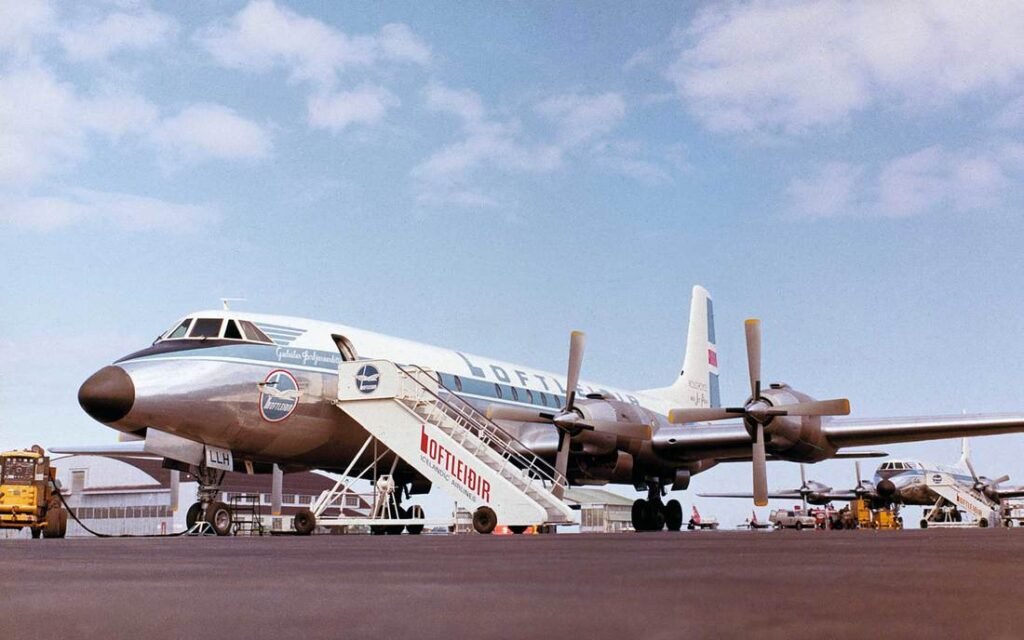
The CL-44 offered unparalleled freight capacity and in passenger configuration excellent efficiency. With everyone else competing with jet service only the outsider Loftleidir was willing to try it in passenger configuration. It offered them the perfect way to transport large numbers at low fares and Canadair had several leftover airframes it hadn’t been able to sell.
Picture courtesy of Icelandair.co.uk
The first aircraft, a CL-44D4-8 was delivered in May 1965 and was followed by a second, however Loftleidir saw even greater opportunity and requested that Canadair stretch the airframe. This created the CL-44J – the largest airliner flying across the Atlantic. With a 3.07m stretch ahead of the wings and a 1.55m stretch aft it could seat 29 extra passengers, although the increased weight necessitated the removal of the centre wing tanks and therefore range wasn’t quite as good as the standard CL-44.
TF-LLG at JFK
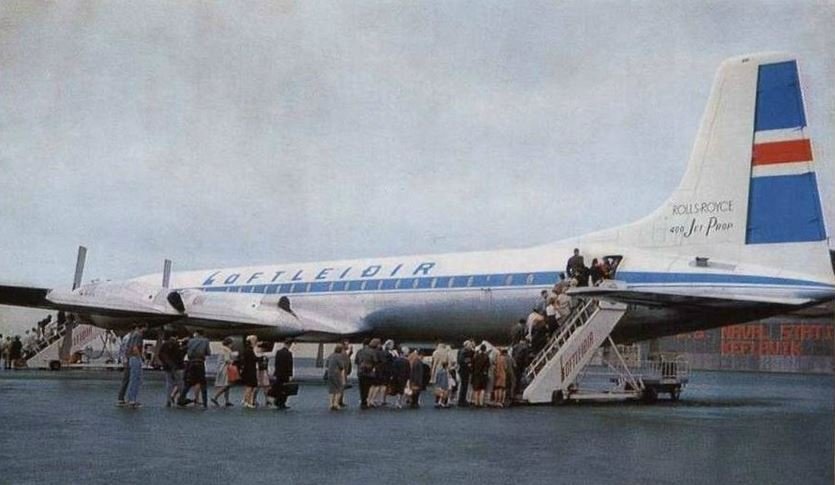
The three already delivered aircraft were converted into CL-44Js and the fourth aircraft was converted prior to delivery. Loftleidir called the new aircraft Rolls-Royce 400 Jet Props in an effort to make them more familiar to the US travelling public. The airline had been growing at an impressive rate, over 30% year on year, as it had found an enthusiastic market in US college students eager for cheap fares to Europe. The flights became known as ‘Hippie flights’ even by the airline, which aided the adventure by building a hotel in Reykjavik included in the package.
The new CL-44Js could carry up to 189 passengers however Loftleidir’s success hadn’t gone unnoticed. Not being an IATA member there was little direct action that could be taken against the airline, however many European airports refused to let Loftleidir operate its new CL-44Js at anything more than the capacity of their DC-6s i.e. 160 passengers.This forced Loftleidir to focus on the remaining airports that allowed full capacity operations. In Europe this was only Luxembourg.
Timetables images from the always excellent timetableimages.com
Nonetheless Loftleidir continued to make profits and in 1968 converted a former Flying Tigers CL-44D4-2 into full passenger configuration. Clearly even with the big propjets in service pure jets would have to be the airline’s future. The stretched Douglas DC-8 Super 60s most closely fitted the airline’s needs allowing high capacity and the capability for the airline to keep its price advantage. Discussions were held with Douglas about buying new aircraft but in the end a more economical path was found to the first jets.
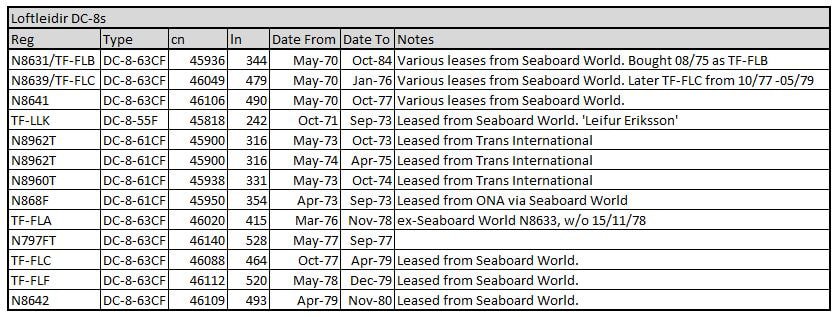
The US supplemental and cargo airlines (Capitol, ONA, Seaboard World etc) had spent heavily on DC-8-63s but with the wind down in Vietnam beginning the number of military trooping contracts was not as high as it had been. A wet lease deal was agreed with Seaboard World for 3 series 63s. One would be permanent for three years whilst the other two would be seasonal 6 month summer leases.
The DC-8-63CF delivery scheme
The first aircraft arrived on May 4, 1970 with all three in service by the end of the month. This wasn’t the only change either as in 1970 Loftleidir joined IATA spelling the end of its rebellious phase. Its fares remained low but not as low as they had been previously.
The CL-44Js left the fleet between 1970-72 all going to the new cargo airline Cargolux, within which Loftleidir was an investor. To compensate for their departure the DC-8 fleet was expanded. A series 55F was leased from Seaboard World for two years and introduced a modified jet livery. Icelandic Airlines still advertised itself as having ‘Lowest jet fares to Europe’.
Unsurprisingly the changing roster of DC-8s coming on and off lease led to various scheme variants during the 1970s. Unfortunately Loftleidir, which had been aggressively independent was less successful in the early 1970s due to the ongoing fuel crisis and increasing competition from Flugfélag Íslands. After a concerted effort by the Icelandic government the two airlines merged into one holding company, named Flugleidir, in 1973.
Loftleidir Douglas DC-8-63CF TF-FLB Aeroclassics 1:400 Scale Model Airliner
Loftleidir Douglas DC-8-63CF TF-FLB Aeroclassics 1:400 Scale Model Airliner
Loftleidir Douglas DC-8-63CF TF-FLB Aeroclassics 1:400 Scale Model Airliner
Loftleidir Douglas DC-8-63CF TF-FLB Aeroclassics 1:400 Scale Model Airliner
Loftleidir Douglas DC-8-63CF TF-FLB Aeroclassics 1:400 Scale Model Airliner
Loftleidir Douglas DC-8-63CF TF-FLB Aeroclassics 1:400 Scale Model Airliner
Loftleidir Douglas DC-8-63CF TF-FLB Aeroclassics 1:400 Scale Model Airliner
Loftleidir Douglas DC-8-63CF TF-FLB Aeroclassics 1:400 Scale Model Airliner
Loftleidir Douglas DC-8-63CF TF-FLB Aeroclassics 1:400 Scale Model Airliner
Loftleidir Douglas DC-8-63CF TF-FLB Aeroclassics 1:400 Scale Model Airliner
Loftleidir Douglas DC-8-63CF TF-FLB Aeroclassics 1:400 Scale Model Airliner
Loftleidir kept its own identity and the DC-8 fleet expanded, with several aircraft acquiring Icelandic registrations. This seeming independence couldn’t continue however and in 1979 Icelandair was formed as the combined name of Loftleidir and Flugleidir when the latter, despite being the smaller of the two, acquired the former in totality. Icelandair continued the business model of Loftleidir using the DC-8s to fly to Luxembourg.
TF-FLC in the late 70s scheme. Photo by Udo Haafke from Wikipedia
Loftleidir during the 1950s and 60s defined the concept of low cost scheduled long-haul services using its unique geographic position and non-IATA membership firmly to its advantage. It is not surprising that both Icelandair and more recently WOW Air have continued this strategy albeit with much more efficient aircraft.