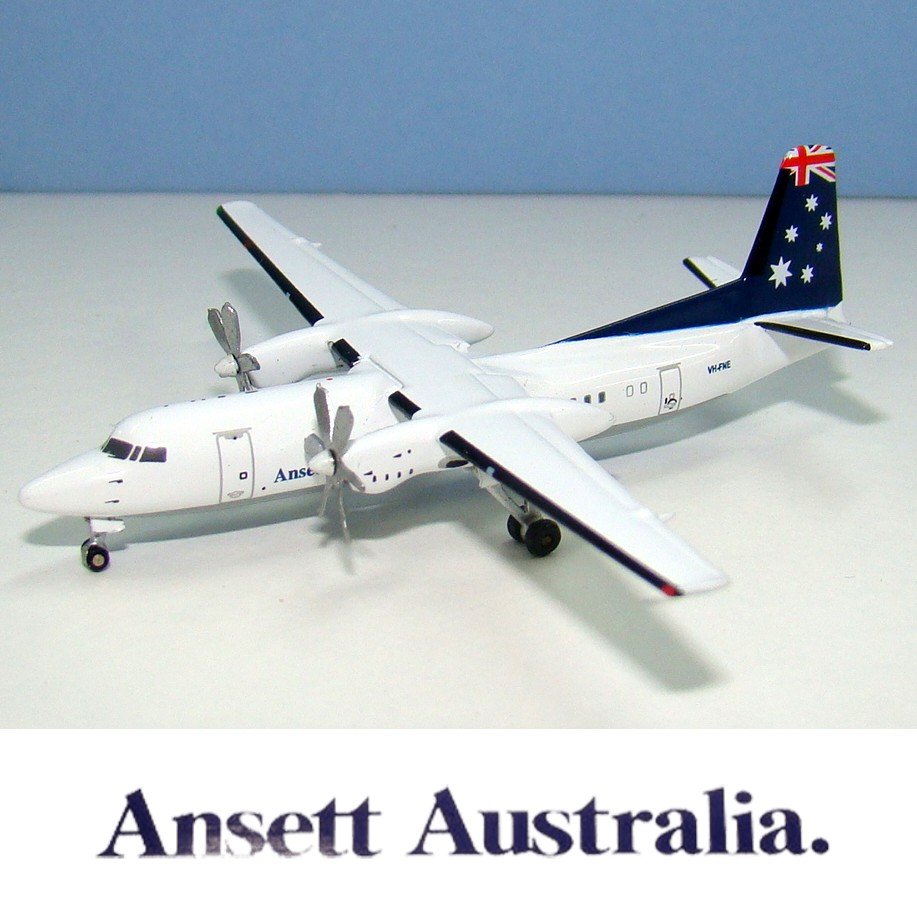
The Fokker F27 had a long and distinguished career in Australia with the government airline, Trans Australia Airlines, and its private competitor Ansett. With the F27s reaching the end of their lives in the mid-1980s Ansett was casting around for a replacement and not surprisingly its modernised sister the Fokker 50 fitted the bill. Unfortunately the F50s were overtaken by events at Ansett and it wouldn’t really be until they went out west that they found their raison d’être.
As discussed in an earlier entry (seeAnsett’s 1980s Re-equipment Binge) Ansett entered the 1980s in rude health with new ownership and a flamboyant CEO in Peter Abeles. Increasingly Ansett’s turboprop needs were serviced by its regional airline associates, which after a brief flirtation with independence where realigned with the new Ansett Southern Cross brand. Airlines of Western Australia became Ansett WA, Airlines of New South Wales : Air N.S.W, Airlines of Northern Australia : Ansett N.T. with only Airlines of South Australia keeping its name. The existing Fokker 27 fleet was largely transferred to the regional affiliates during the 1960/70s but did sometimes see further service with the parent.
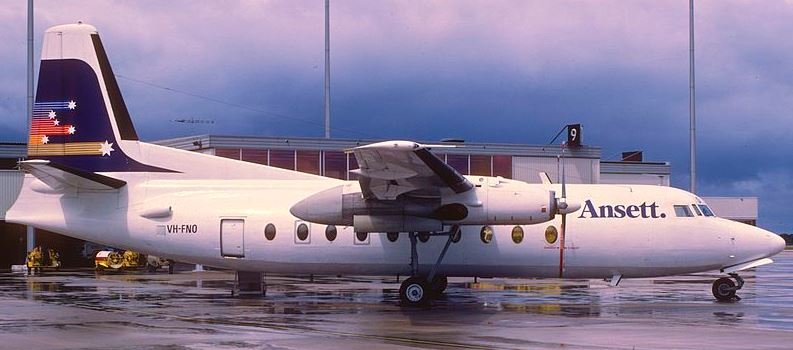
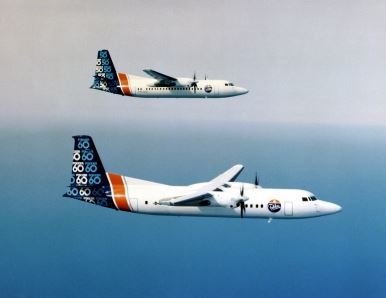
Fokker began to look at a replacement for the popular Fokker F27 in 1981 with the F50 programme kicking off in 1983. The Fokker 50 first flew in December 28, 1985. Though looking vaguely similar to the F27 the F50 was heavily updated with new undercarriage, engines, electronic flight information system (EFIS), wing ailerons and tips and new forward passenger door and airstairs. The F50 in the end shared only 10% commonality with the F27.

Fokker was naturally very keen to sell the F50 as a replacement for F27s and the first customers were both F27 operators. These were DLT of Germany and Ansett. Abeles signed the first order for 15 F50s on February 12, 1985 and then at the 1985 Paris Air Show, along with orders for A320s, expanded that purchase to 22 units with many of the aircraft being destined for a joint TNT/News Corp/Leslie Hong leasing company. This was to be US based, named Corsair and presumably would market the F50s locally in the US.
This expansion was in line with Ansett moving into becoming a global aviation company, part of which would be leasing. I’m not sure what went down but this part of the plan never happened and these F50s were never delivered. In fact despite the F27’s success in the USA (at least as the Fairchild F-27) and the massive growing marketplace for commuter aircraft the F50 was never certified with the FAA in the USA and didn’t make any sales there. This is quite amazing considering how successful the competing Saab 340, de Havilland Canada DHC-8 and ATR-42 were.
Even the British ATP made some sales in the USA and it isn’t as though the Fokker 50 was a failure. In the end 213 aircraft were built, but you can only imagine how many would have been made if they’d broken into the USA. It seems Fokker learned from their mistake and aggressively targeted sales of the F100 in the USA resulting in large orders from USAir and American.
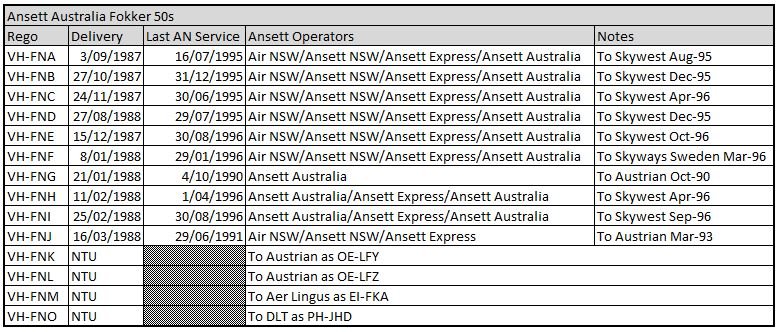
The delivery of the first production F50 was to DLT on August 7, 1987. Ansett received their first aircraft soon afterwards on September 3. This aircraft was registered as VH-FNA. Deliveries continued at about one a month into the new year. By mid-March 9 aircraft were in service with a final frame (registered out of delivery sequence as VH-FND) arriving in August. These ten aircraft then made a sequence running from VH-FNA-J. At least 4 other aircraft briefly gained the regos VH-FNK/L/M and O but were not taken up. Two went to Austrian Air Services, 1 to Aer Lingus and another to DLT.
Initially several of the F50s gained standard Ansett titles but the five earliest aircraft (plus the two last) were quickly transferred to Air N.S.W. As their name suggests they were configured to seat 50 passengers and replaced the older Fokker F27s, which readily found new homes at airlines like Mesaba, AirUK, Ladeco and Pakistan International. The remaining F50s stayed with Ansett itself, based at Melbourne with VH-FNH and FNI being utilised for example on Tasmanian services like Melbourne-Devonport and Launceston.
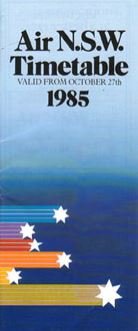
The first aircraft (FNA) was actually originally repainted with Air N.S.W titles on the port side only and used on a 14 day 23 airport tour of the Air N.S.W route network. She operated her first service, between Sydney and Dubbo on November 16. In service it sounds like at least initially the Fokker 50s had many technical teething issues with such things as “prop de-ice, EEC’s, PEC’s, battery chargers, AHRS, MFC’s, weather radar (most unreliable rotable in the system), cockpit lighting dimmers” etc. Apparently it gained the nickname the “Euroglider”.




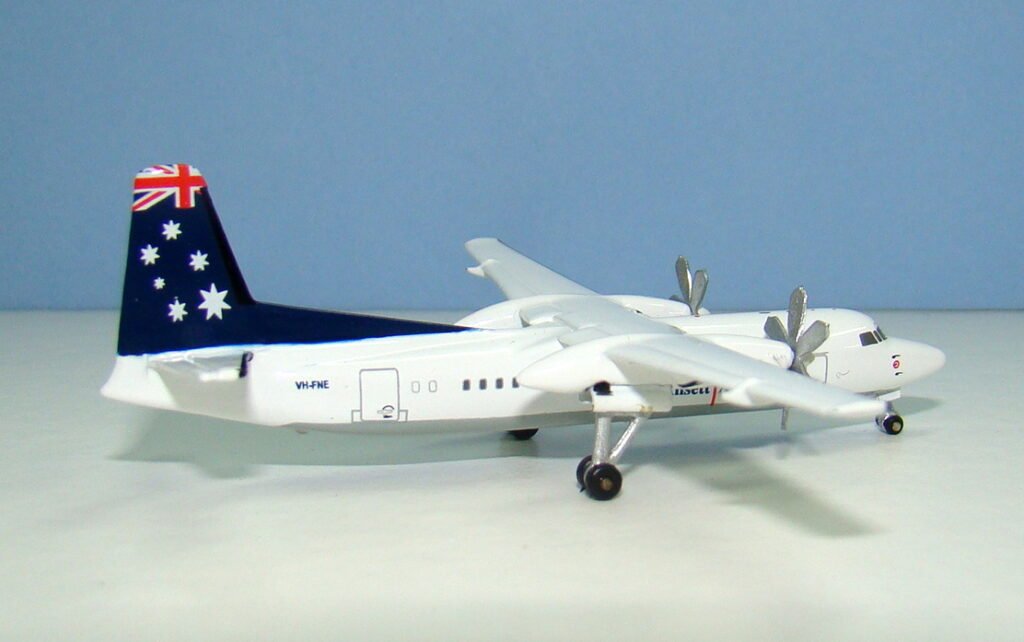


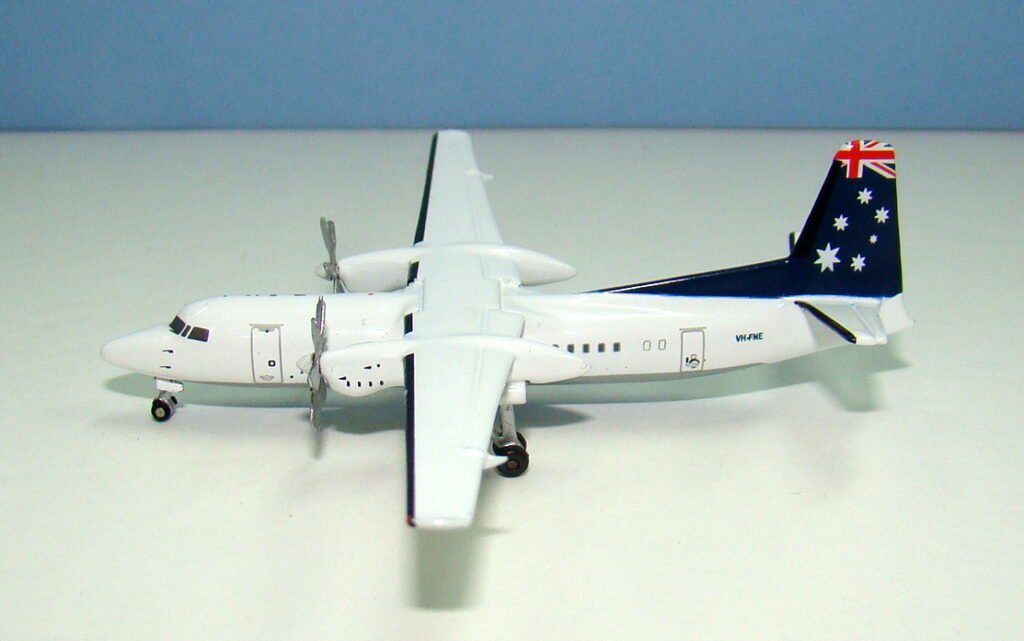

I assume these initial issues were ironed out but in 1989 the Australian Pilot’s Dispute hit and between August 18, 1989 and mid-January 1990 the civil aviation network in the entire country effectively ground to a halt. Since almost all pilots were involved Ansett’s Fokker 50 operations were accordingly hit too. At least one of the F50s (VH-FNG) saw very little usage after the strike and was leased to Austrian Air Services in October 1990. She didn’t return to Australia until 1995.
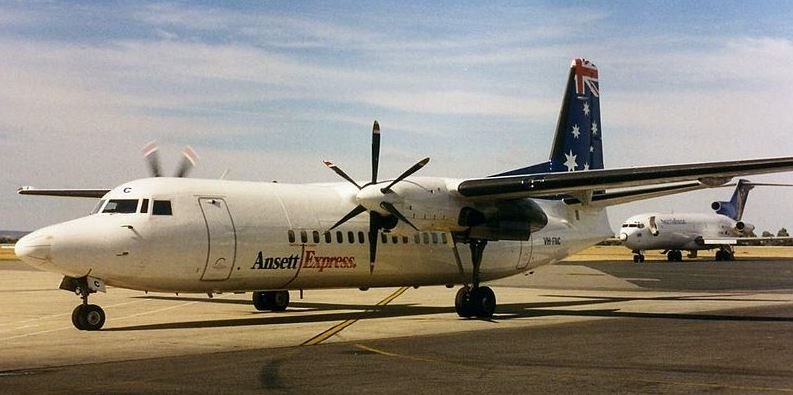
In fact it seems Ansett was keen to remove the F50s with rumours of attempts to sell at least two to Airlines of Tasmania. They continued in service with Air N.S.W however Ansett’s regional airlines were undergoing an overhaul and during 1990 Air N.S.W was renamed twice. First to Ansett N.S.W in March and then to Ansett Express in November. The F50s found themselves often used on the Sydney-Canberra-Melbourne shuttle services.
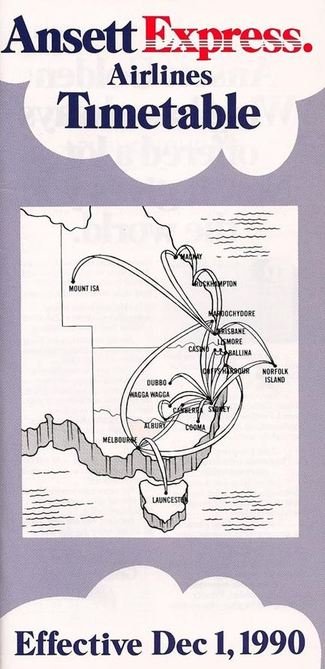
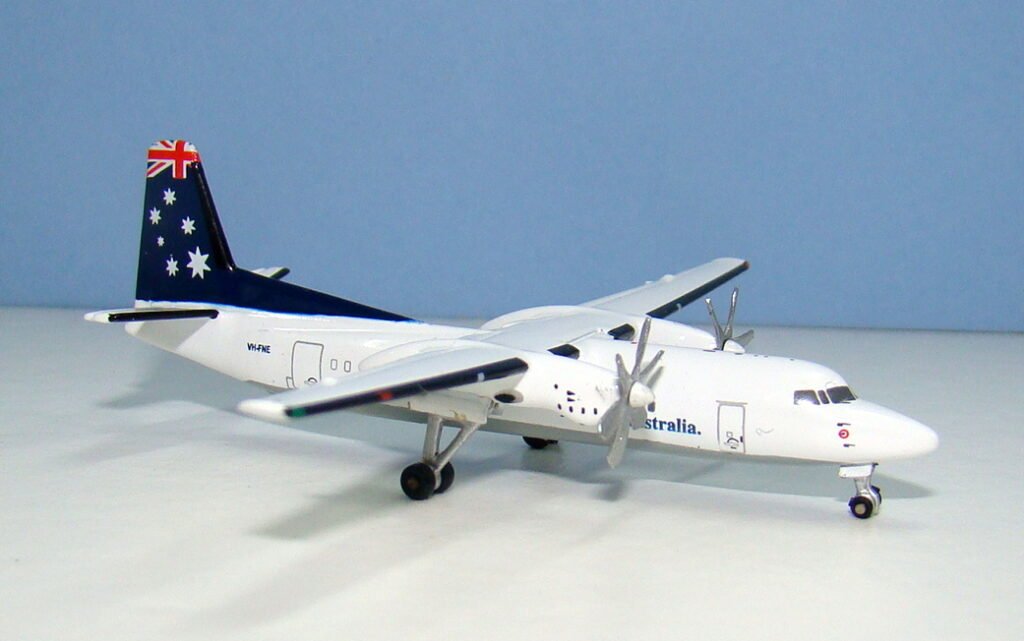
Ansett Express survived only until October 30, 1993 when it was merged into Ansett Australia’s mainline operations. By then the F50’s days were numbered as turboprop operations didn’t suit the new Ansett. In June 1993 several aircraft (VH-FNE, FNF, FNH) were repainted into the colours of a new Indian startup known as Rajair. The agreement never went through, though one aircraft did reach India, and indeed Rajair never flew. The aircraft gradually returned to service but FNE for example wasn’t back until September 1994 after being out of service since April 1993. Another aircraft (VH-FNJ) was leased to Austrian in March 1993 leaving 8 with Ansett.
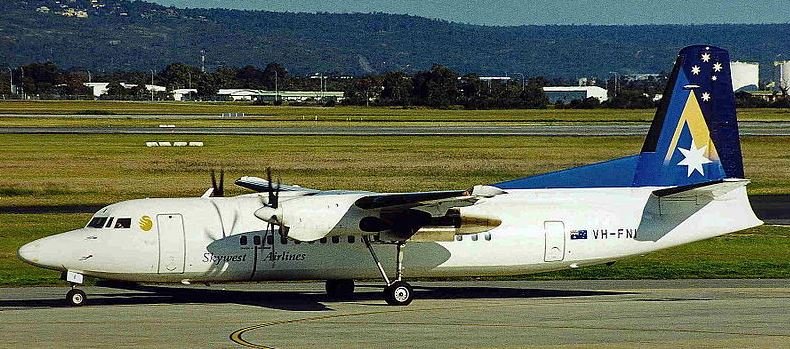
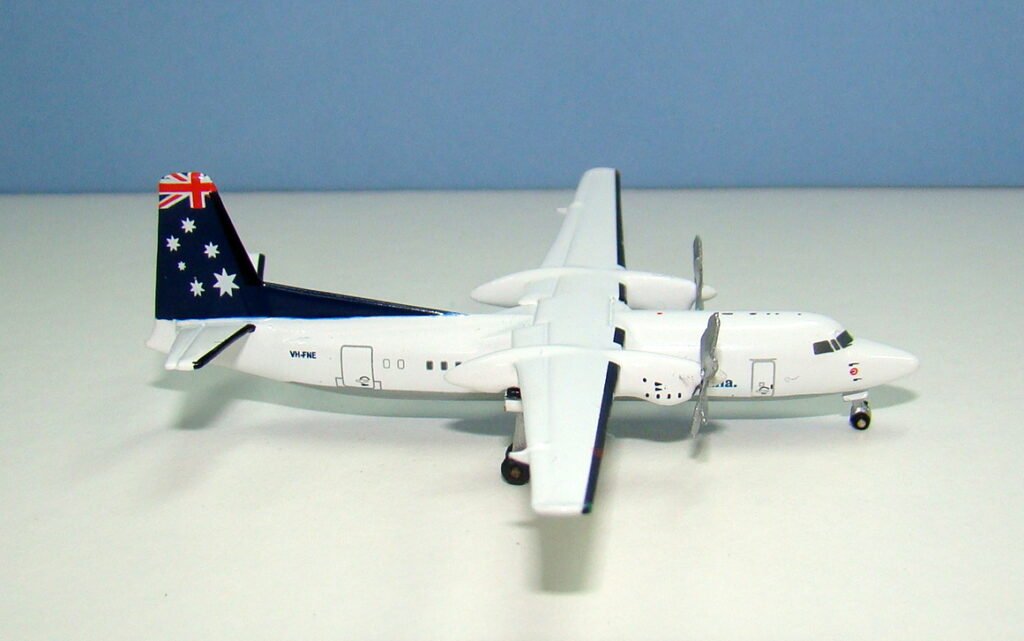
Ansett’s F50 operations continued into 1995 with aircraft sometimes leased to Flight West Airlines and then all gradually being leased by Ansett regional affiliate Skywest Airlines. Their Ansett careers were not totally over however and VH-FNI was returned from Skywest in June 1996. She operated the final Ansett F50 service, and indeed the final Ansett turboprop service of all time, on August 30 between Ballina and Sydney. The aircraft continued in service with Skywest operating as an Ansett feeder though several were leased to Skyways of Denmark in the late 1990s. Skywest continued operating four or five of the F50s and survived Ansett itself to eventually become Virgin Australia Regional in 2013. They ended F50 services on February 27, 2016 using VH-FNH fittingly still painted in Skywest colours. By then the F50s had operated in Western Australia since October 1994.

References
Aussie Airliners Fokker 50
Fokker 50. Dutch Aviation.
Ansett’s Golden Years. Aussie Airliners
Ansett & the Fokker Friendship. PPRuNe.org
Farewell Fokker 50: end of 21 years’ service in Western Australia: 27 February 2016. AviationWA