Lockheed’s Constellation programme was a great success both for civilian and military marks but coming towards the end of the 1950s the age of the piston liner was swiftly drawing to a close. Lockheed understood this but the airlines, locked in a battle for transatlantic supremacy, were keen to keep their foot full on the throttle and wanted bridging equipment. Both Lockheed and Douglas were in a position to provide it.
In hindsight both the Lockheed L-1649 Starliner and the Douglas DC-7C were really colossal wastes of money as the aircraft were expensive and gave a relatively small advantage over the existing equipment for the space of just a few years. Temperamental at the best of times, since they were both pushing piston engine technology to the limits, neither type saw long service, due to the sea of jets coming into play, or had particularly useful lives on the second-hand market, where the DC-6 was more suitable. Nevertheless at the time it was far from clear that jets were the immediate future and both the manfacturers were only responding to customer demand.
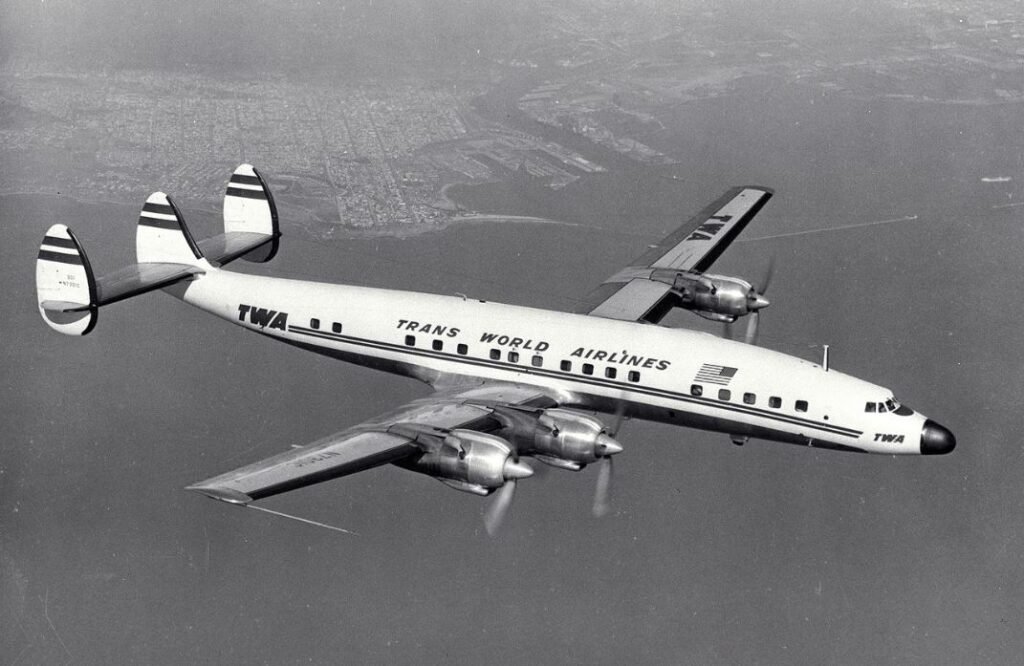
N7301C on a test flight. Photo from Wikipedia
Pan Am had been working with Douglas on the new DC-7Cs since 1954 and this meant naturally that its fierce competitor TWA was in need of a response to the challenge the Seven Seas presented. Initially Lockheed was keen on a turboprop version of the Super Connie, known as the L-1449, and in fact TWA ordered (through Howard Hughes’ company Toolco) 25 of these in December 1954 for $50 million, even though it was clear that the type was not financially viable and would be a major loss maker. The L-1449 was dropped when Pratt & Whitney cancelled the PT2 engine project, but this was replaced by a L-1549 with Allison turboprops. The turboprop versions proved unviable as neither the engines were available or could structurally be accommodated. In the end Lockheed returned to piston engines (Wright 988TC-18EA-2 Turbo-Cyclone compounds) and redesignated the model as the L-1649.
Lockheed were still not overly keen on developing the new airliner and in April 1955 informed TWA that they wished to cancel it. TWA’s mercurial leader Howard Hughes was not interested in cancellation though and held Lockheed to the contract he’d signed. This is especially curious as not long after TWA had ordered the Starliners Pan Am ordered (in October 1955) 25 DC-8s and 20 707s. In addition the entire TWA engineering department was against the L-1649 purchase. Hughes it seems was focused on the proposed speed advantage the L-1649 would have and when he realised that the 707 would ruin the chances for it he didn’t have the heart to cancel the aircraft. Hughes may have been many things but he was also a man of integrity and he saw the L-1649 order as a moral obligation.
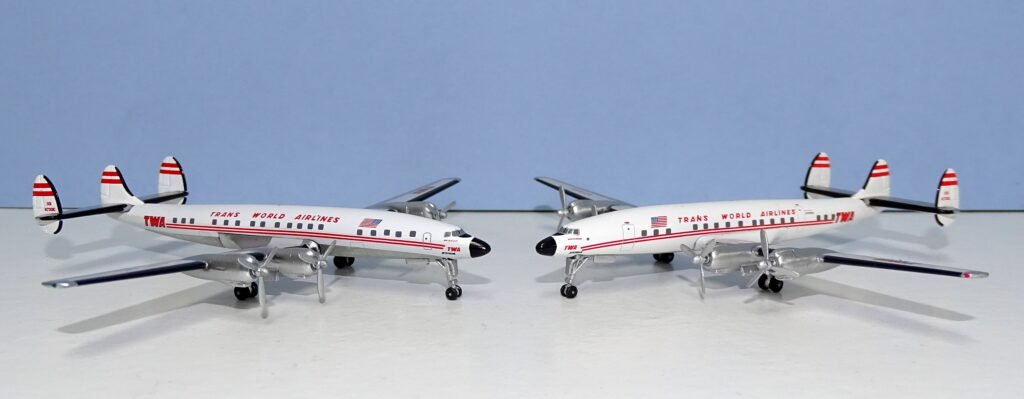
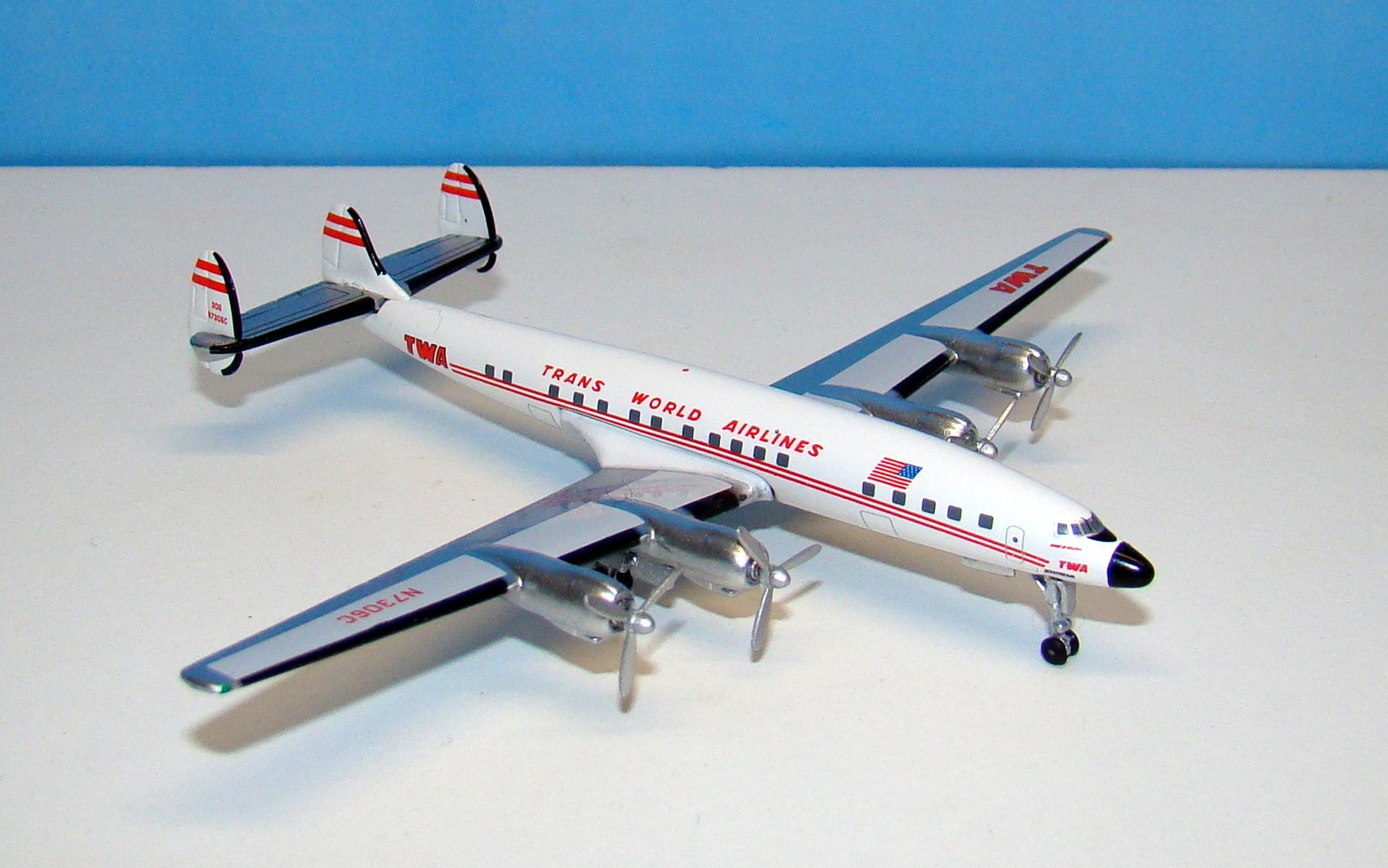
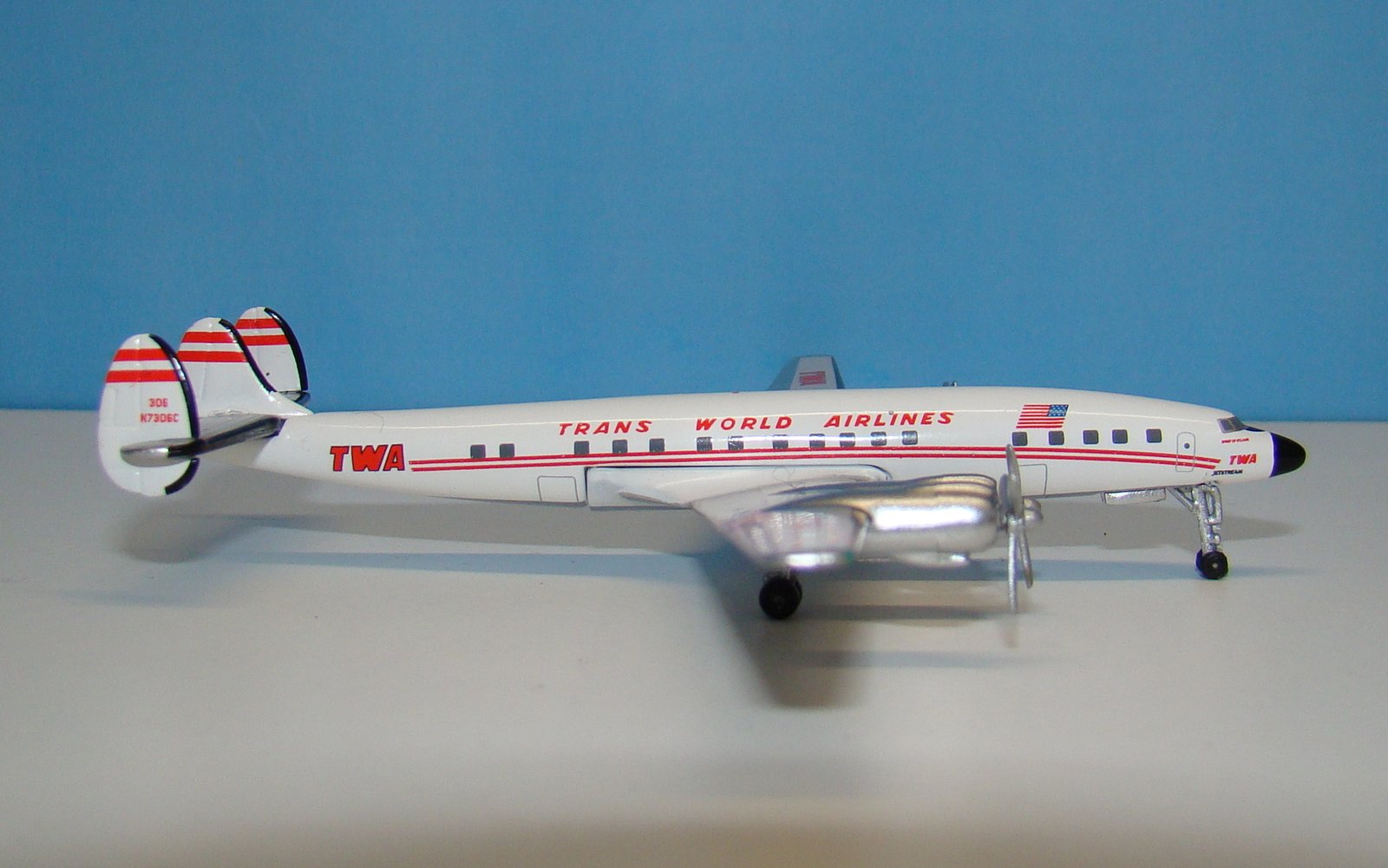
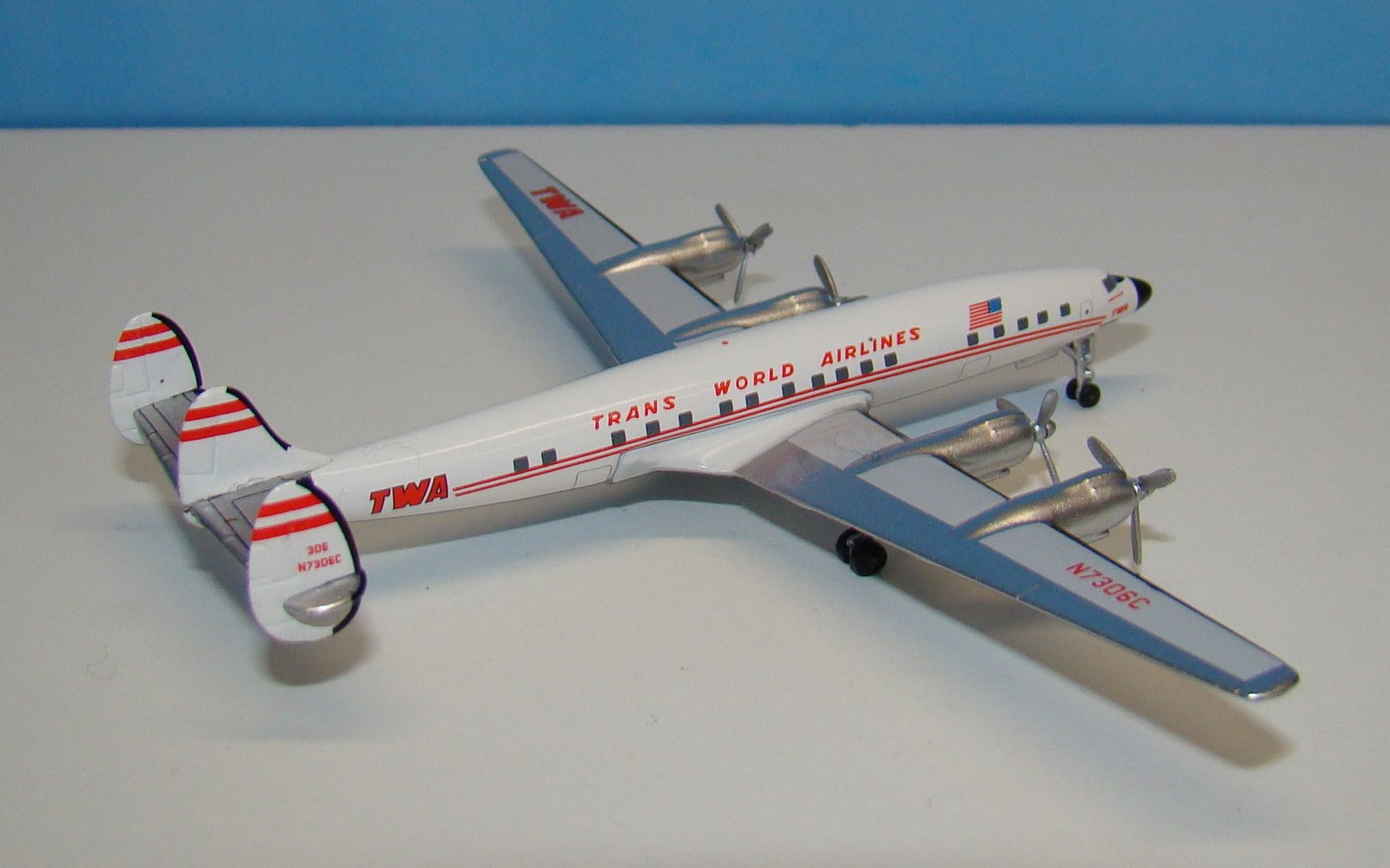
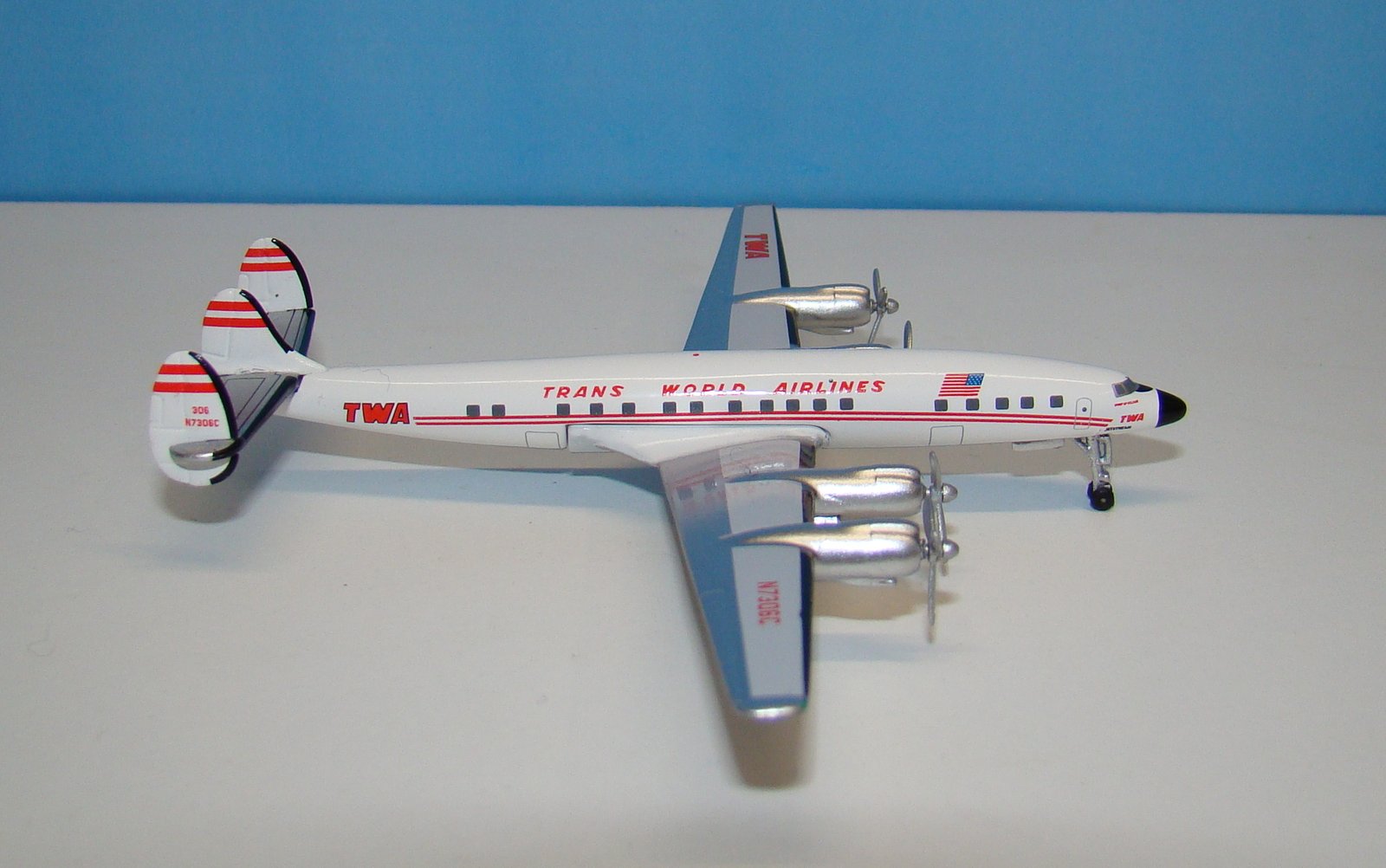
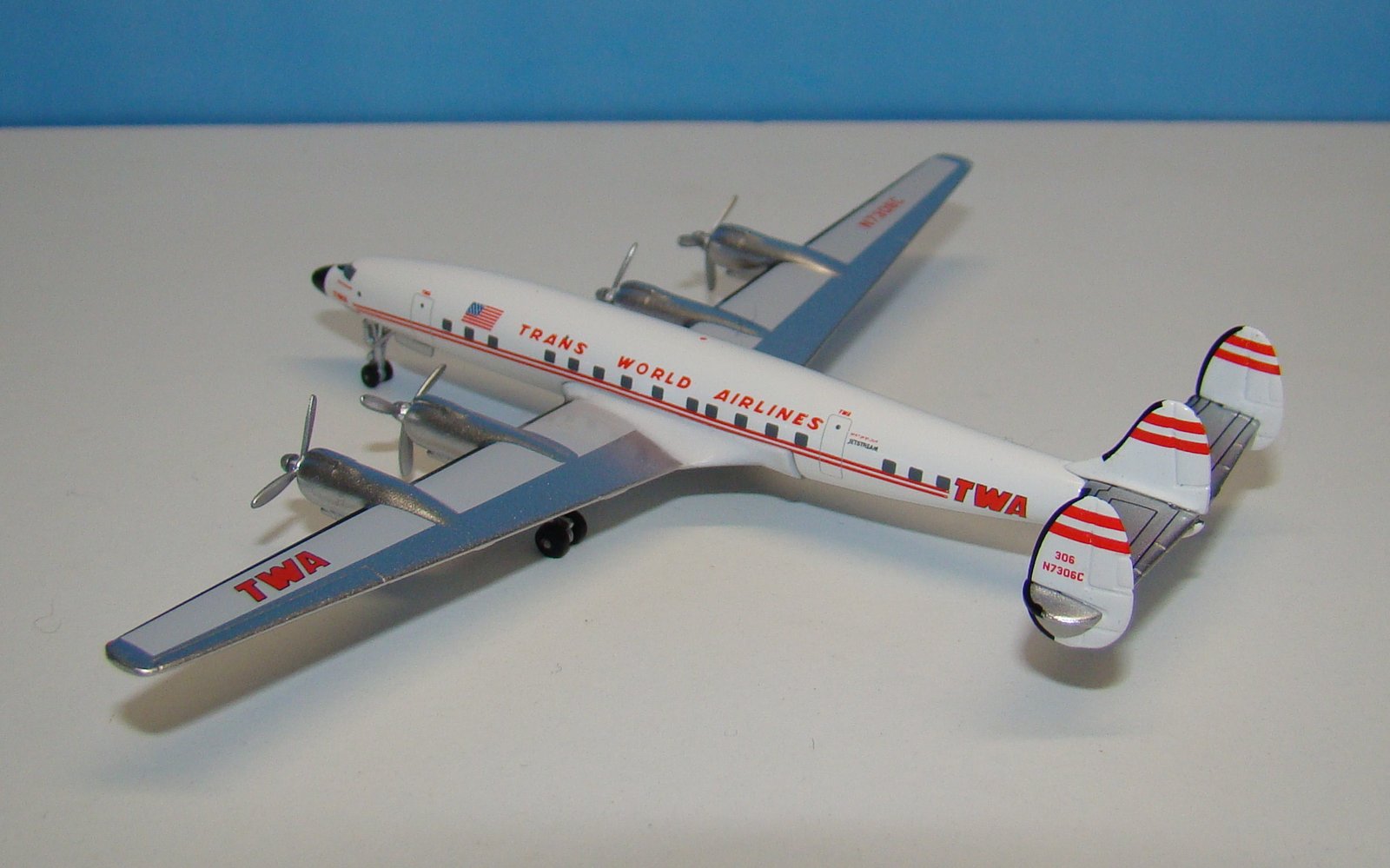
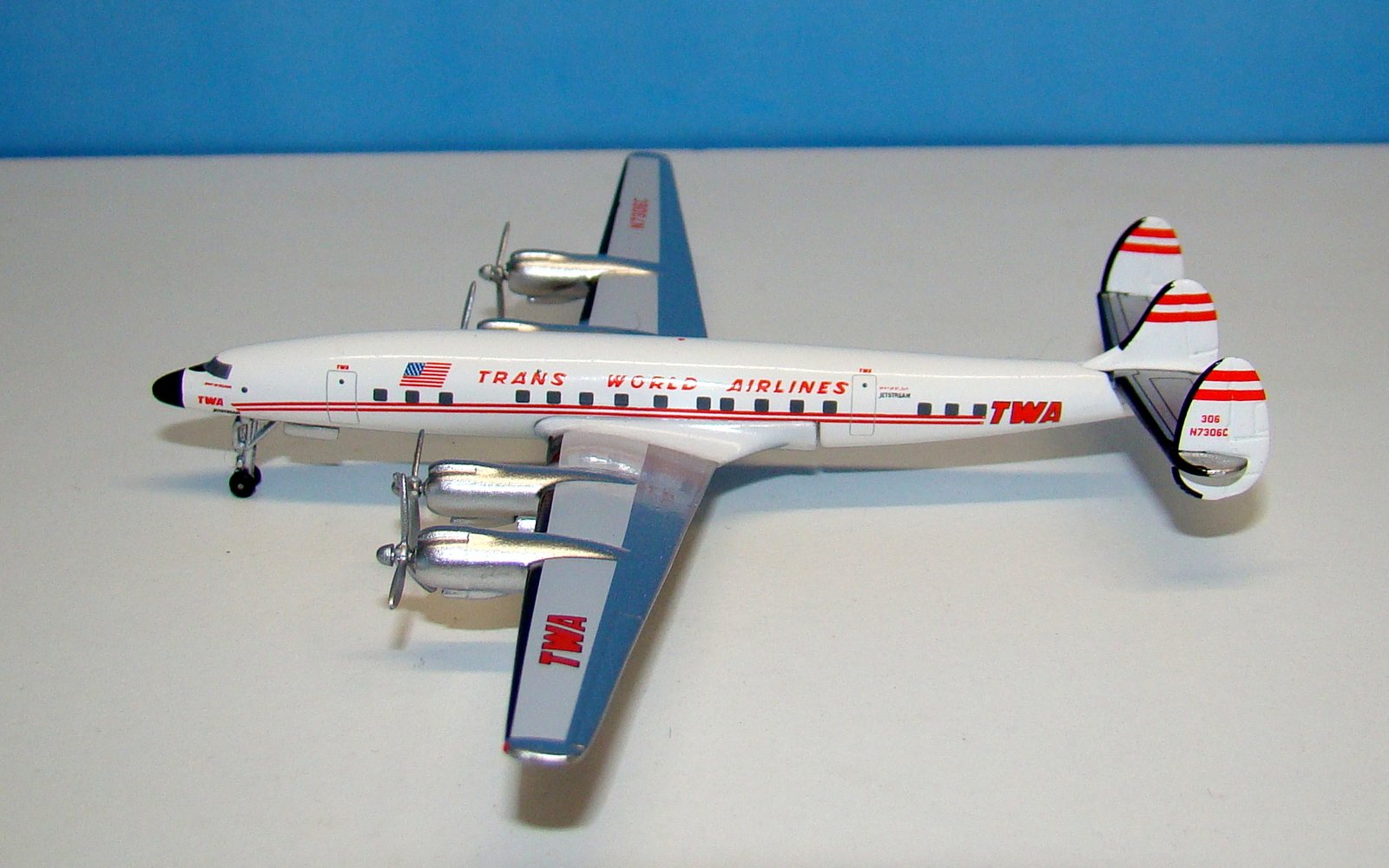
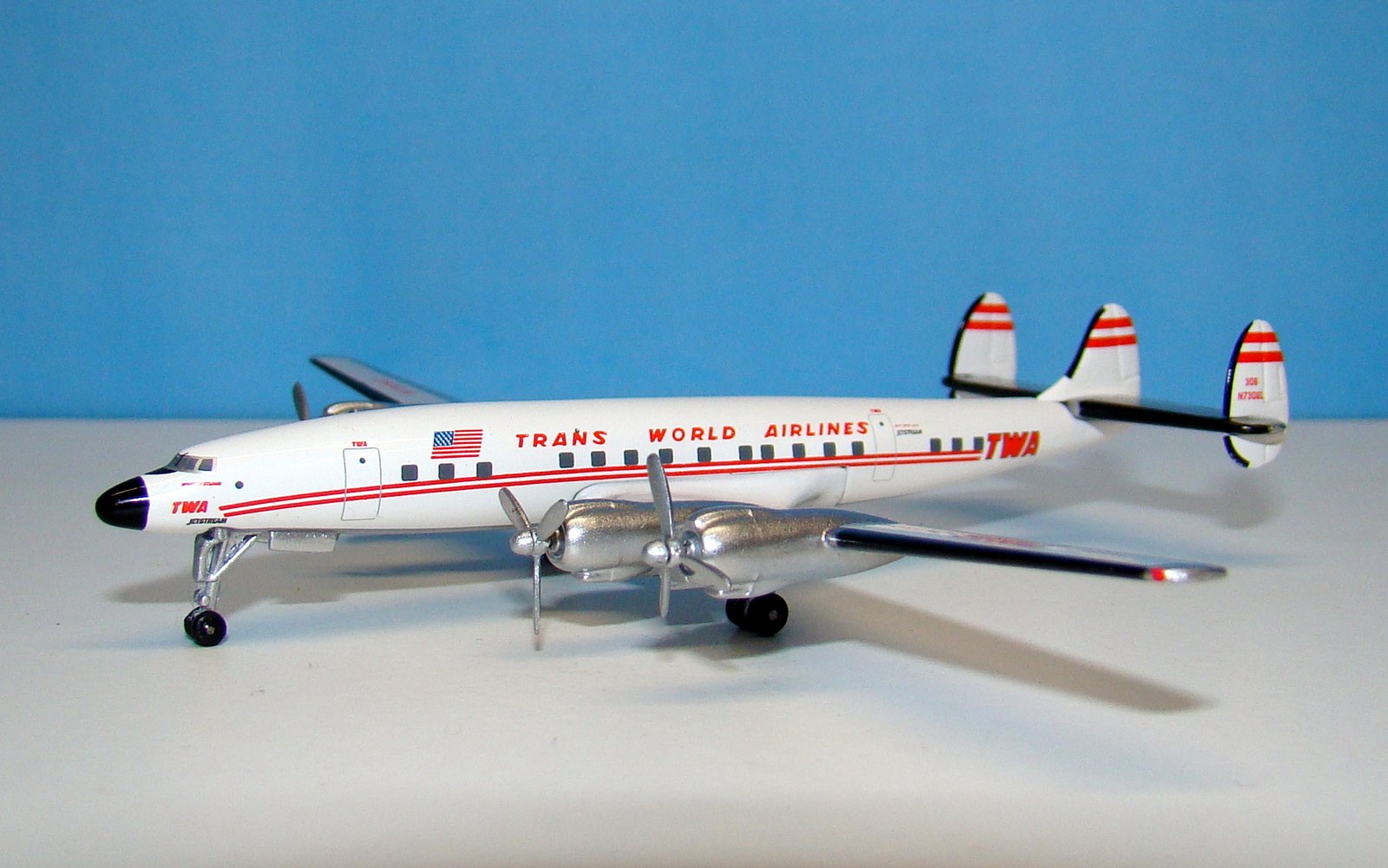
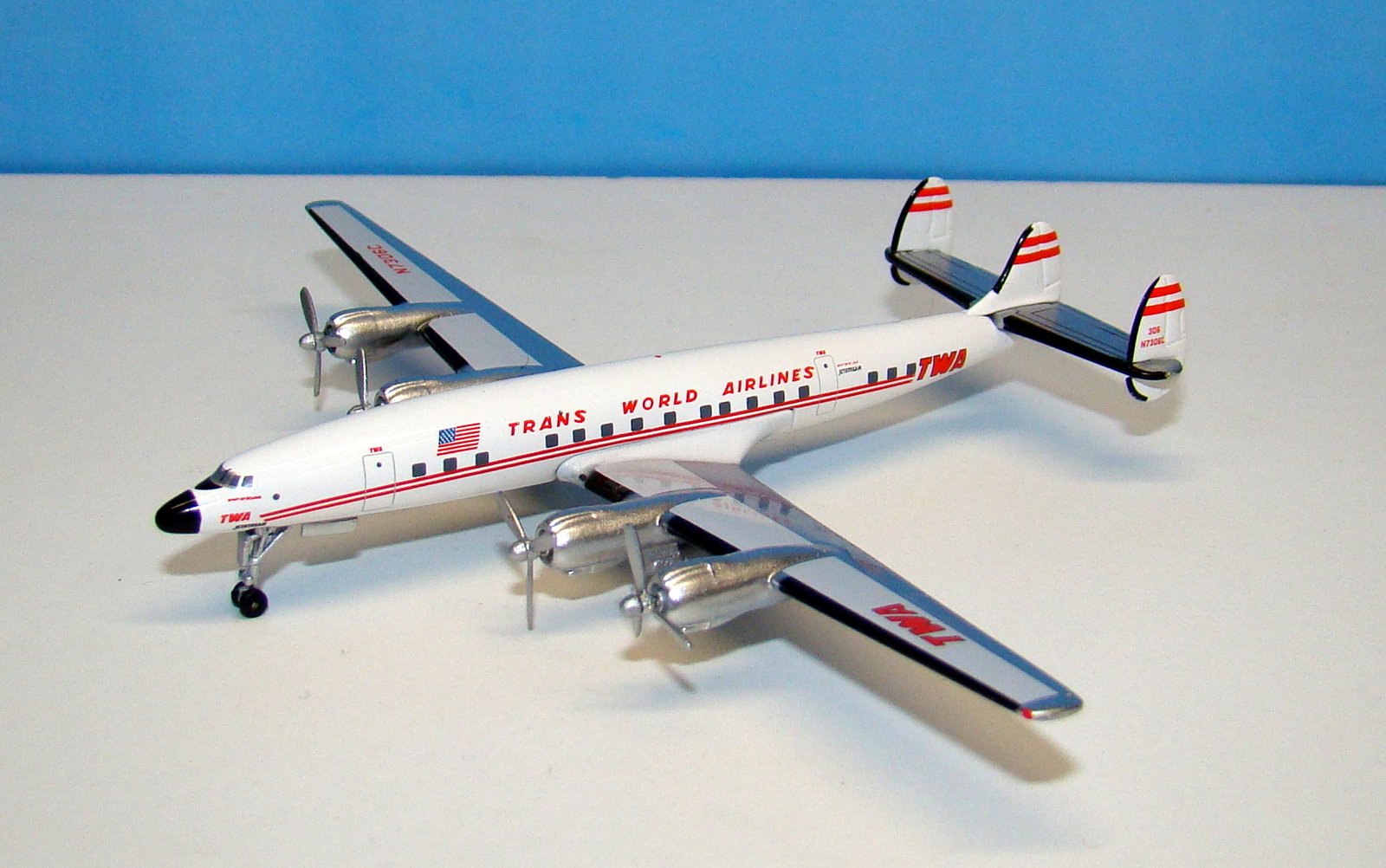
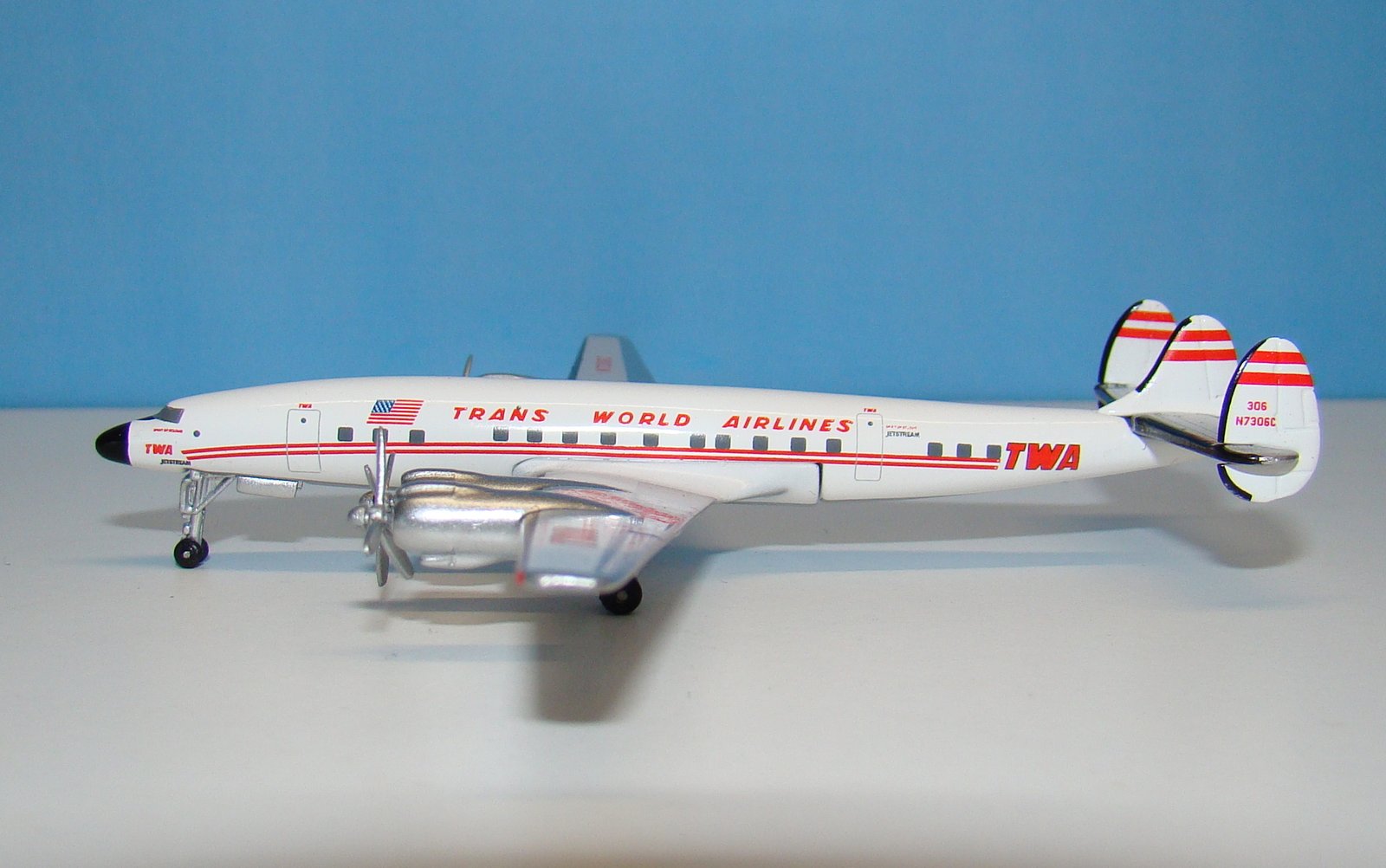
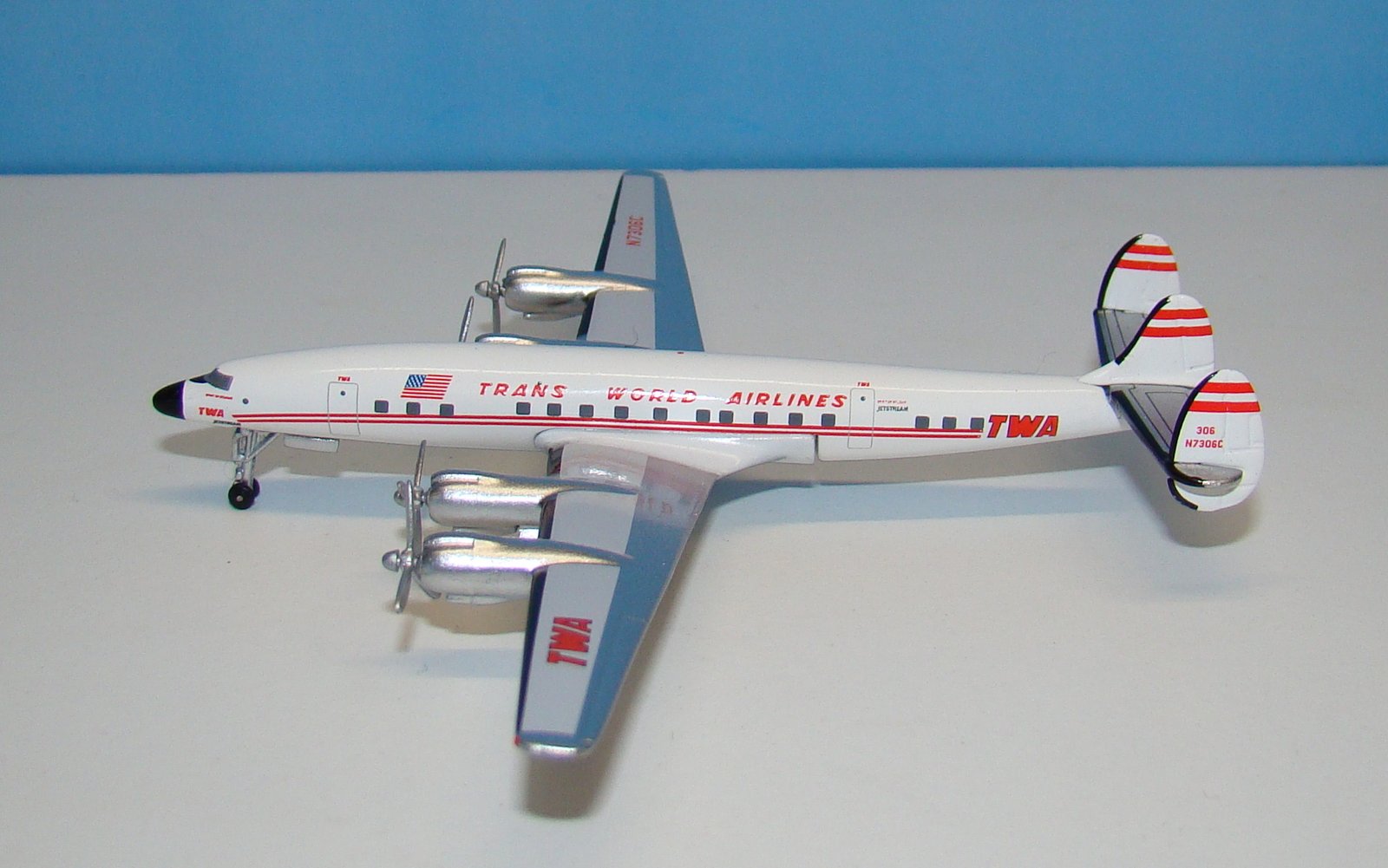
Trans World Airlines Lockheed L-1649A Starliner N7306C Aeroclassics 1:400 Scale Model Airliner
Trans World Airlines Lockheed L-1649A Starliner N7306C Aeroclassics 1:400 Scale Model Airliner
Trans World Airlines Lockheed L-1649A Starliner N7306C Aeroclassics 1:400 Scale Model Airliner
Trans World Airlines Lockheed L-1649A Starliner N7306C Aeroclassics 1:400 Scale Model Airliner
Trans World Airlines Lockheed L-1649A Starliner N7306C Aeroclassics 1:400 Scale Model Airliner
Trans World Airlines Lockheed L-1649A Starliner N7306C Aeroclassics 1:400 Scale Model Airliner
Trans World Airlines Lockheed L-1649A Starliner N7306C Aeroclassics 1:400 Scale Model Airliner
Trans World Airlines Lockheed L-1649A Starliner N7306C Aeroclassics 1:400 Scale Model Airliner
Trans World Airlines Lockheed L-1649A Starliner N7306C Aeroclassics 1:400 Scale Model Airliner
Trans World Airlines Lockheed L-1649A Starliner N7306C Aeroclassics 1:400 Scale Model Airliner
The L-1649 as designed used the fuselage of the Super Constellation but was fitted with a new larger span, square tipped and thinner wing. This enabled the engines to be placed further from the fuselage thus lessening internal noise, but also would give the aircraft the range to cross the Atlantic non-stop in both directions.
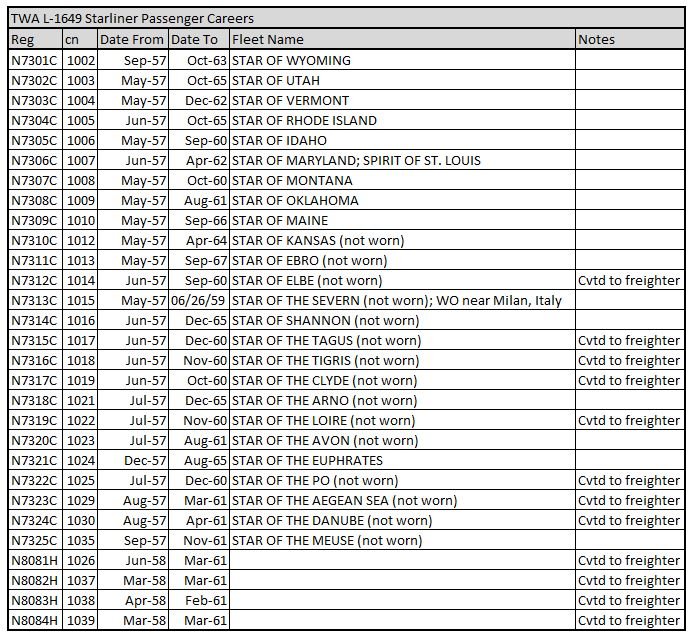
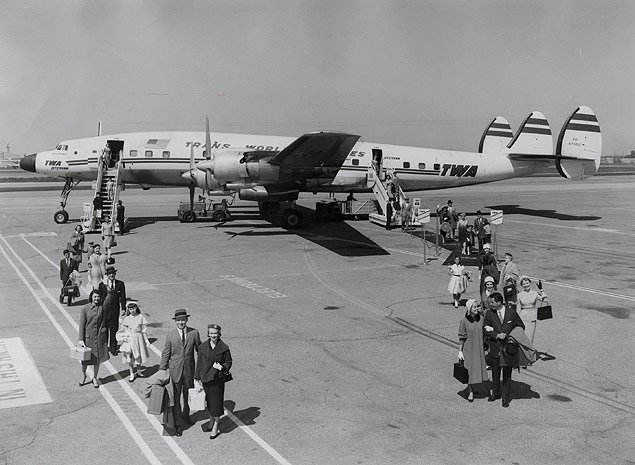
Development of the DC-7C outpaced the L-1649 significantly, with the Seven Seas entering service on June 1, 1956 well before the L-1649 had even flown. The Starliner prototype eventually flew on October 11, 1956 and entered service a full year after the DC-7C, on June 1, 1957. Orders were accordingly very slow to come in and in fact TWA took up four aircraft from an order from LAI (which was merged into Alitalia who had DC-7Cs on order). These four were the last delivered to TWA and wore non-standard registrations (N8081H-4H) whereas the original 25 wore N7301C-N7325C.
Despite the 'Date To' dates no L-1649s were still in passenger service into 1963
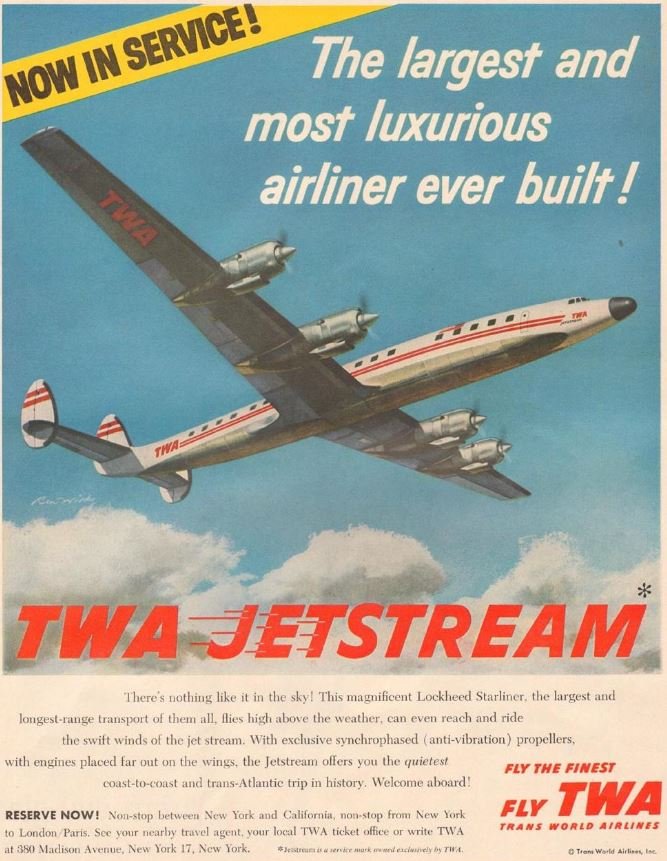
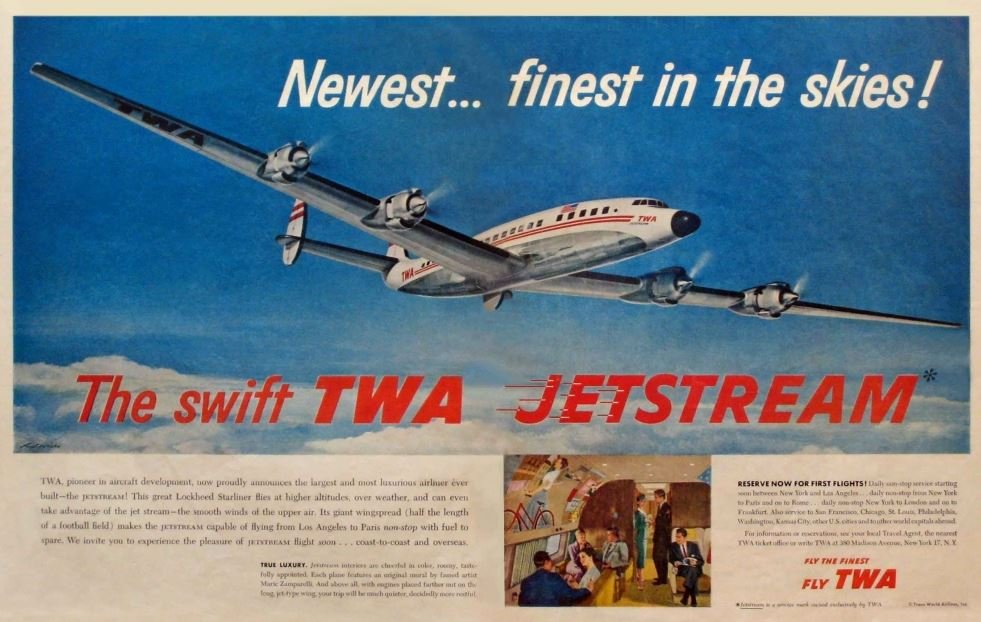
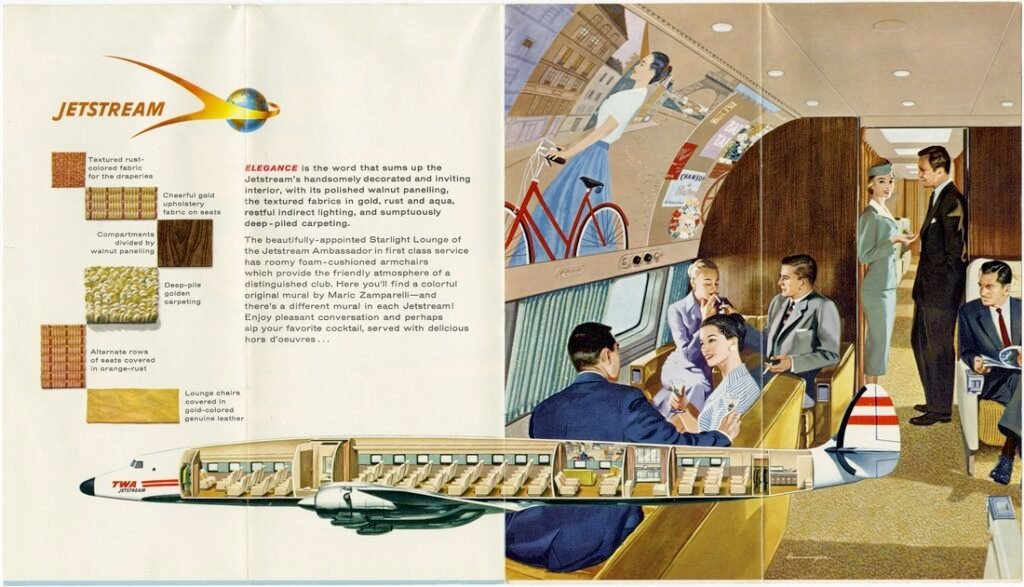
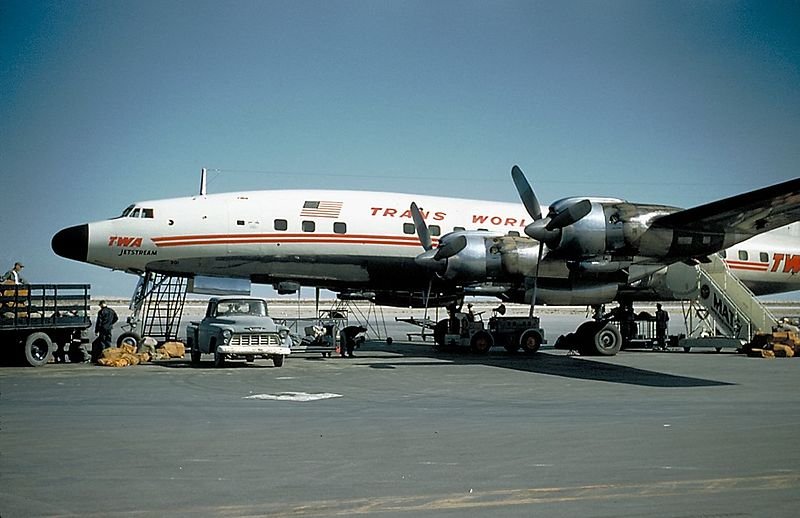
TWA named its L-1649s not Starliners but Jetstreams. This was Howard Hughes’ idea and caused some controversy as the other airlines stated that the name was misleading since it suggested the aircraft was jet powered. The Jetstreams introduced a luxurious TWA developed “Siesta seat”, which reclined almost flat and cost $2,500 per seat. TWA had this seat exclusively and it was at the time easily the most comfortable seat ever designed. TWA also broke up the L-1649 cabin into separate compartments for added luxury.
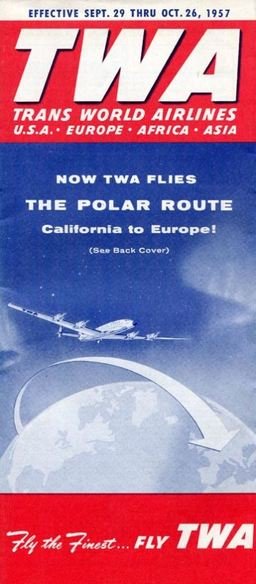
In service the Starliner was something of a disappointment. It had better range than the DC-7C but didn’t match the speed of the Douglas prop, which was more important in the 1950s. Nonetheless by the middle of 1958 TWA was operating half of its European schedule (30 of 60 flights) with what it called the Jetstream.
With the jet age obviously now on the horizon TWA seems to have lost some interest in its L-1649s. Many of the names to be associated with the individual aircraft were never worn in service. Interestingly most of these names related to famous global rivers rather than the locations that had adorned most of the Connie fleet.
The lateness of the Starliner meant it was only in service for a year and a half before TWA’s first 707-131 was delivered. TWA took 19 707s in 1959 alone meaning the Starliners were quickly usurped from front line duties. The last transatlantic passenger service was flown in October 1961. The engines had predictably proven very temperamental at full power and suffered a terrible failure rate.
A single aircraft was lost in TWA service. On June 26, 1959 N7313C, operating flight 891 took off from Milan Malpensa on one of its many legs home heading towards Paris. The weather was poor when N7313C took off but it climbed through cloud up to 10,000 feet when the aircraft broke up in mid-air. There were no survivors from the 59 passengers and 9 crew aboard. The investigation implicated a lightning strike as the culprit, it having ignited fuel vapours.
N7301C at Dhahran in Saudia Arabia in June 1959. Photo by Ted Quackenbush from Wikipedia
Some of the aircraft’s careers were over by 1962 and they passed to secondary operators, usually for only short periods. Others remained in the fleet flying domestic services until displaced by new 707s and CV-880s in December 1962.
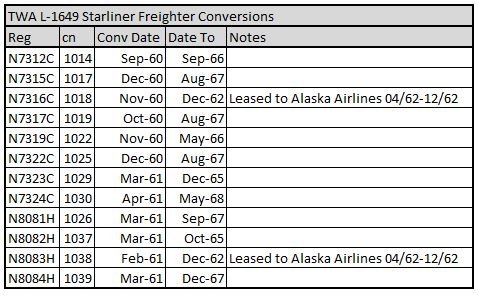
The other way for airlines to recoup some of the costs of their expensive, but worthless, DC-7C and L-1649 fleets was to convert them to freighters. Lockheed converted 12 of TWA’s aircraft for them and they operated across the Atlantic until 1964 with the last operating domestic cargo services until the end of 1967. Even then the aircraft was less than ten years old but with a new glut of young turbojets coming on to the second-hand market even the L-1649 looked positively ancient.
Despite its relative failure, and the significant financial loss Lockheed suffered, the Starliner, like its older sibling the Super Connie, was a beautiful aircraft and did briefly help TWA bridge the gap and remain competitive.