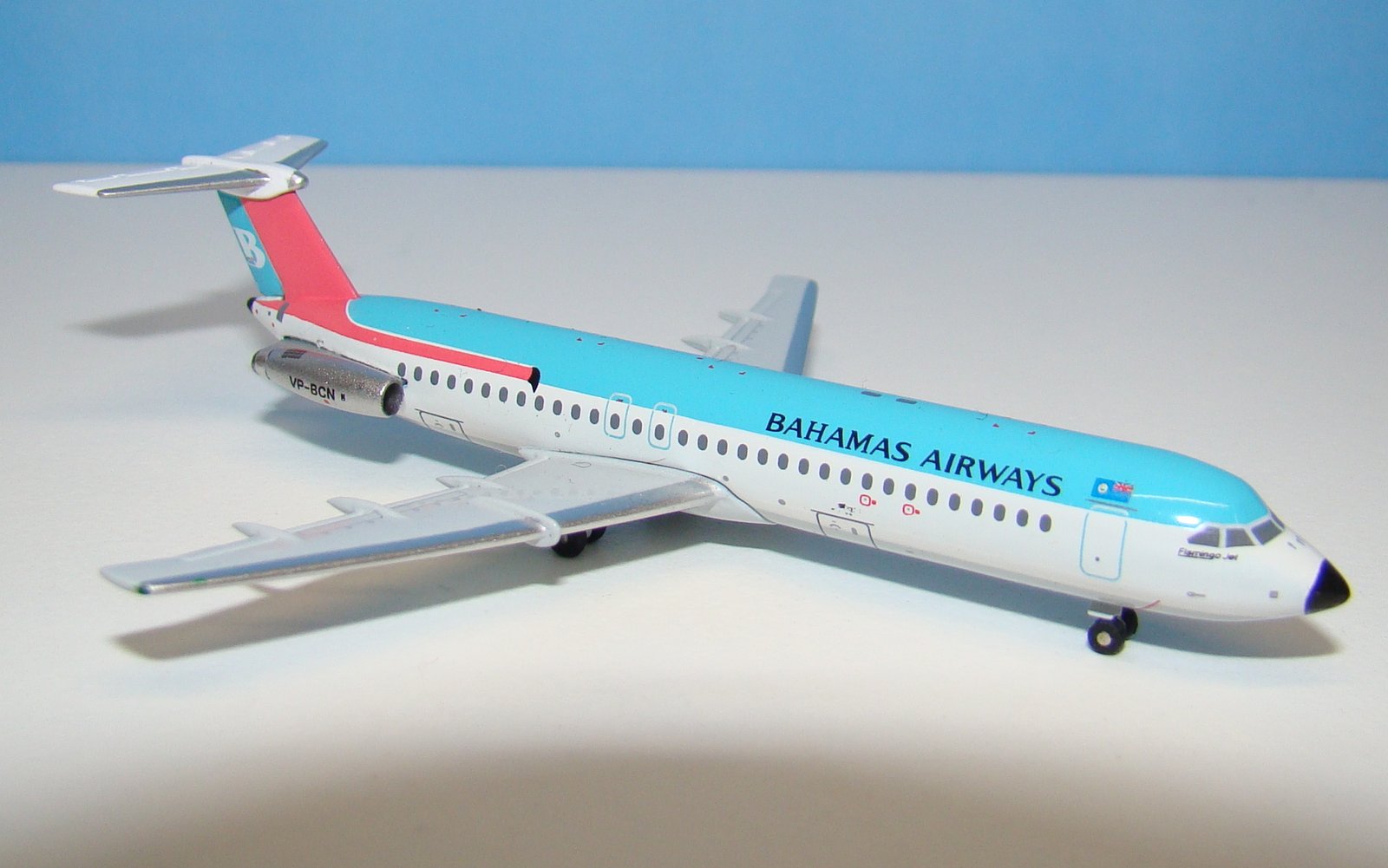
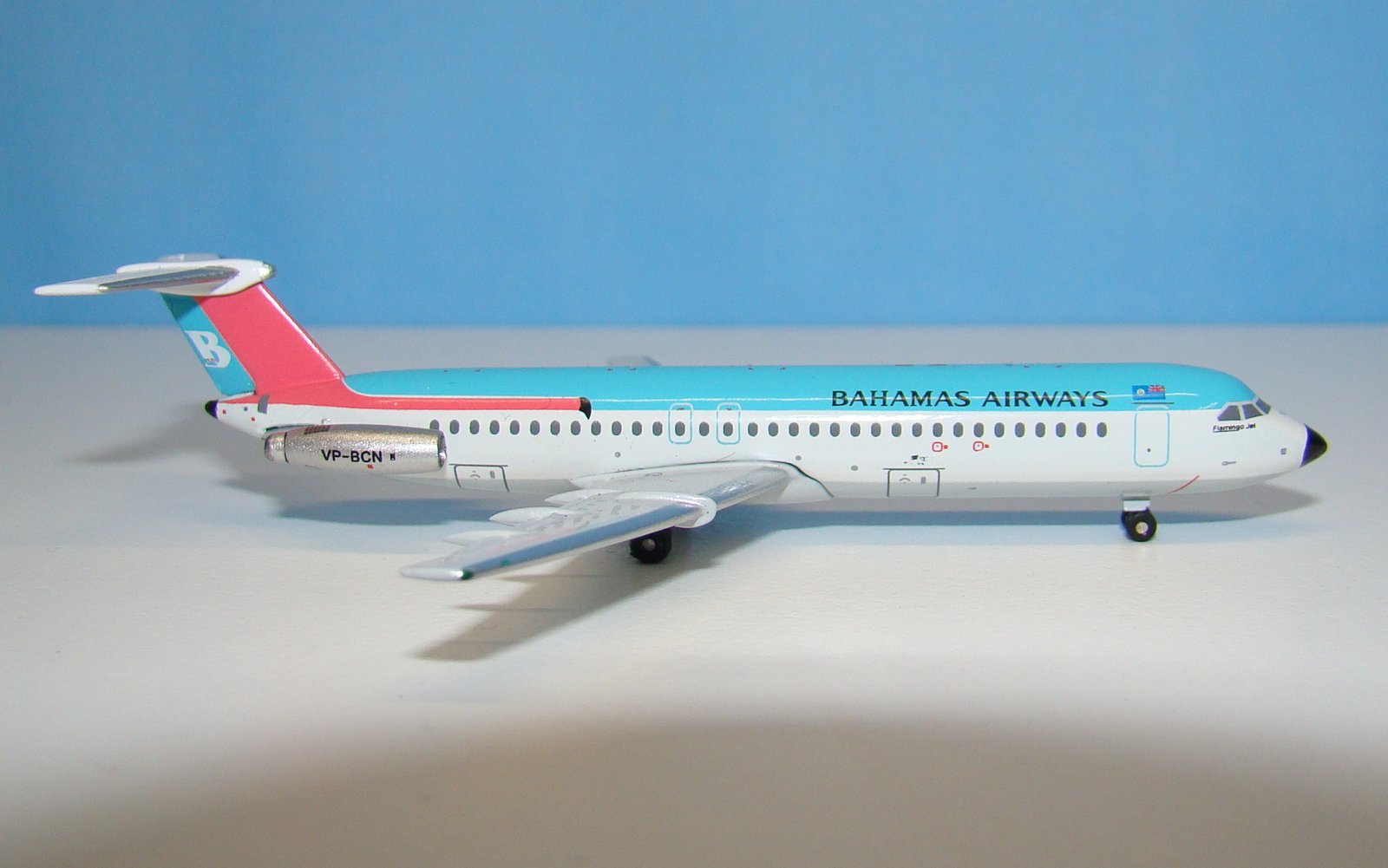
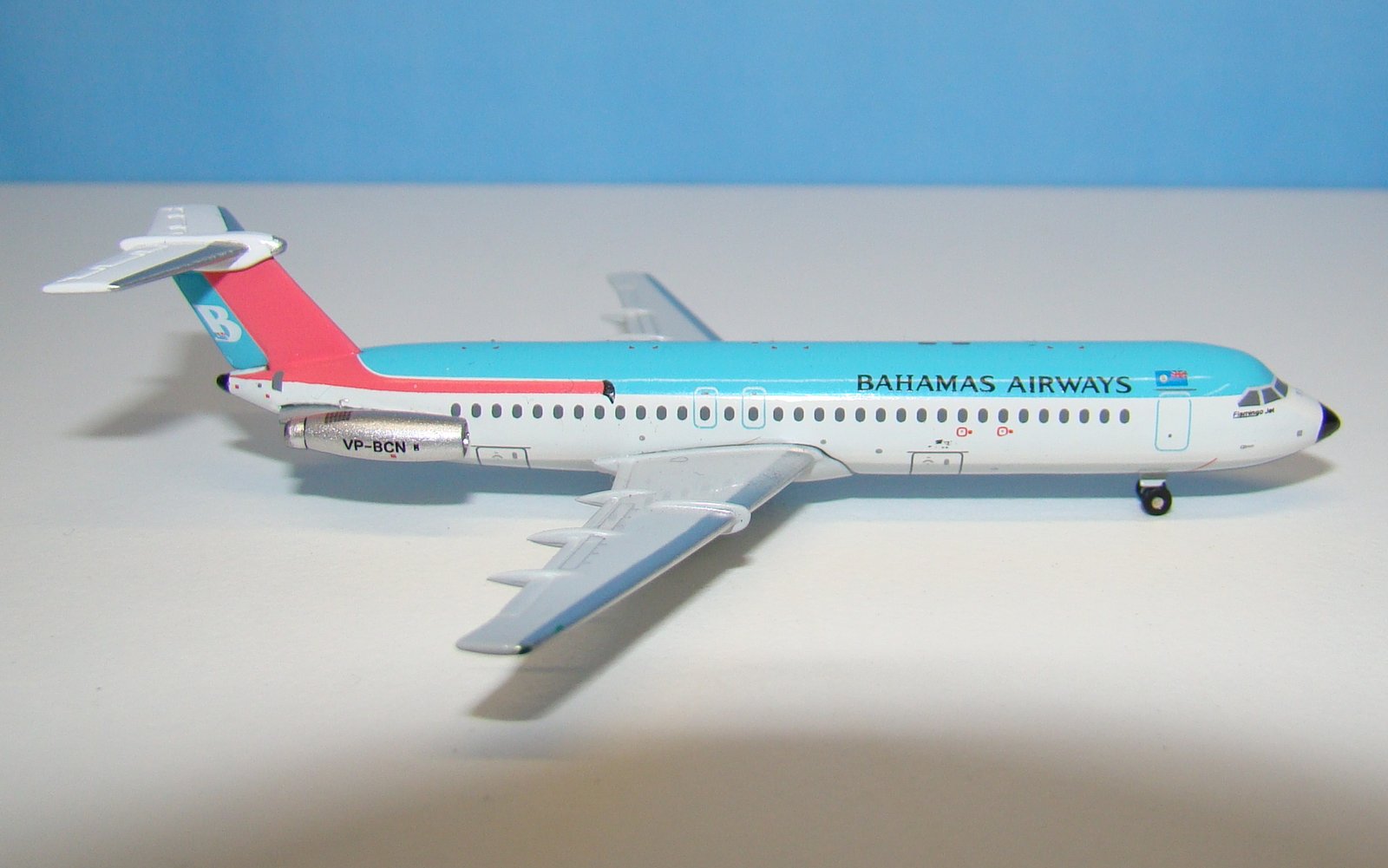
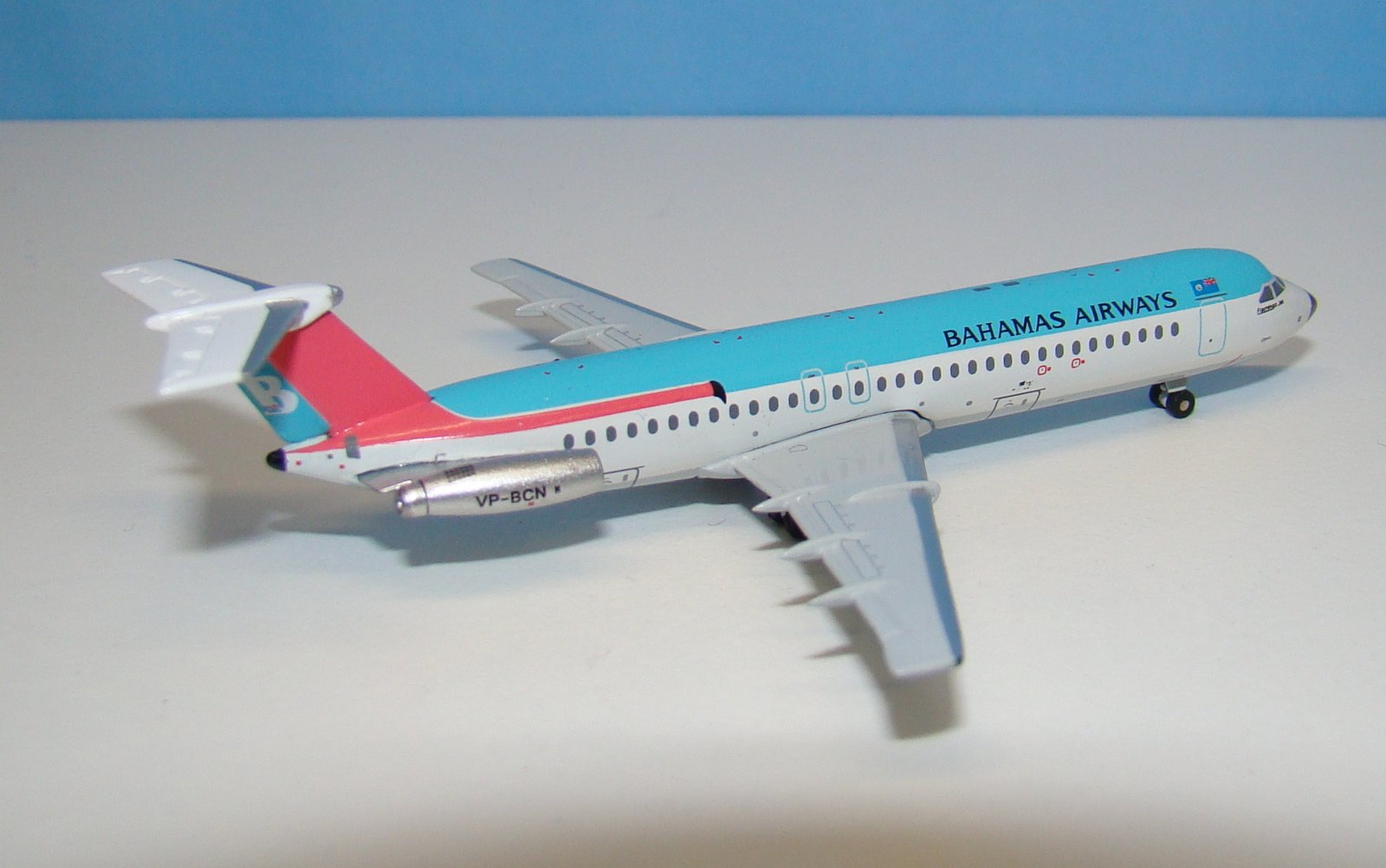
Bahamas Airways had for many years been rather a thorn in the side of BOAC and by 1968 the British flag carrier was keen to extricate itself from the perenially loss making airline. It succeeded and initially the future looked, literally, bright, however the rebirth was ultimately only a short-lived affair and the Bahamian government was left to look for an alternative.
BOAC approached John Swire & Sons who owned Cathay Pacific and had acquired Hong Kong Airways, another BOAC affiliated coroporation in 1959. Interestingly the Bahamian government declined to take a 49% share of BAL, which was perhaps symptomatic of their relationship with BOAC and the continuing failure of the airline to make money. Instead in October 1968 Bahamas Airways was taken over by John Swire & Sons with BOAC retaining a 15% stake.
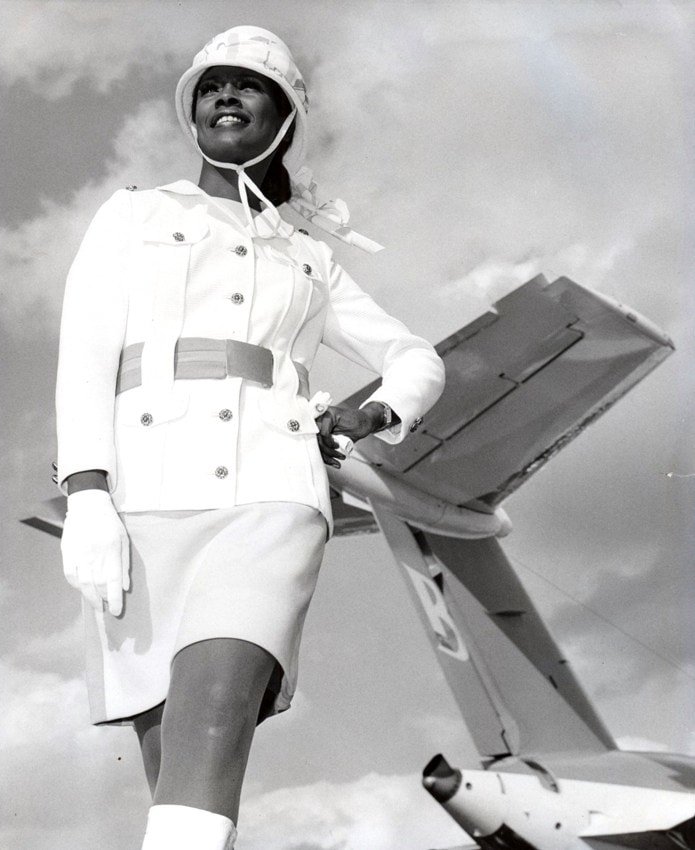
The new stewardess uniforms were impressive!
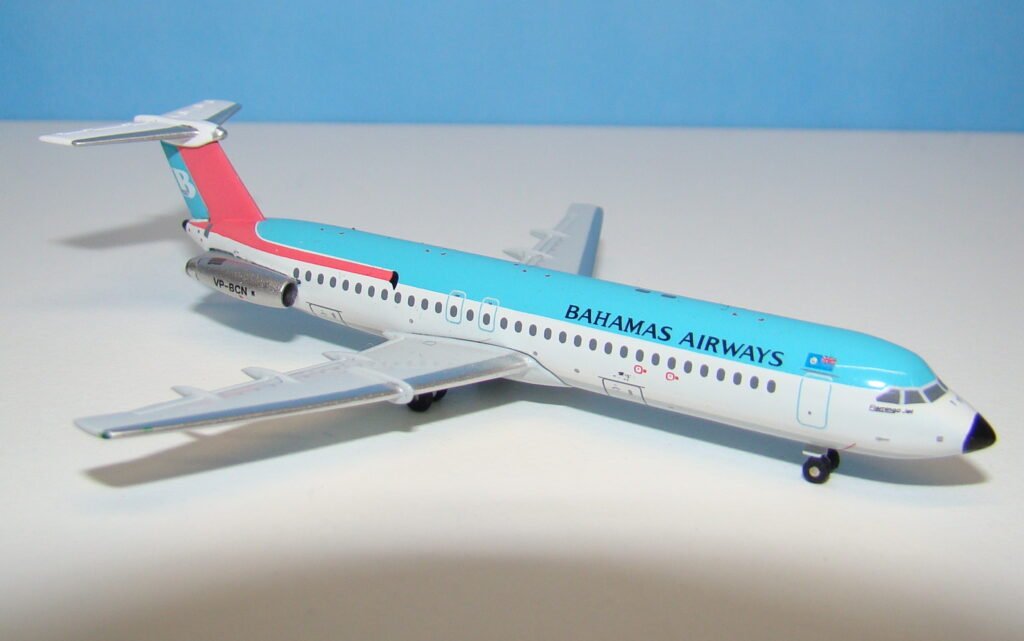
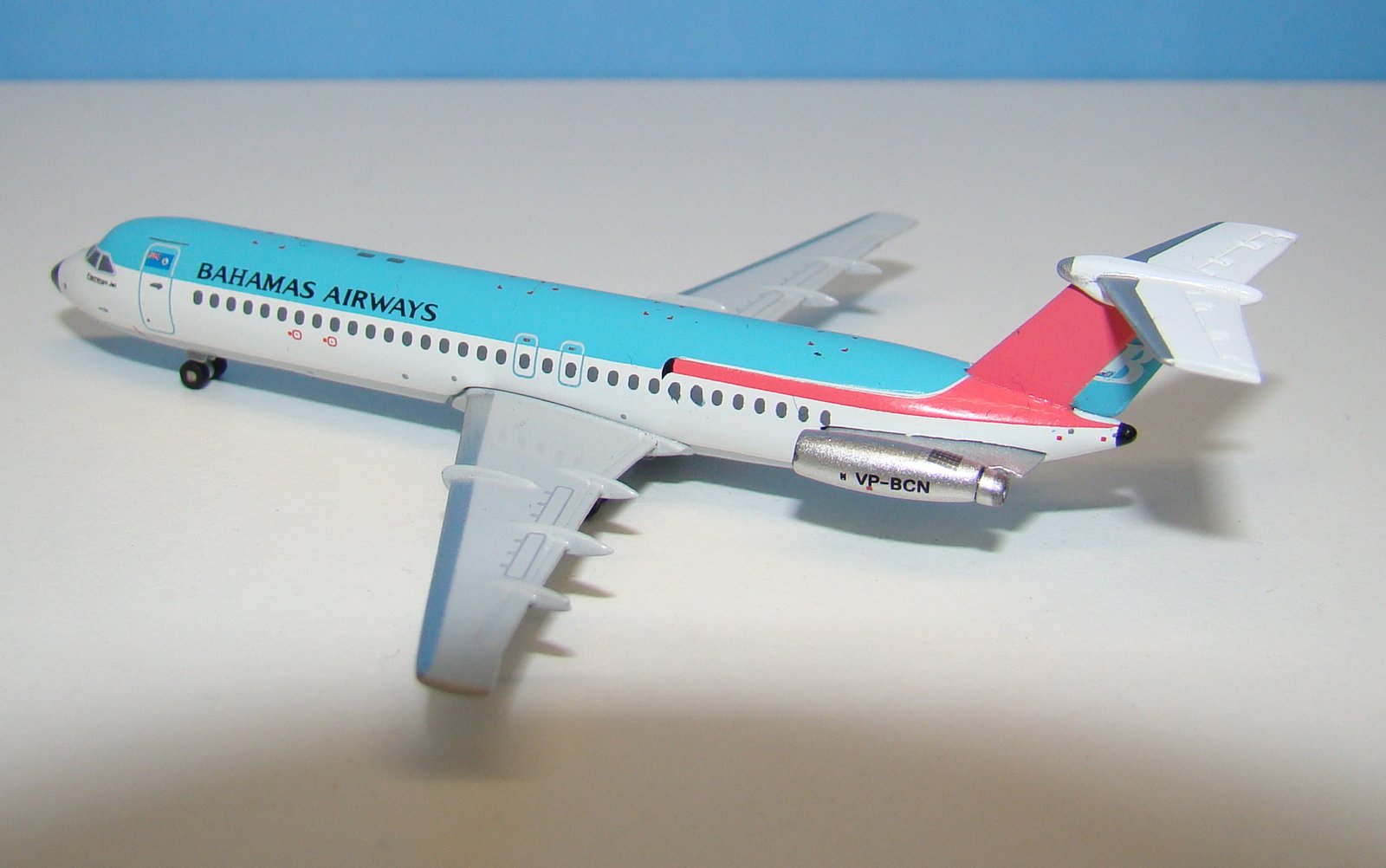
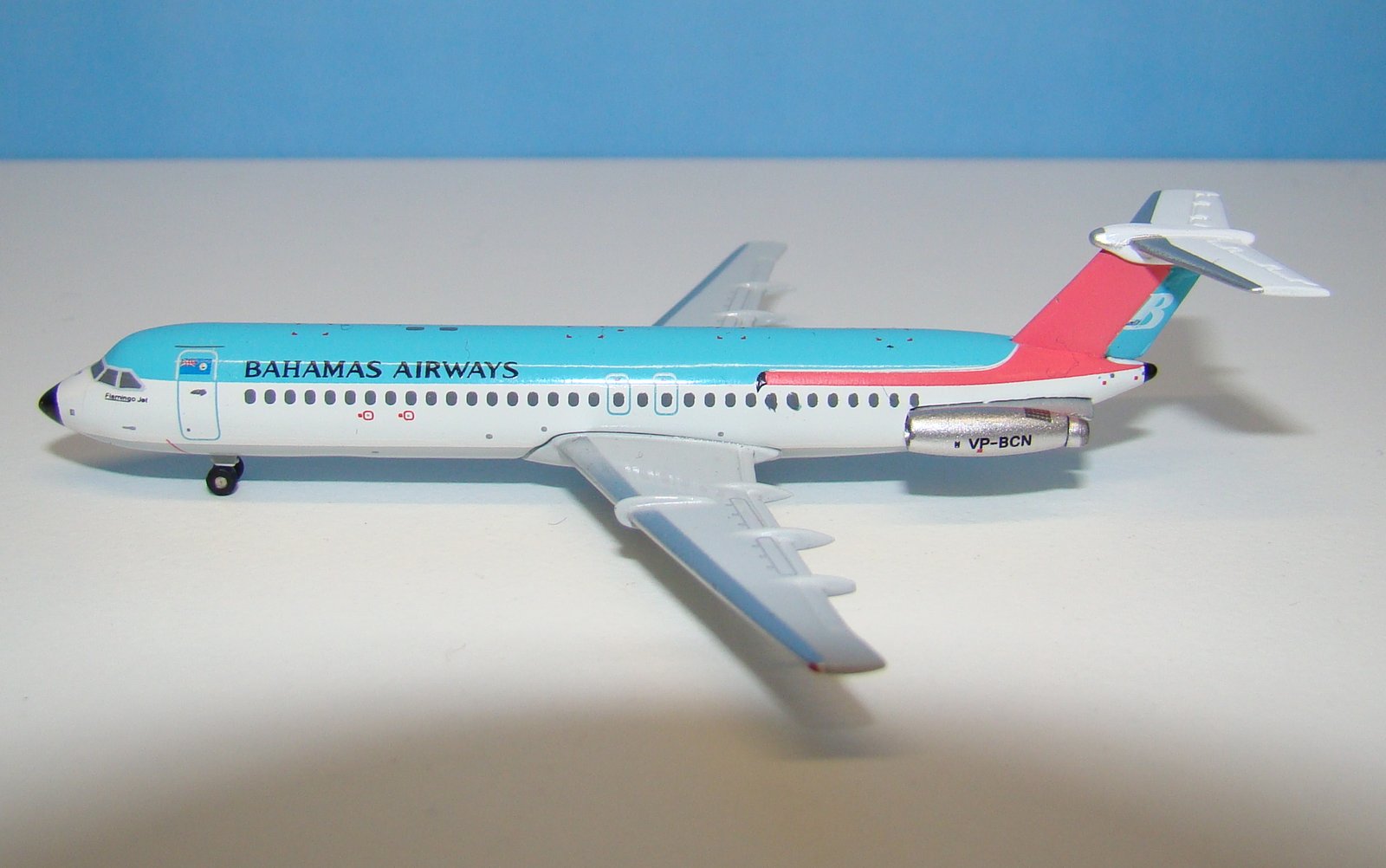
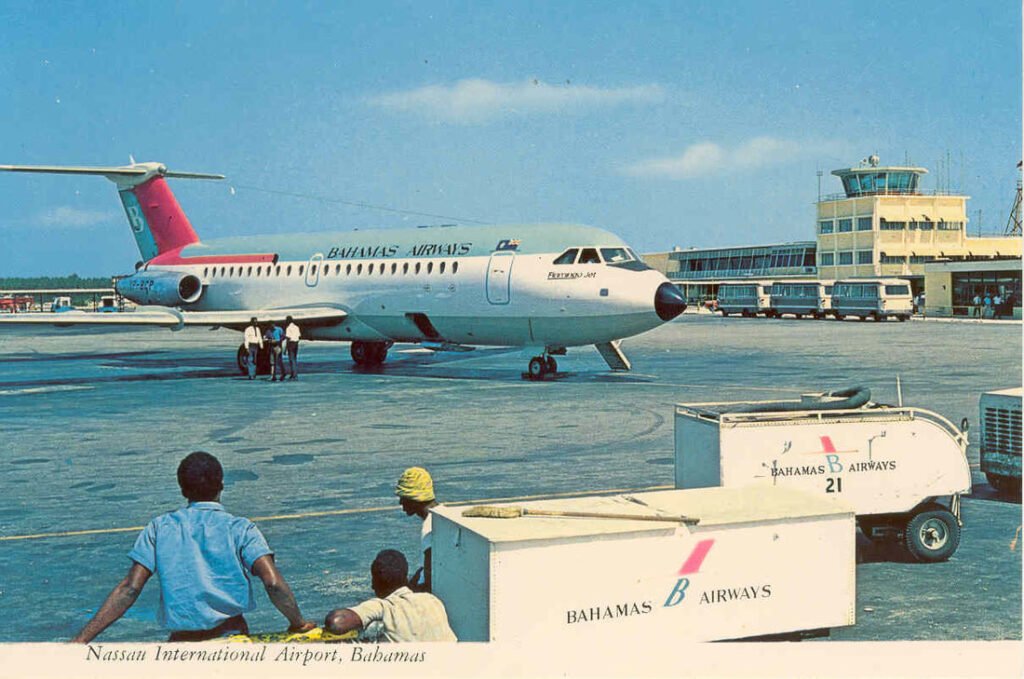
The new airline’s priorities were to regain competitiveness by acquiring pure jets and to present for the first time a truly independent brand. The latter was unveiled almost immediately with a lovely new blue crown scheme complete with a pink flamingo whose wing took up most of the tail aside from a stylised B behind it on the rudder.
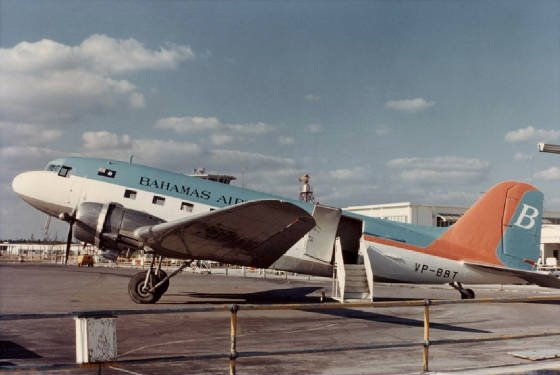
Even the C-47s got the new scheme
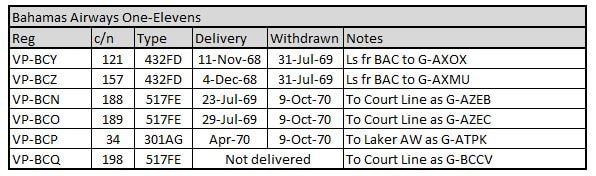
The new owners ordered a pair of new BAC One-Eleven 517FEs and in the interim leased a pair of shorter series 423FDs. These gained the new scheme, as did the HS-748s and C-47s, and entered service in November and December 1968 as ‘Flamingo Jets’. They seated 79 passengers in a single class layout and enabled high frequency jet routes from Miami-Nassau, Miami-Freeport, West Palm Beach-Freeport-Nassau & Fort Lauderdale-Nassau. The new series 517FEs joined the fleet in July 1969 replacing the short One-Elevens and seating an increased capacity of 99 passengers.
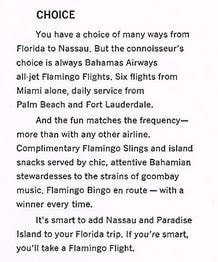
This text from the above poster is interesting. What is 'Flamingo Bingo'? Sounds fun.
One of the major factors inhibiting Bahamas Airways from profitability was its lack of long haul routes such as a service to New York. The new fleet and livery hadn’t improved profitability and the airline quickly applied for a Nassau-New York service even though it did not have any aircraft to operate the service. Both Pan Am and Eastern flew the route with 727s and for a time it appeared likely that BAL would lease a 727 for the service, probably from one of the supplemental airlines like World Airways.
BAC was keen to avoid Boeing involving itself with another of its customers and instead offered a specially modified One-Eleven 500, which would have long range fuel tanks added into the forward cargo hold. BAL still had a pair of options outstanding for the One-eleven and confirmed one as an order for the ‘new’ type. Bahamas Airways did actually add a third One-eleven to the fleet but this was a new series 301AG, which arrived in April 1970. Although the long range 517FE was completed and painted into BAL colours it never left Bournemouth, as Bahamas Airways finally ceased operations on October 9, 1970.
VP-BCP Bahamas Airways sole One-Eleven 301AG
It’s a little unclear why the airline eventually ceased services at that particular point in time but having never made a profit the structural problems with the airline were I suspect insurmountable and Swires seeing this had a change of heart about the probability of turning the carrier around. The fleet of BAC One-eleven 517FEs returned to BAC and were sold to Court Line with all three seeing some further service in the Caribbean operating for periods with LIAT.
It would be several years until the Bahamas acquired a new national carrier with Bahamasair beginning operations on June 17, 1973. It was probably no coincidence that the Bahamas gained full independence from the UK on July 10, 1973 less than a month after the new airline’s first flight. Nonetheless even with a reduction in competition from international carriers to the islands it has been a difficult road for Bahamasair to become profitable, which perhaps shines a kinder light on its predeccessor.