The New Zealand domestic market had long been the realm of National Airways Corporation (NAC) and later, post-merger, Air New Zealand. There had been attempts to compete but none had been successful or resulted in co-operation rather than competition. It wasn’t until the mid-1980s that true competition was possible and out of that Ansett acquired a foothold in the New Zealand market, which it was to hold onto for 13 years.
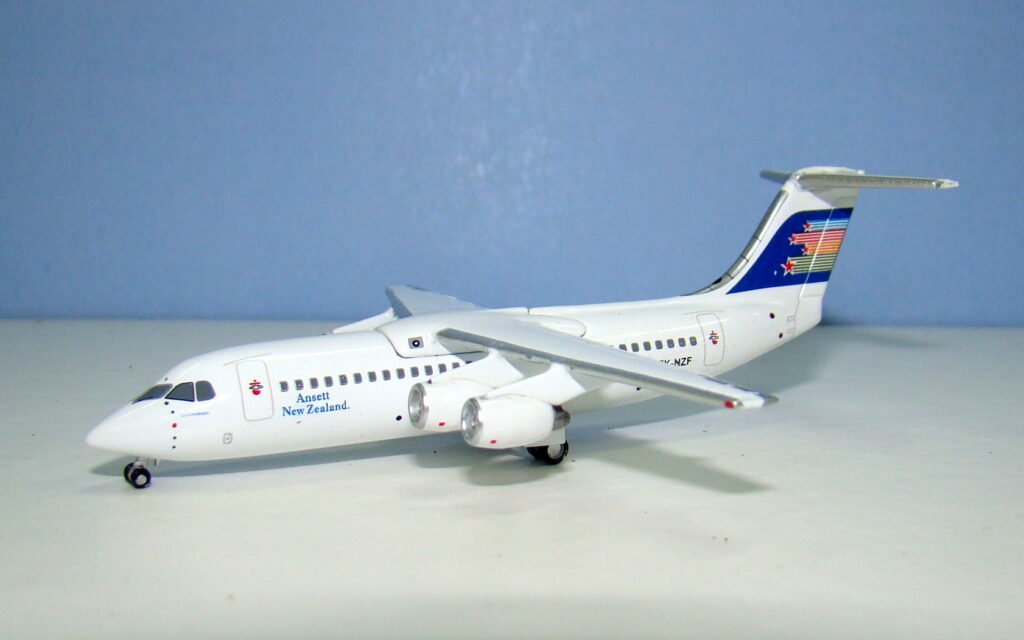
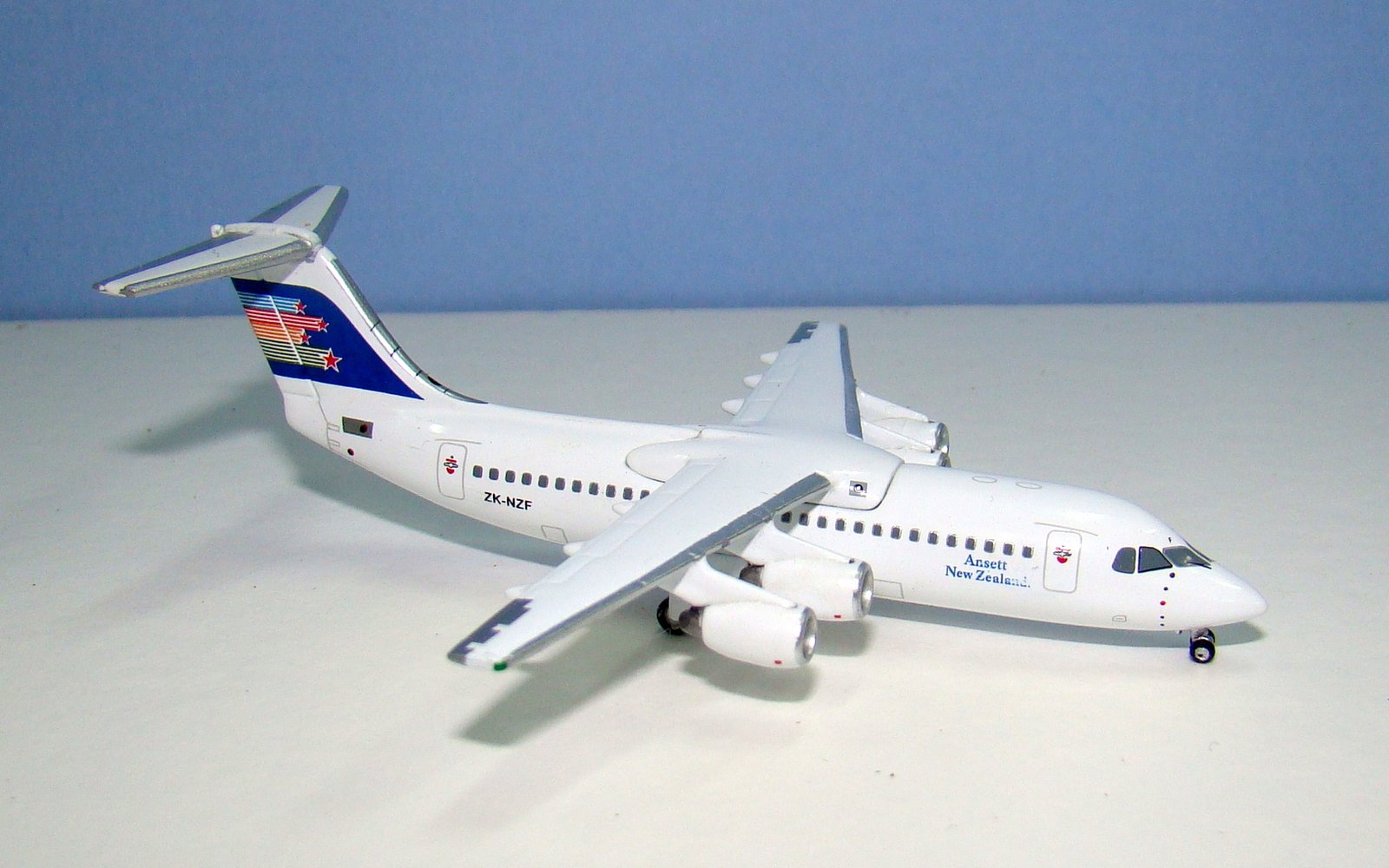
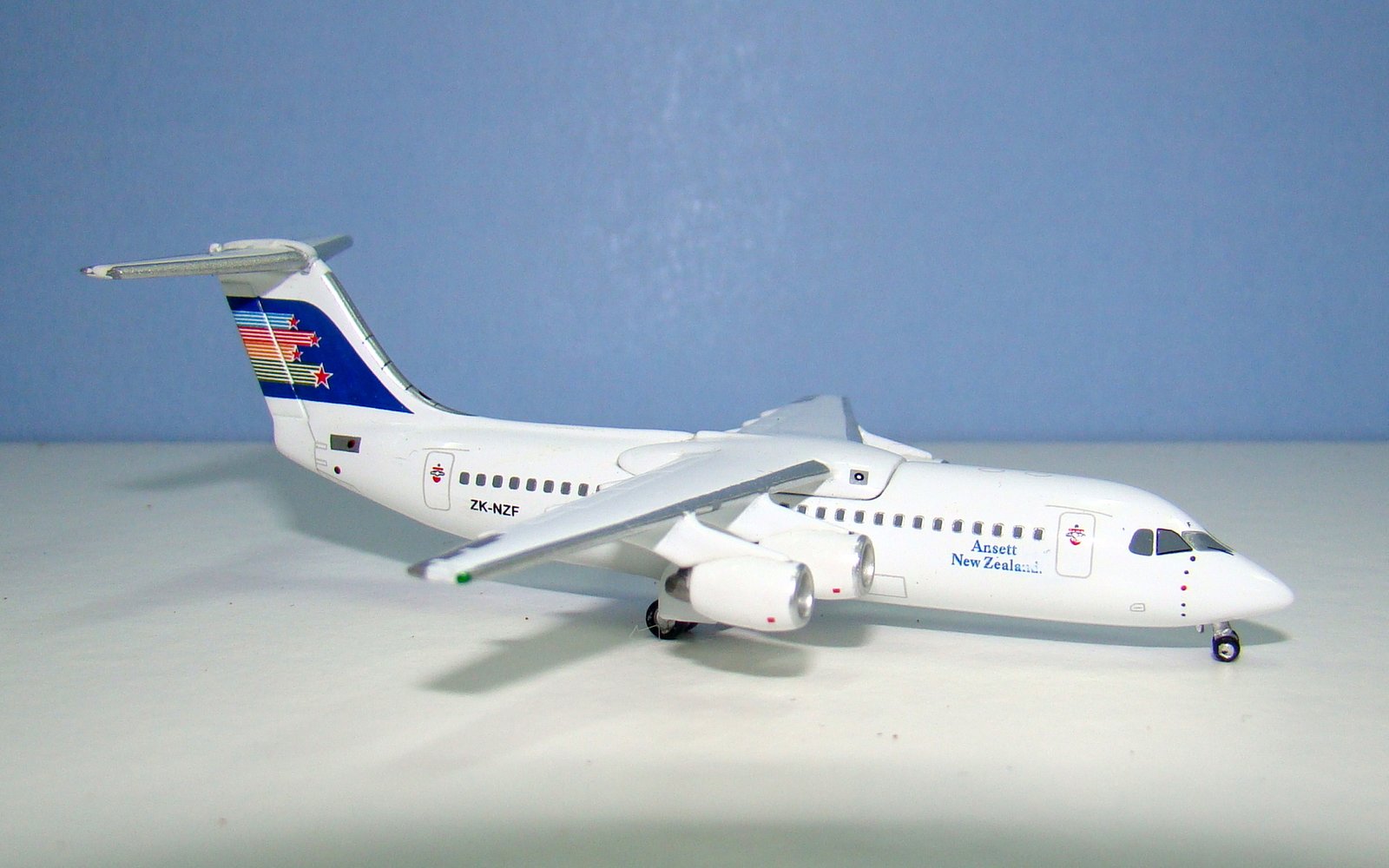
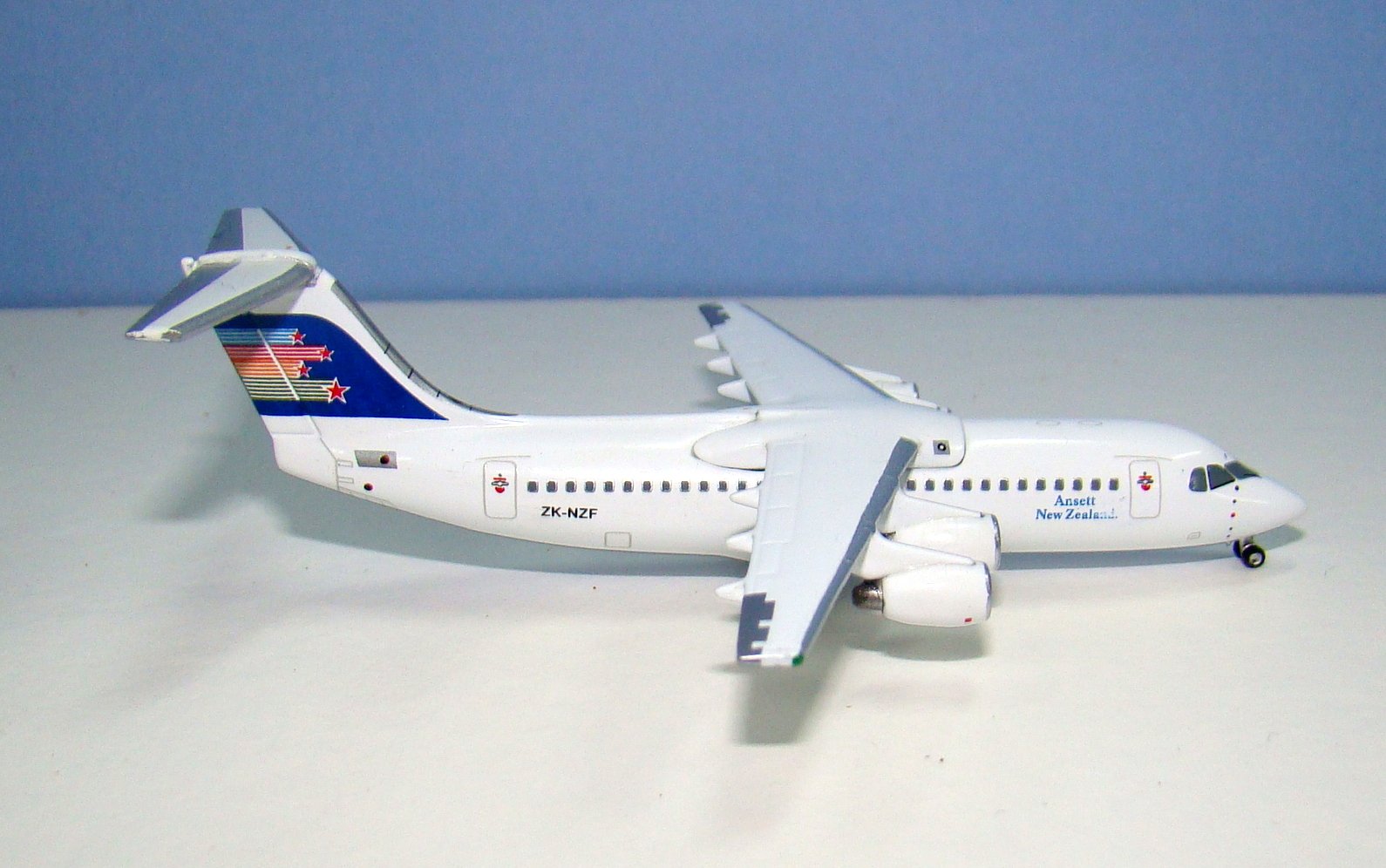
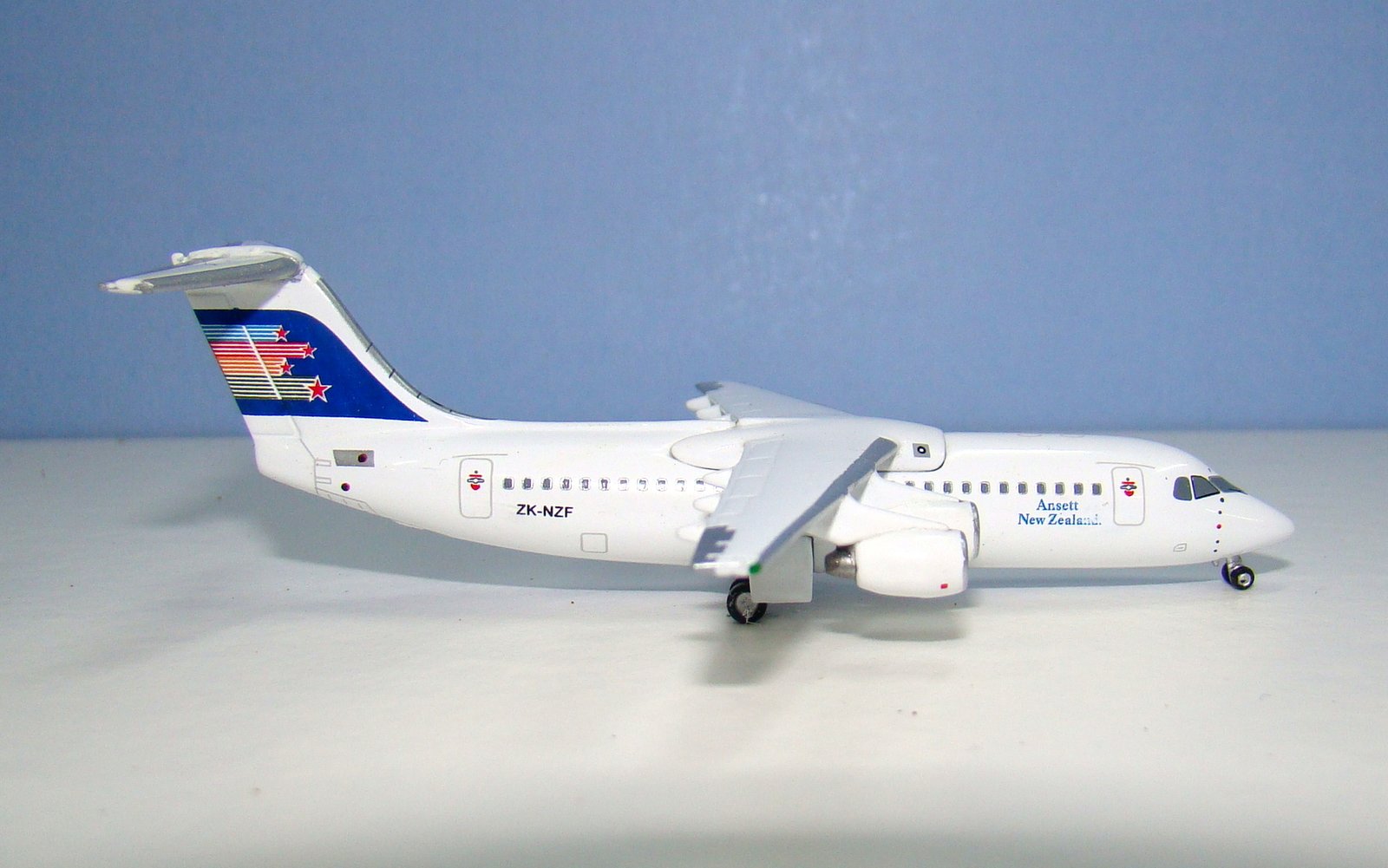
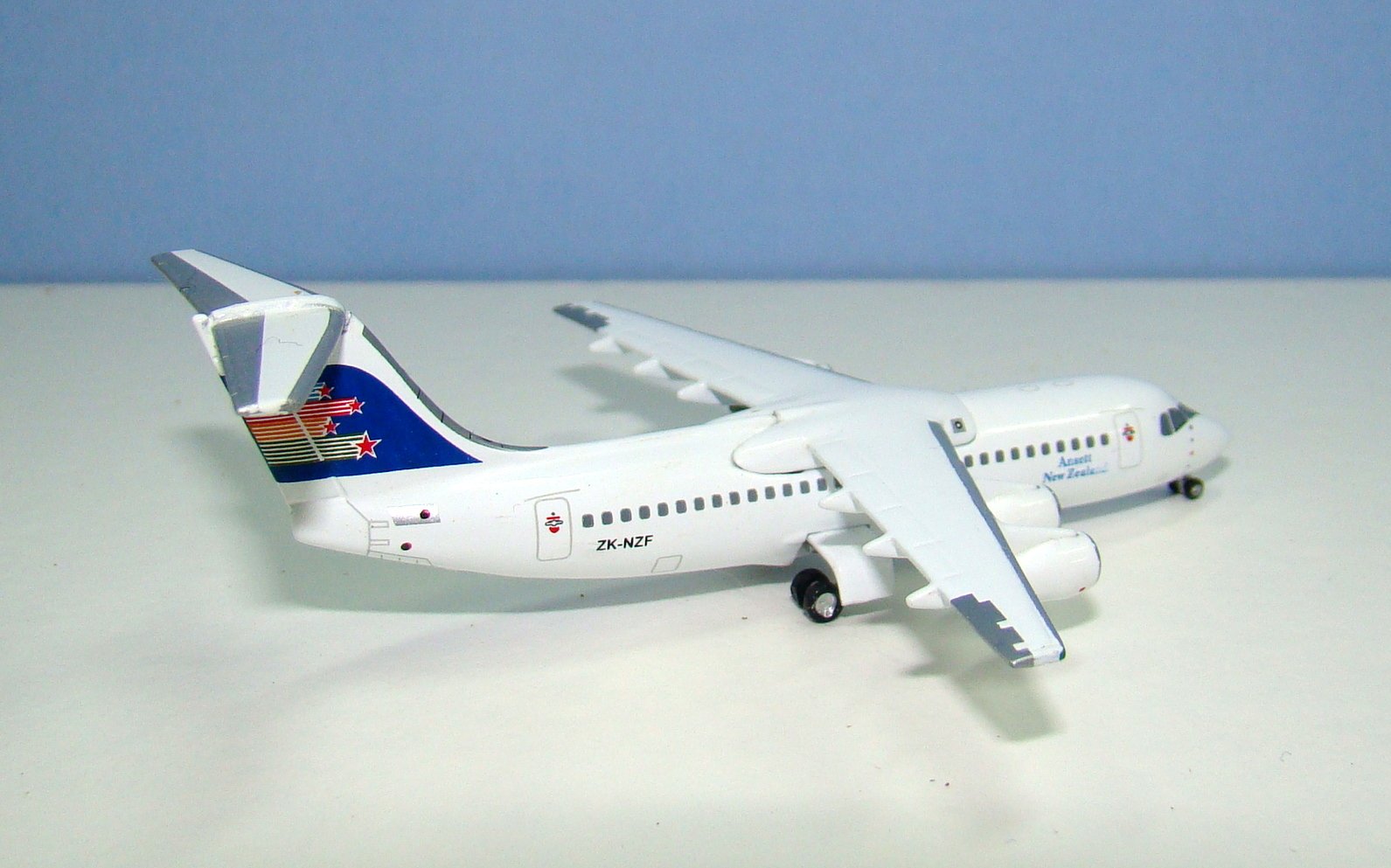
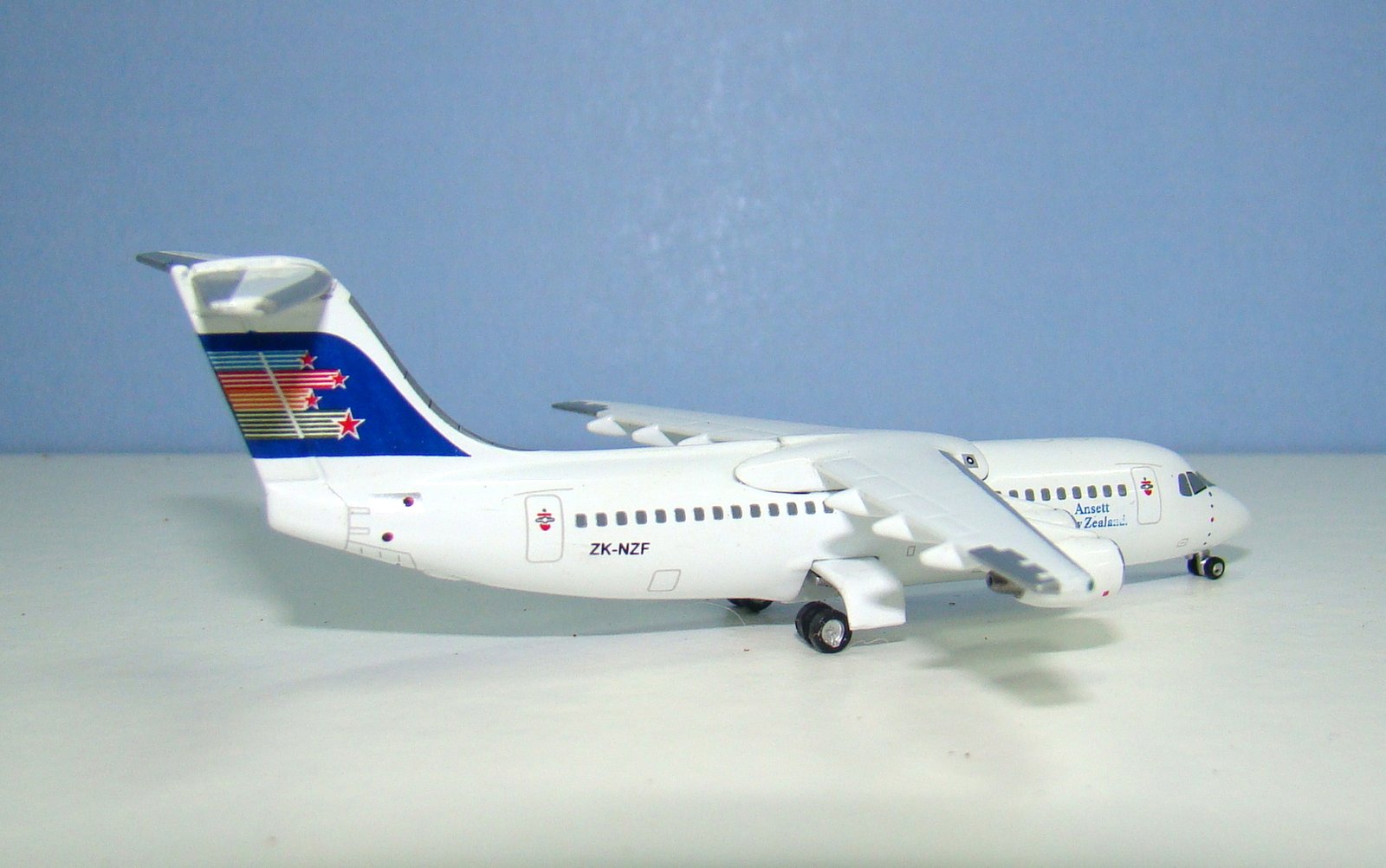
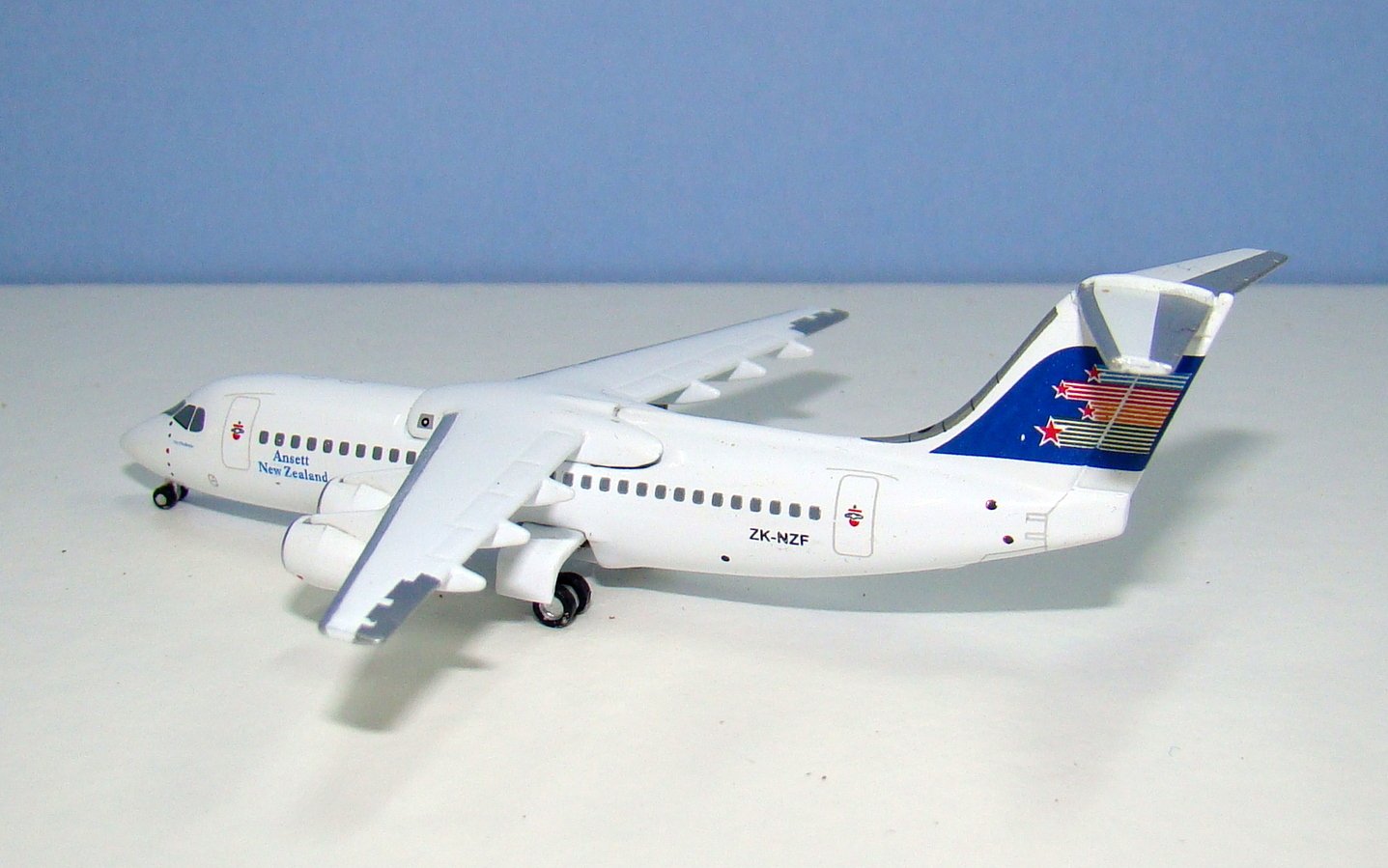
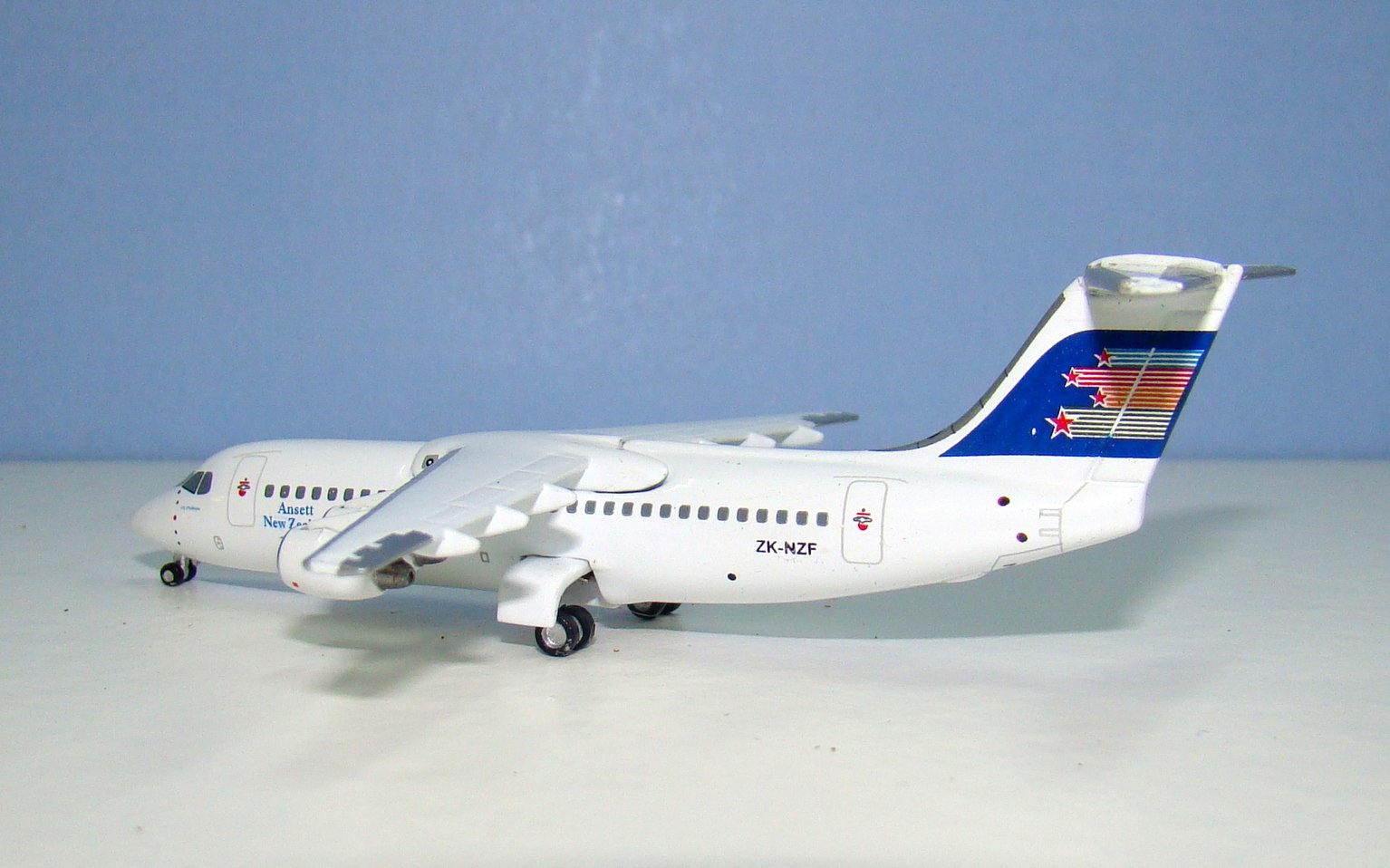
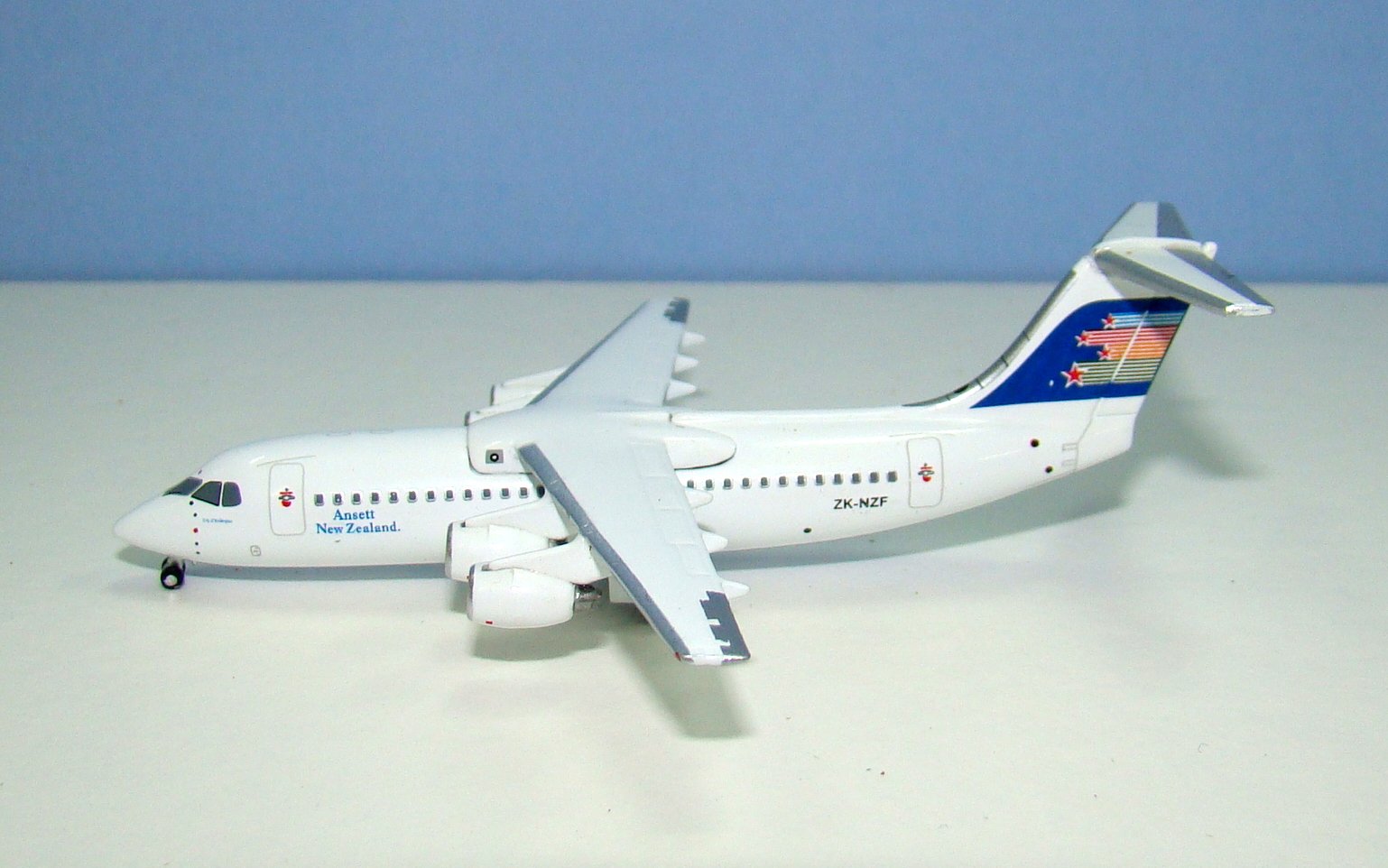
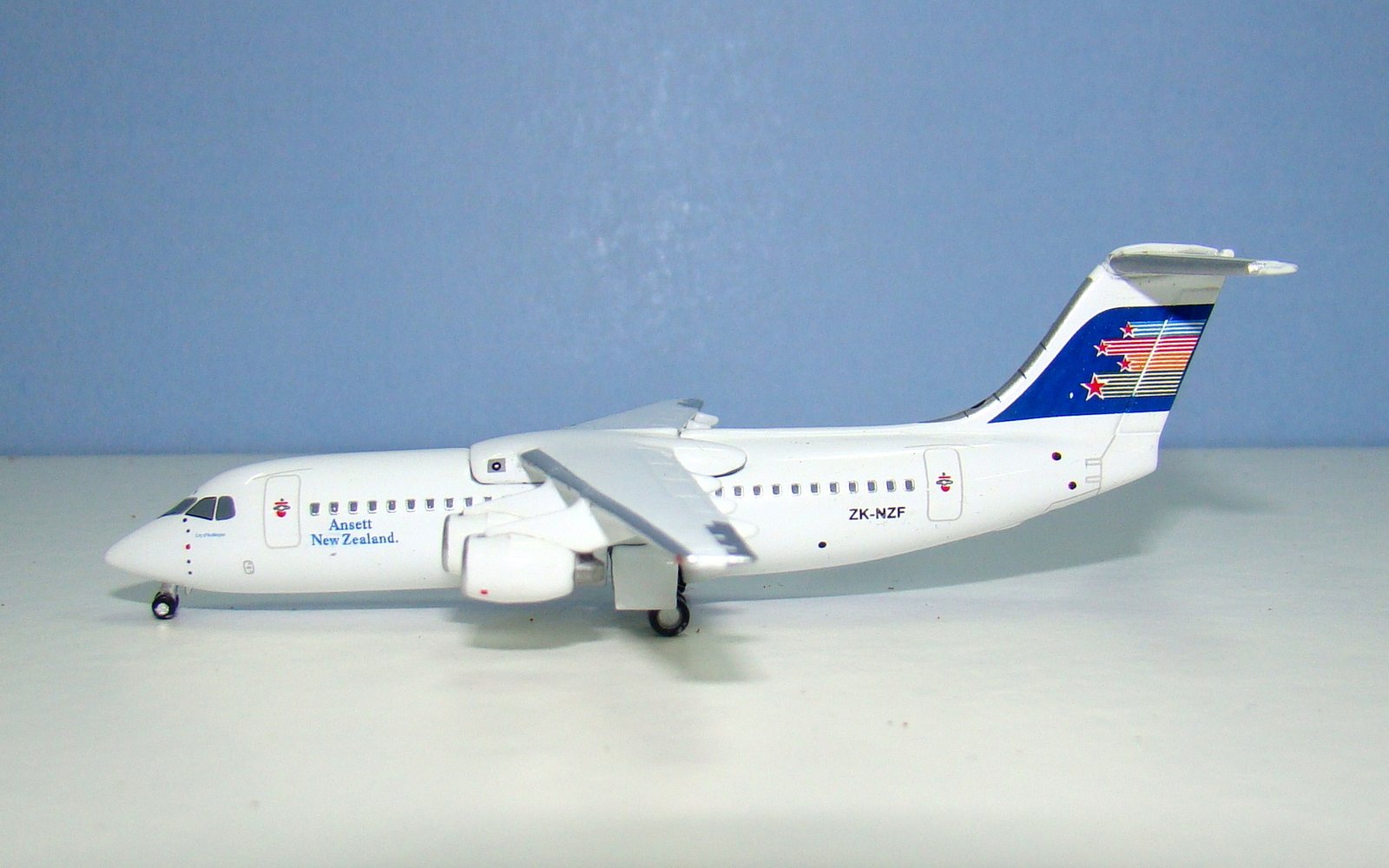
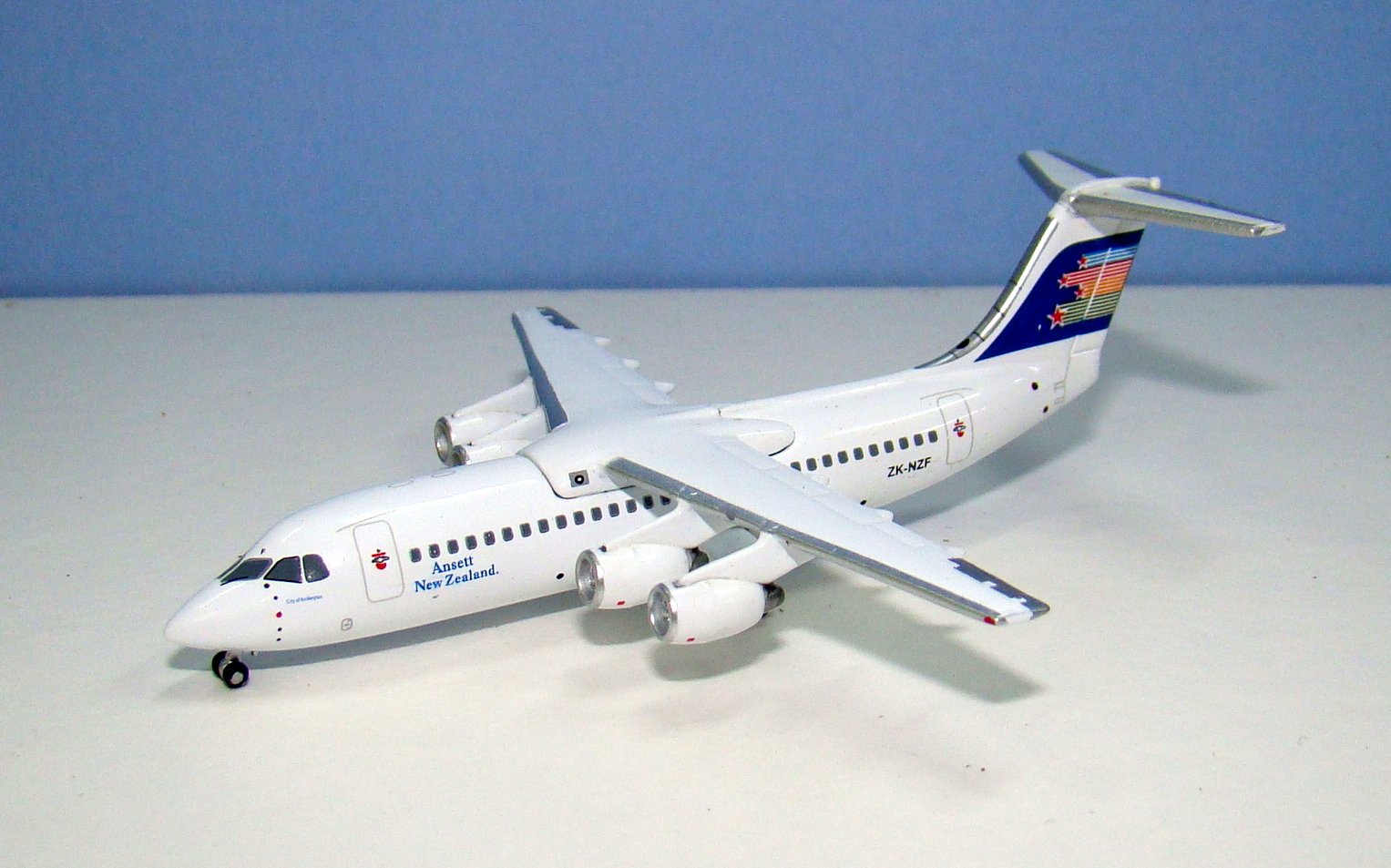
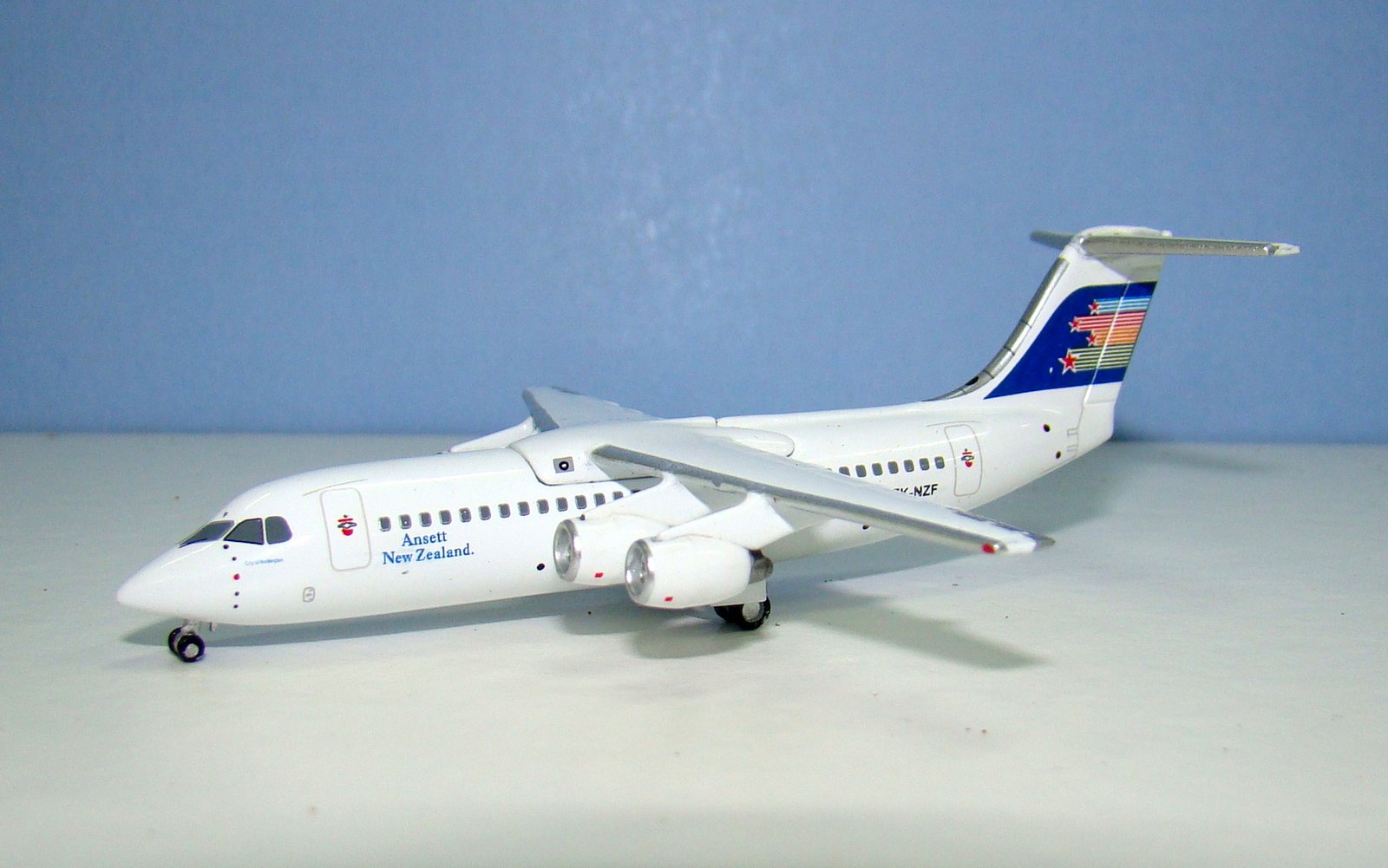
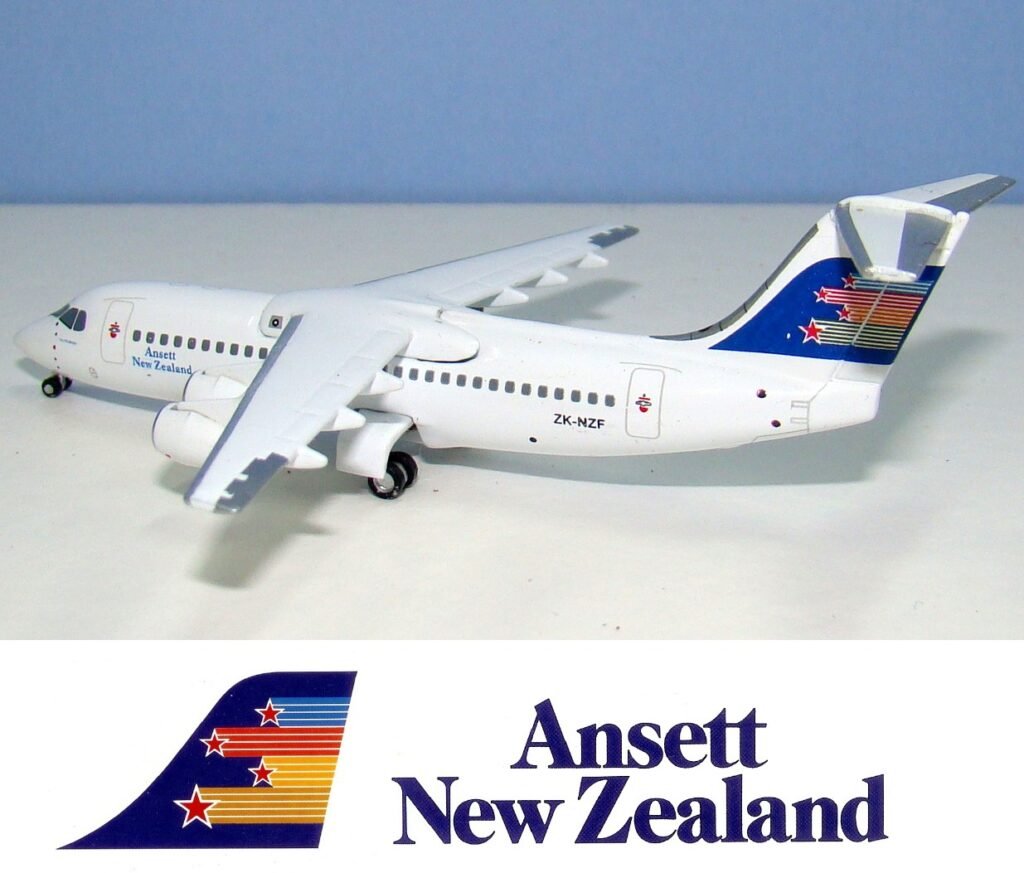
Ansett New Zealand BAE 146-300 ZK-NZF Jet-X 1:400 Scale Model Airliner
The roots of the future Ansett New Zealand came from the Newmans Group, which was heavily involved in the alternative transport option of buses via its Newmans Coach Lines brand. They had failed to takeover Mount Cook Airlines in 1983 and instead setup a rival airline knows as Newmans Air.
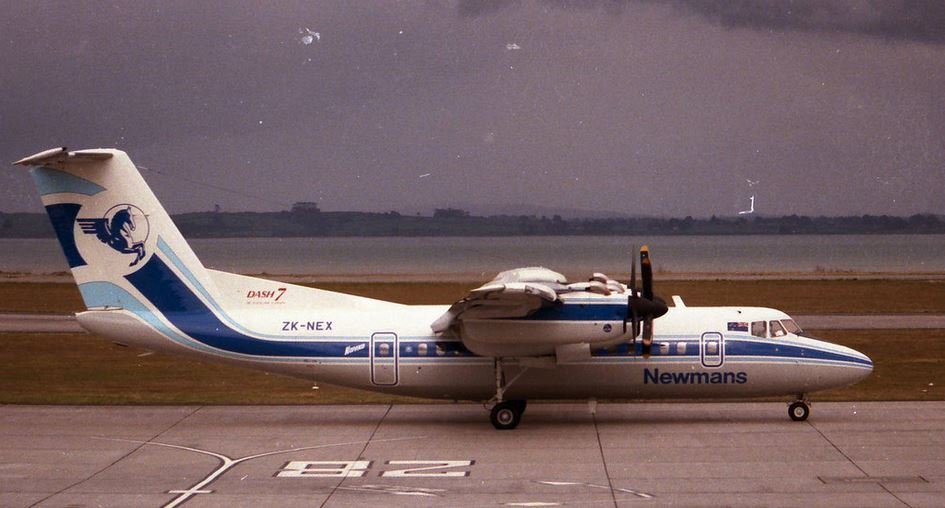
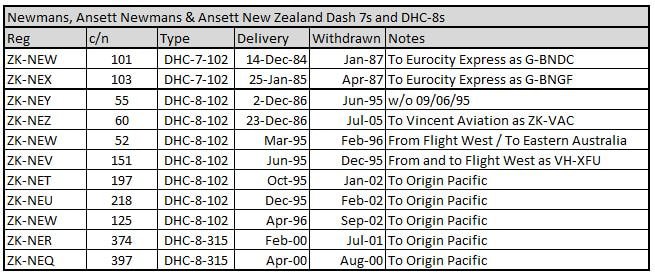
With this they hoped to maximise their profits from international tourists and began operations on February 13, 1985 with a pair of new De Havilland Canada Dash-7s. The initial route network competed directly with Mount Cook, with services connecting Christchurch with Queenstown 3 times daily, Christchurch and Rotorua twice daily and Rotorua to Auckland daily. The relatively remote Mount Cook airfield of Glentanner was added into the Queenstown sector and was a destination well suited to the Dash 7’s STOL capabilities.
Newmans Air Dash 7, ZK-NEX, at Auckland in November 1984. Photo by permission of Mike Cornwall from FlickR
Newmans appears to have had big plans for its airline with a future of jet service on the trunk routes and the Dash 7s moved to feeder services. The Dash 7 was a reliable and capable airplane but not particularly cheap to operate and relatively complex. Faced with competition from Mount Cook’s HS 748s and long history of service Newman’s airline was not a financial success. Liberalisation of the aviation sector by the then Labour government opened up a pathway for new investment into the startup. Accordingly in 1986 Newmans Air was reorganised as Ansett Newmans when new backers were found in the form of a NZ investment company, Brierley Investments (27.5%), and Ansett Australia’s parent ATI (50%).
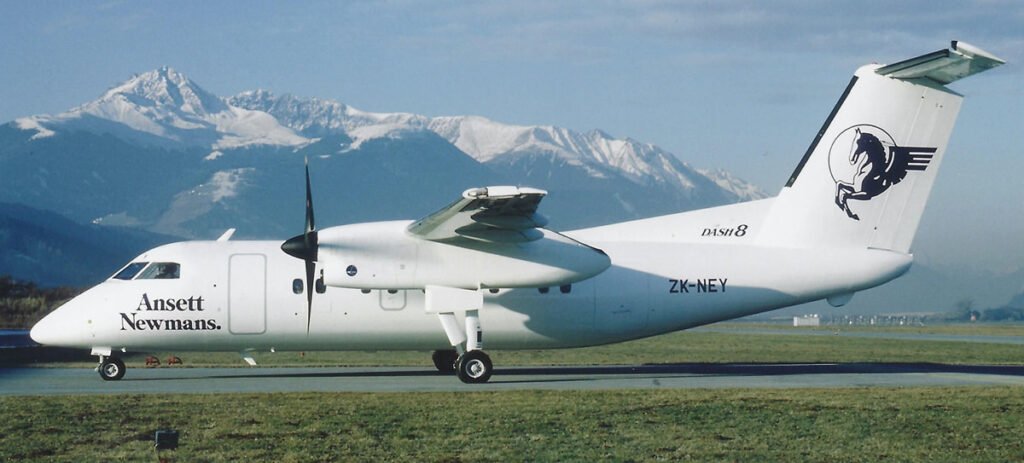
Ansett Newmans had a lot more clout than its predecessor and the Dash 7s were replaced with cheaper to operate and more efficient smaller 40 seater DHC-8-102s in late 1986/early 1987. This would be just the beginning however as with the increased investment and access to Ansett’s resources jets could be put into service, which would provide real competition, not with Mount Cook alone, but with the national carrier also. This was bolstered even further when on July 25, 1987 Ansett bought out the other shareholders and Ansett New Zealand was born.
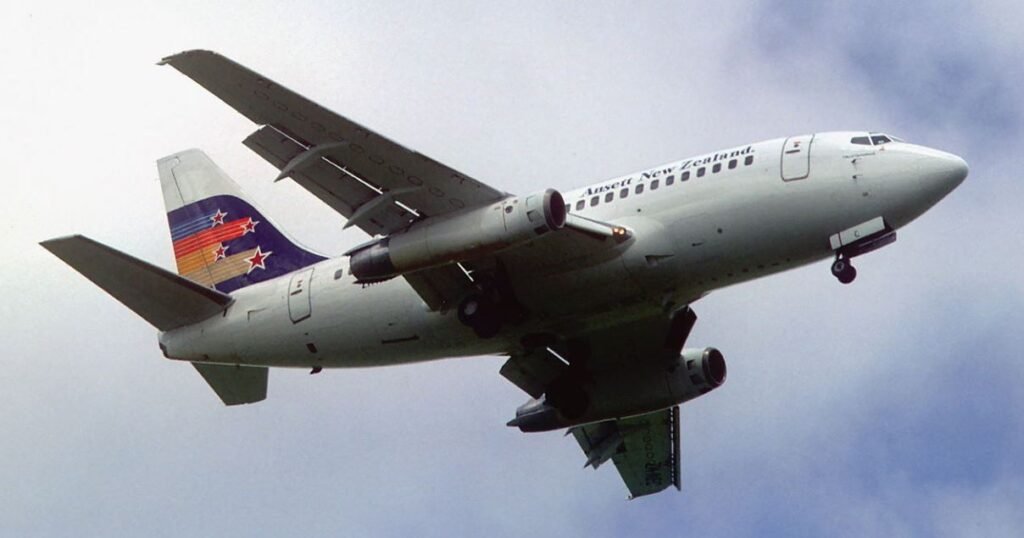
B737-130 ZK-NEC in November 1988. Photo by Aero Icarus from Wikipedia
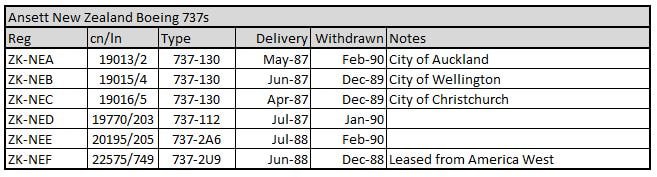
The new jet aircraft were somewhat unusual as they were a trio of aged Boeing 737-130s. In fact they were the second, fourth and fifth 737s ever built. Nonetheless the new 737s came with new terminal facilities at Wellington (opened on July 23, 1987), Auckland (October 30th) and Christchurch (November 5th).
These new facilities introduced the use of airbridges, hot meals and ‘Golden Wing’ lounges, in effect creating an end to end experience for passengers they had only previously been able to experience through Air New Zealand. As a Brit it is interesting that in NZ often airlines have operated the leases to terminals in a similar manner to the USA. This obviously has a greater impact on competition than the shared facilities common to Europe.
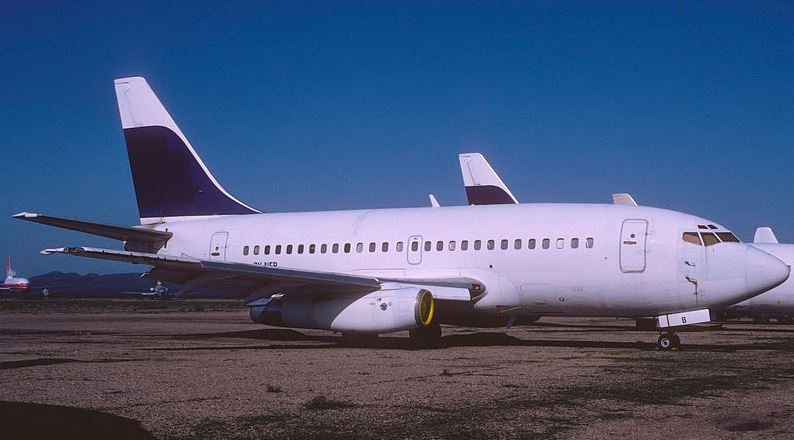
ZK-NEB stored at Marana still in rough Ansett NZ markings in April 1993. Photo by Aero Icarus from Wikipedia
The 737 fleet increased with the addition of a fourth 737-130 in July 1987 and a pair of 737-200s in June and July 1988. The 737-100/200s had never been intended to operate in the long term and the original intention was for them to be replaced with new 737-500s. Ansett’s takeover changed these plans and the 737-500s were cancelled and replaced with aircraft from Ansett’s large order for British Aerospace 146s.
Ansett New Zealand BAE 146-300 ZK-NZF Jet-X 1:400 Scale Model Airliner
Ansett New Zealand BAE 146-300 ZK-NZF Jet-X 1:400 Scale Model Airliner
Ansett New Zealand BAE 146-300 ZK-NZF Jet-X 1:400 Scale Model Airliner
Ansett New Zealand BAE 146-300 ZK-NZF Jet-X 1:400 Scale Model Airliner
Ansett New Zealand BAE 146-300 ZK-NZF Jet-X 1:400 Scale Model Airliner
Ansett New Zealand BAE 146-300 ZK-NZF Jet-X 1:400 Scale Model Airliner
Ansett New Zealand BAE 146-300 ZK-NZF Jet-X 1:400 Scale Model Airliner
Ansett New Zealand BAE 146-300 ZK-NZF Jet-X 1:400 Scale Model Airliner
Ansett New Zealand BAE 146-300 ZK-NZF Jet-X 1:400 Scale Model Airliner
Ansett New Zealand BAE 146-300 ZK-NZF Jet-X 1:400 Scale Model Airliner
Ansett New Zealand BAE 146-300 ZK-NZF Jet-X 1:400 Scale Model Airliner
Ansett New Zealand BAE 146-300 ZK-NZF Jet-X 1:400 Scale Model Airliner
Network expansion in late 1988 added Dunedin and Palmerston North to the schedule creating a schedule that encompassed all of the main trunk destinations. The first BAE 146-200 ‘Whisper Jets’ arrived in July 1989 with three on charge by mid-October, one of which was a quick change aircraft accepted on a trial basis. The trials, as a freighter between Auckland and Christchurch, were a success and the QC was purchased on January 24, 1990.
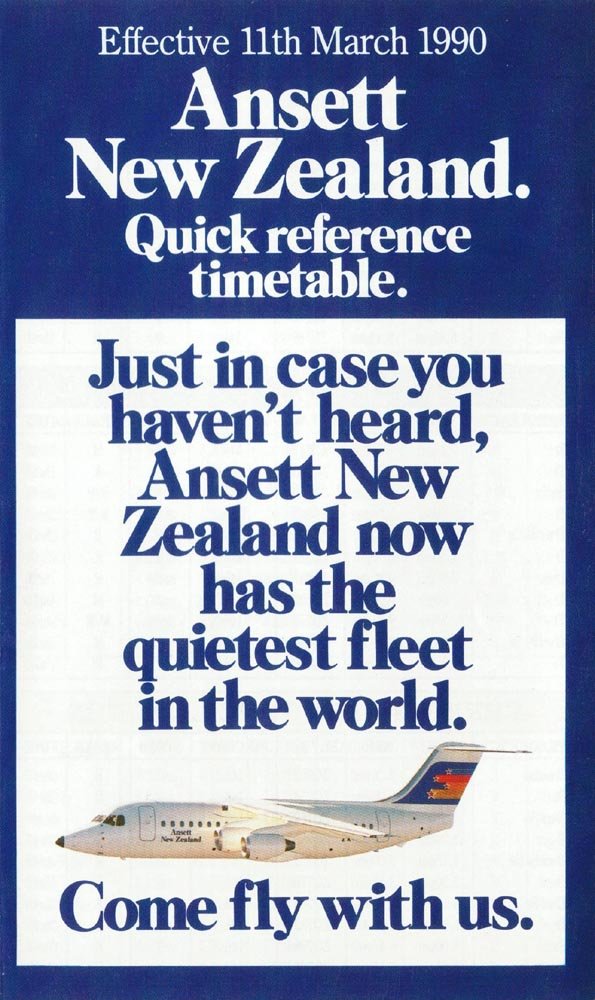
By February 1990 all the 737s had been withdrawn leaving a BAE 146 only jet fleet (the DHC-8s remained) of eight aircraft. All of the 146s following the first three would be larger series 300s of which ZK-NZF was the first. Glentanner was lost from the network, however services were begun using jets, for the first time, between Queenstown and Invercargill, in the far South.
The BAE 146s gave Ansett New Zealand a homogenous modern jet fleet for the first time and would provide the airline’s competitive edge into the 2000s. In part 2 we’ll investigate Ansett New Zealand in the 1990s.