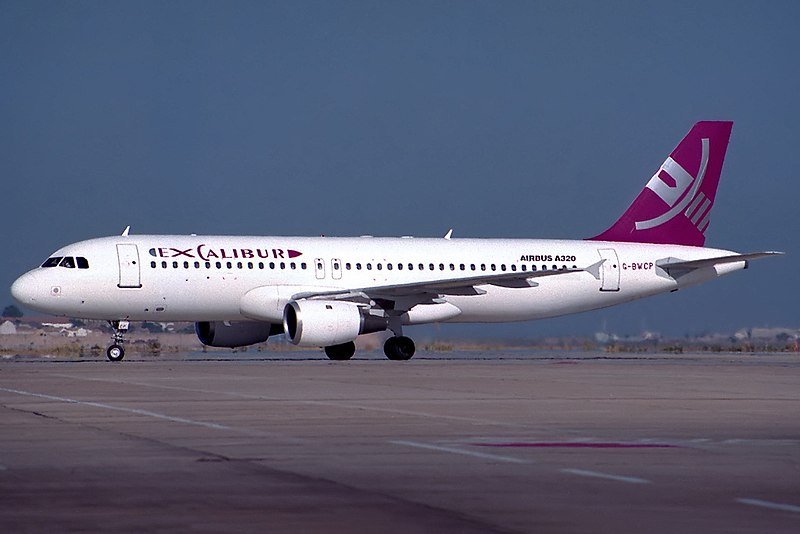
The charter airline industry has always been a turbulent one but that hasn’t stopped many from getting into it. The early 90s were a time of great change as older companies like Dan Air and Air Europe disappeared and new ones started up. Excalibur was one of the new breed using ultra-modern equipment and offering a great service, at least until an ill-thought out change of direction led to their downfall.
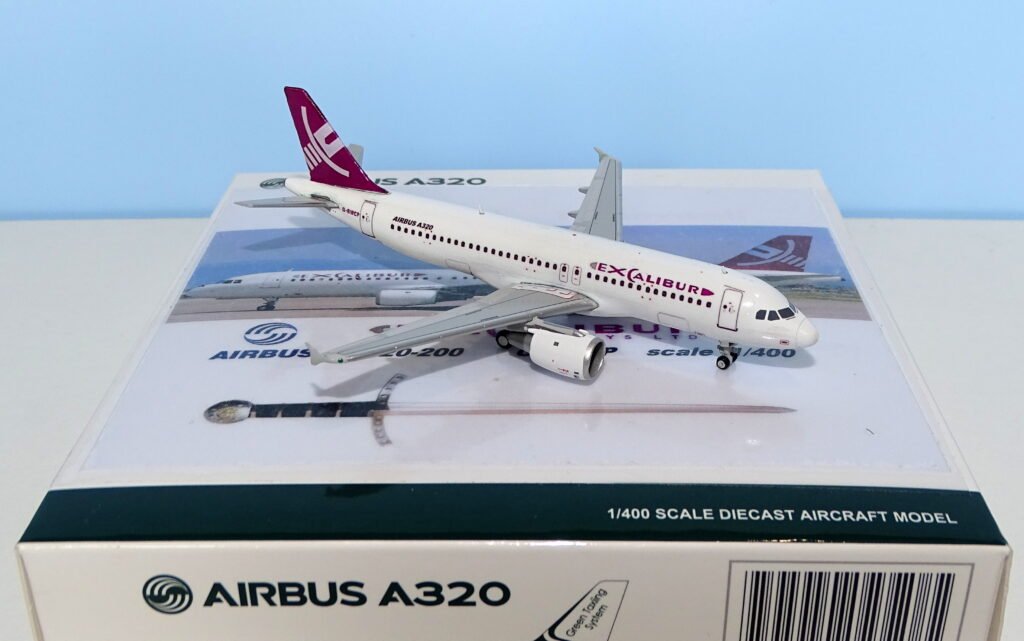
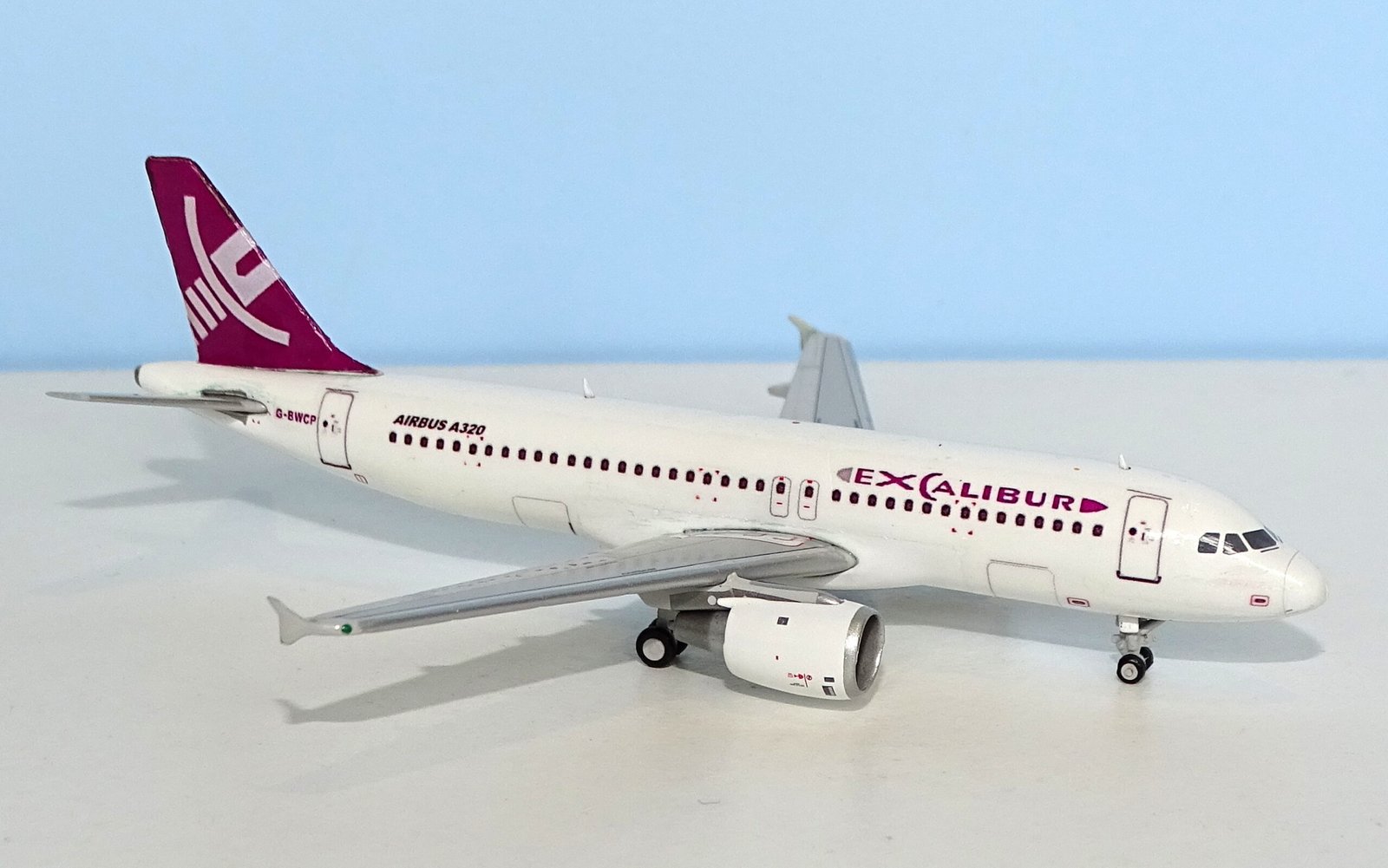
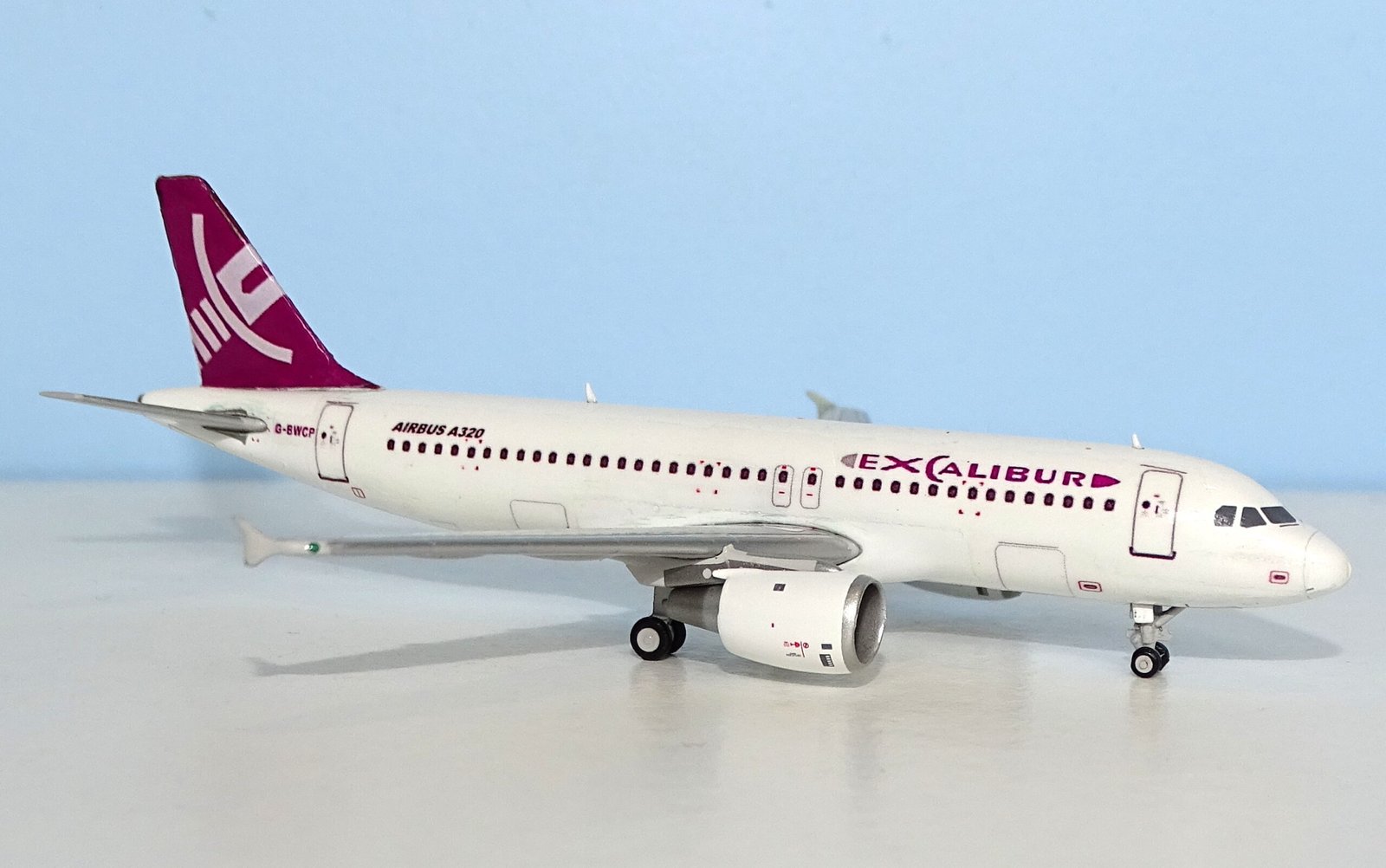
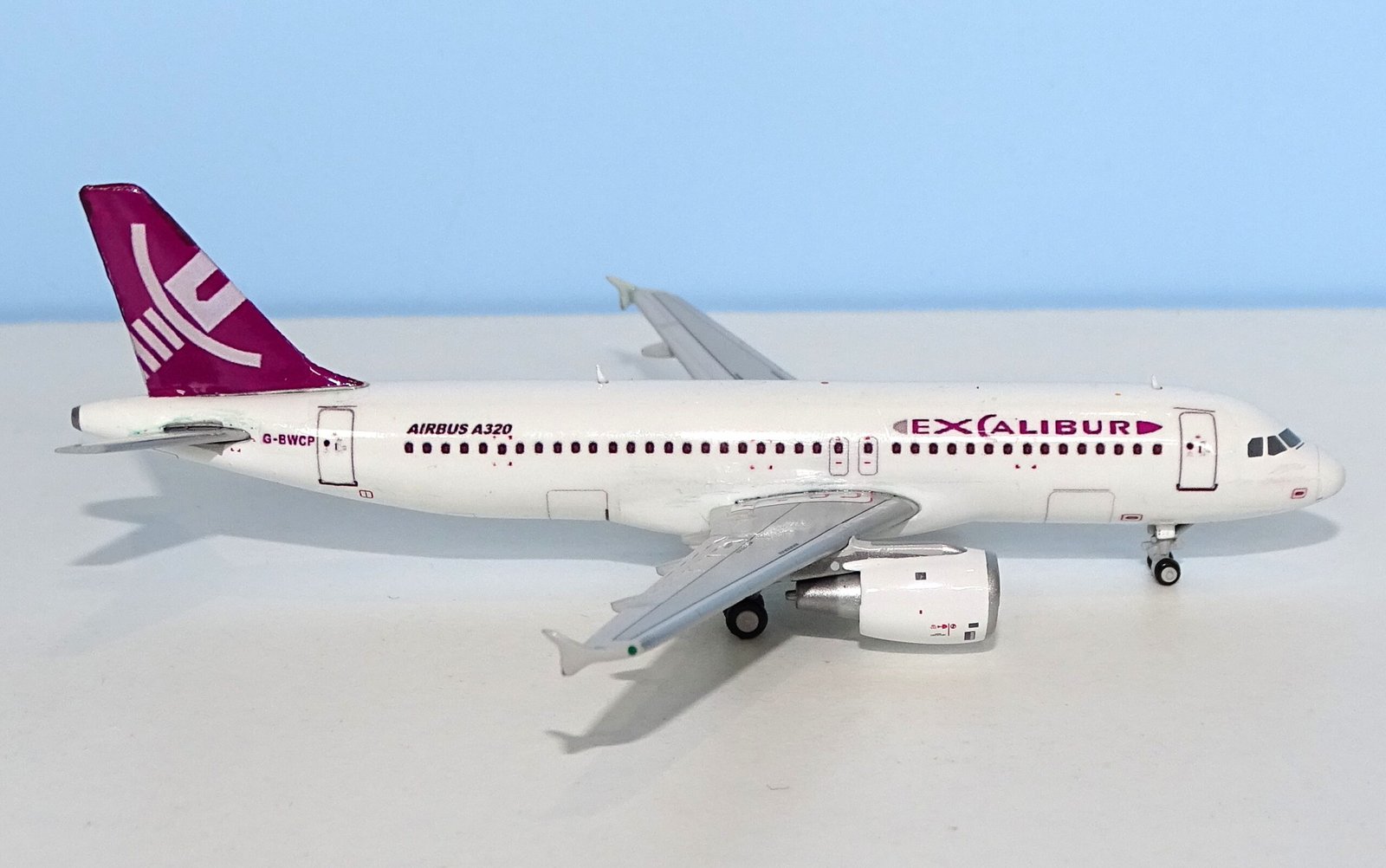
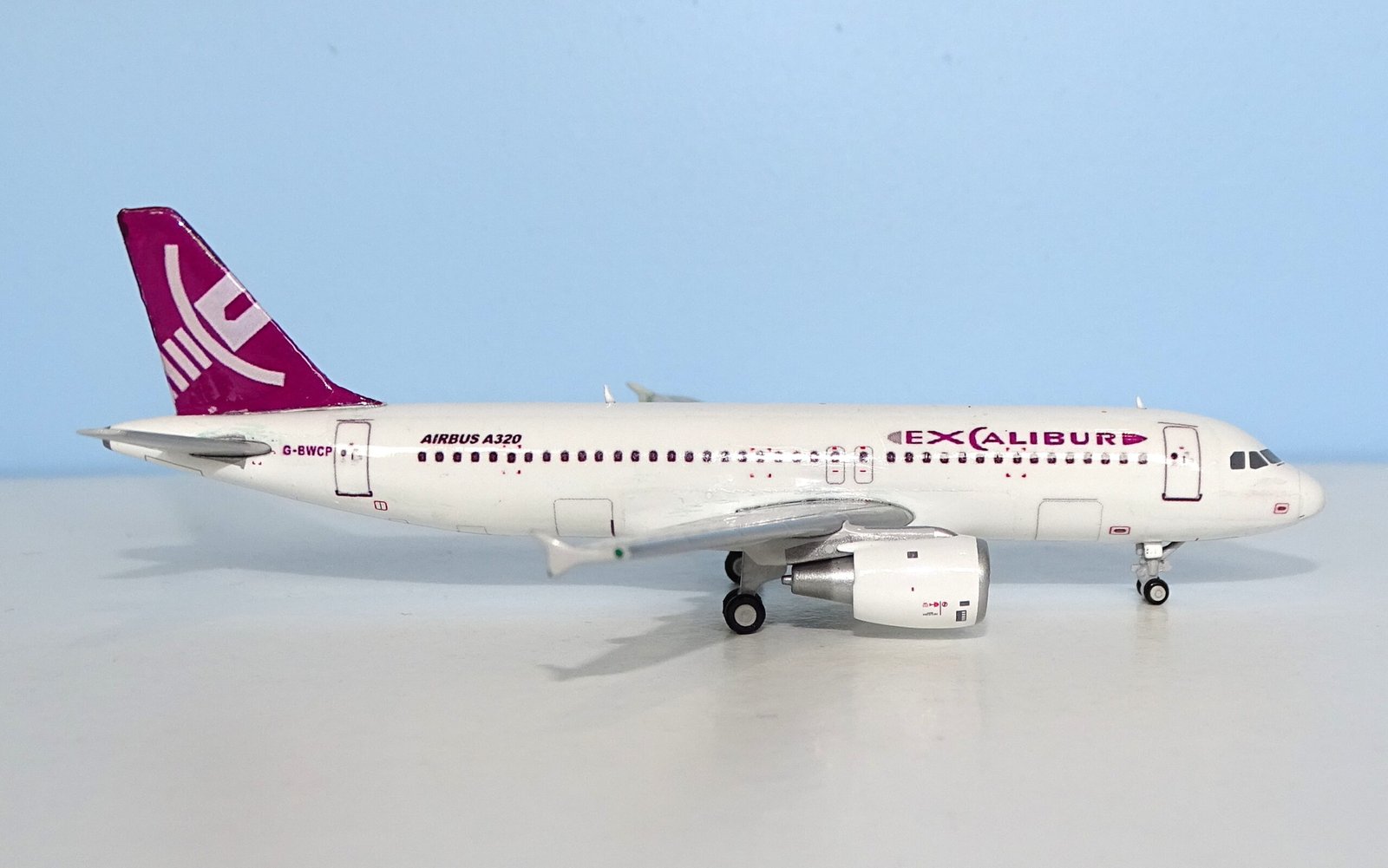
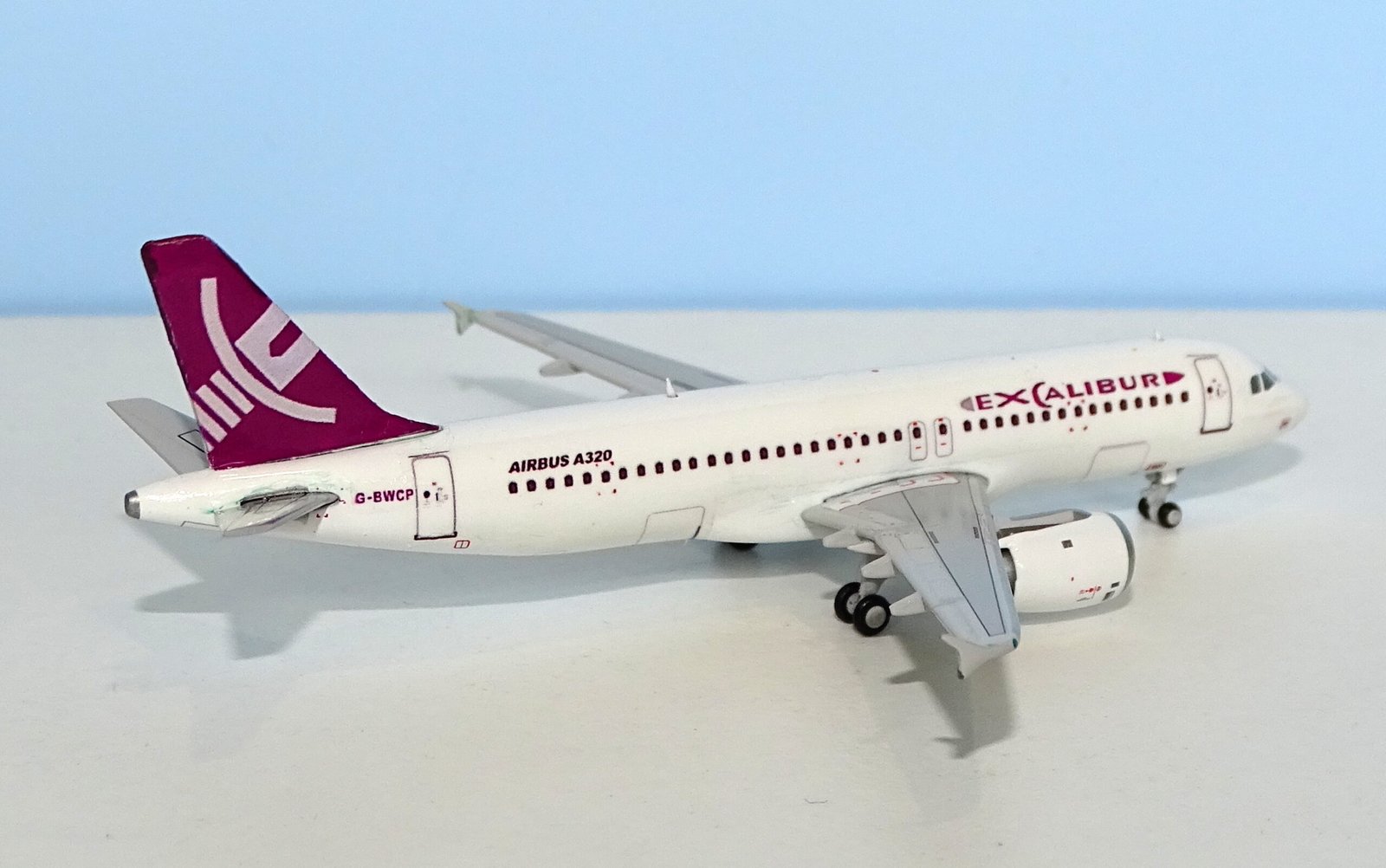
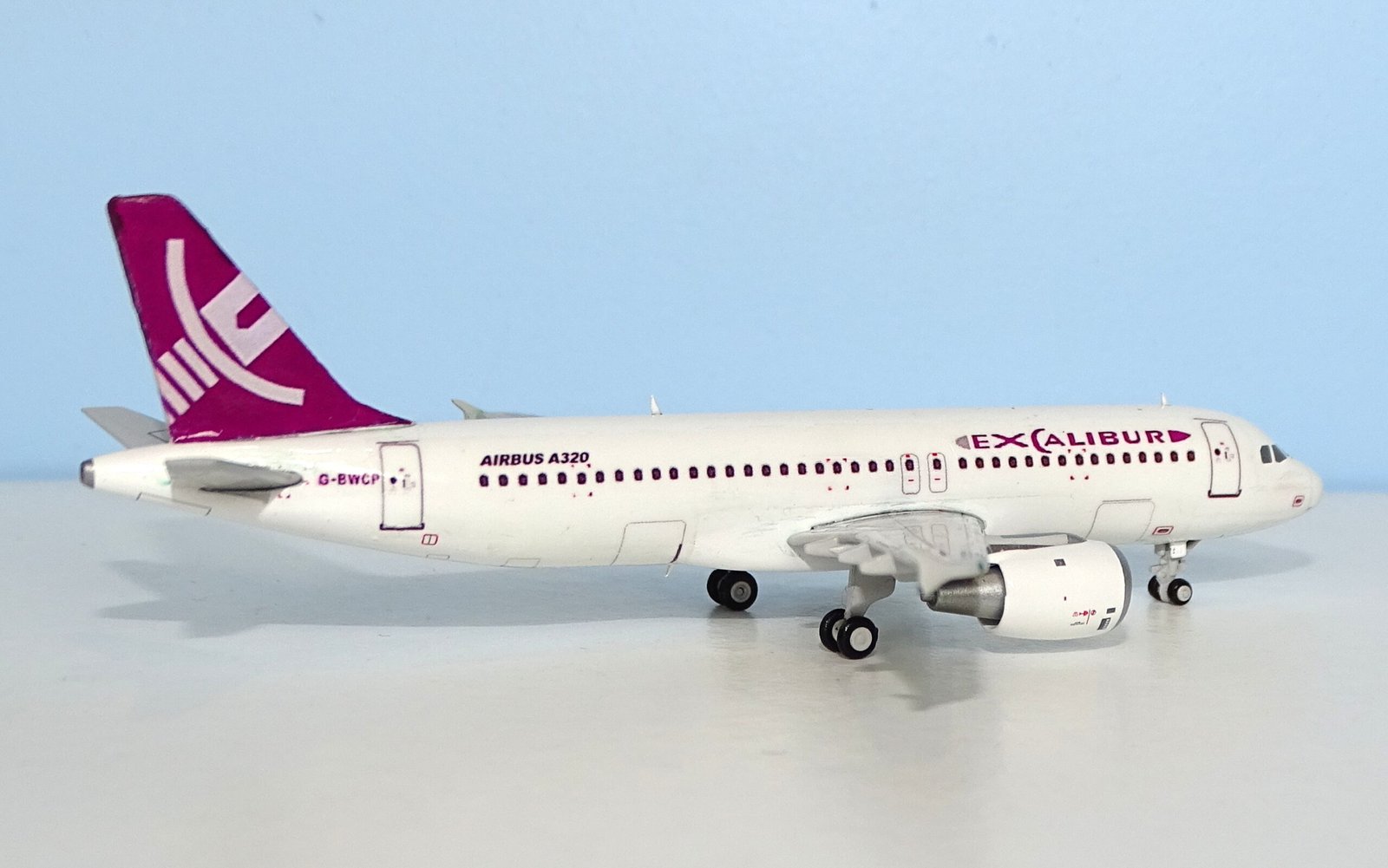
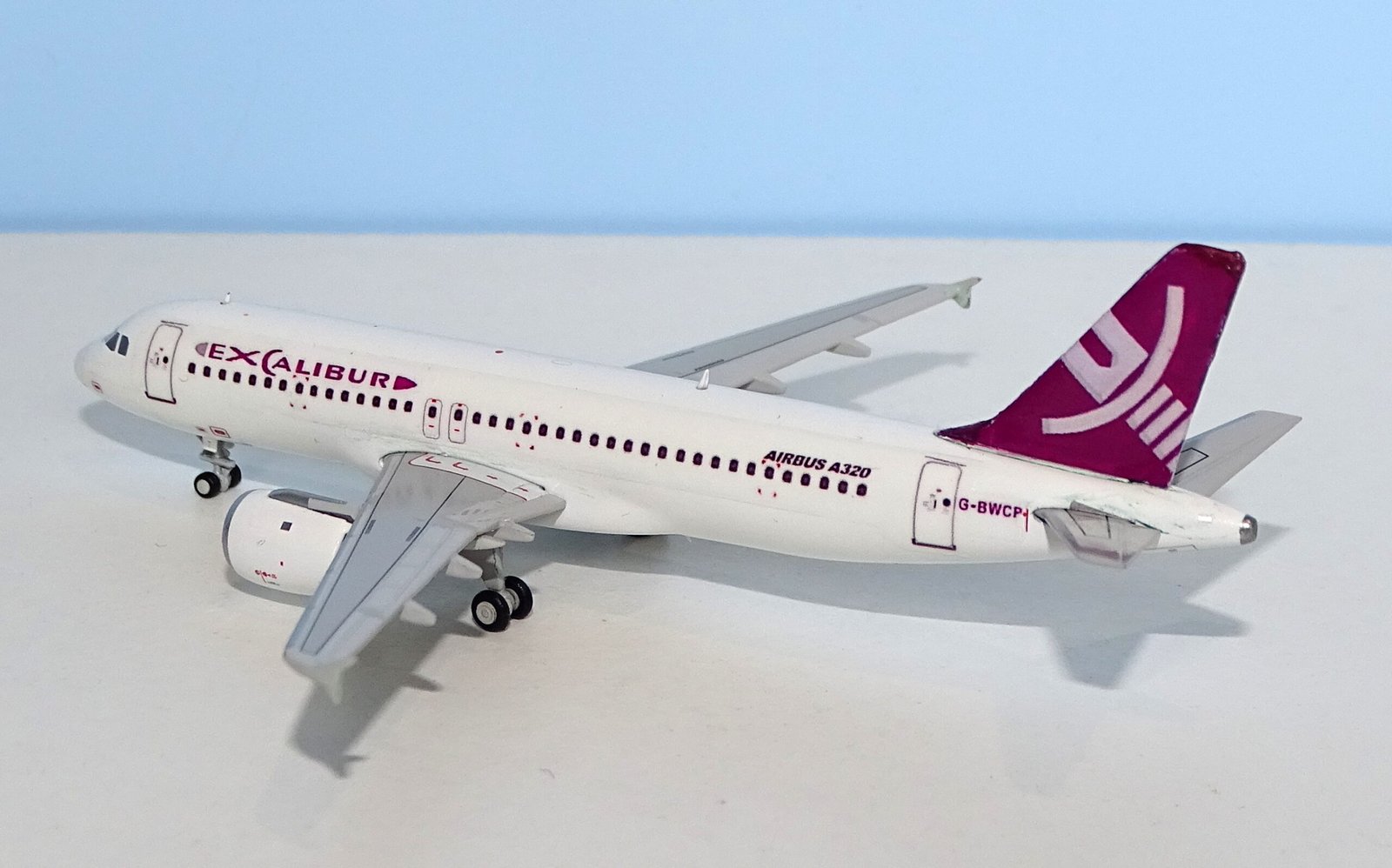
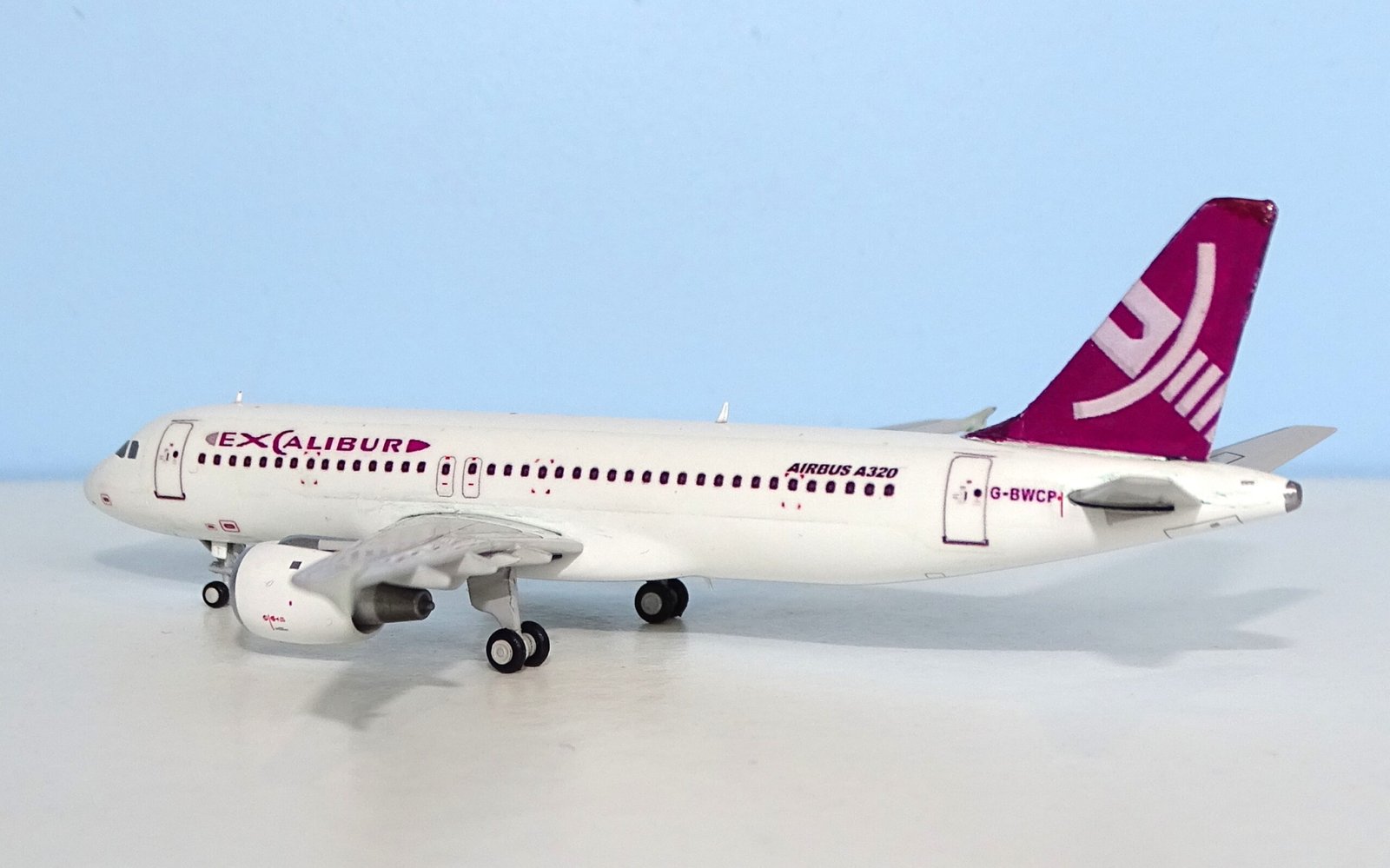
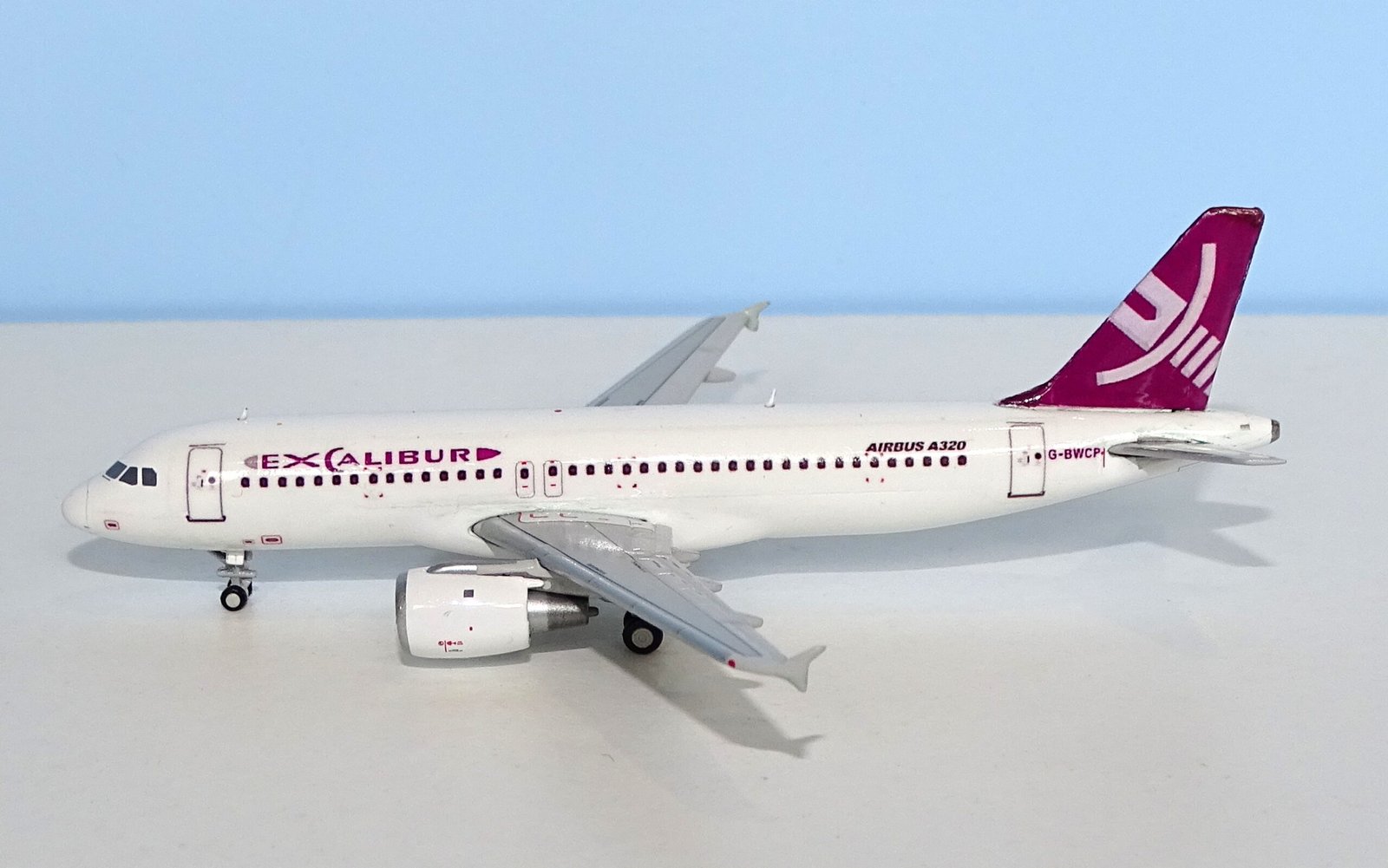
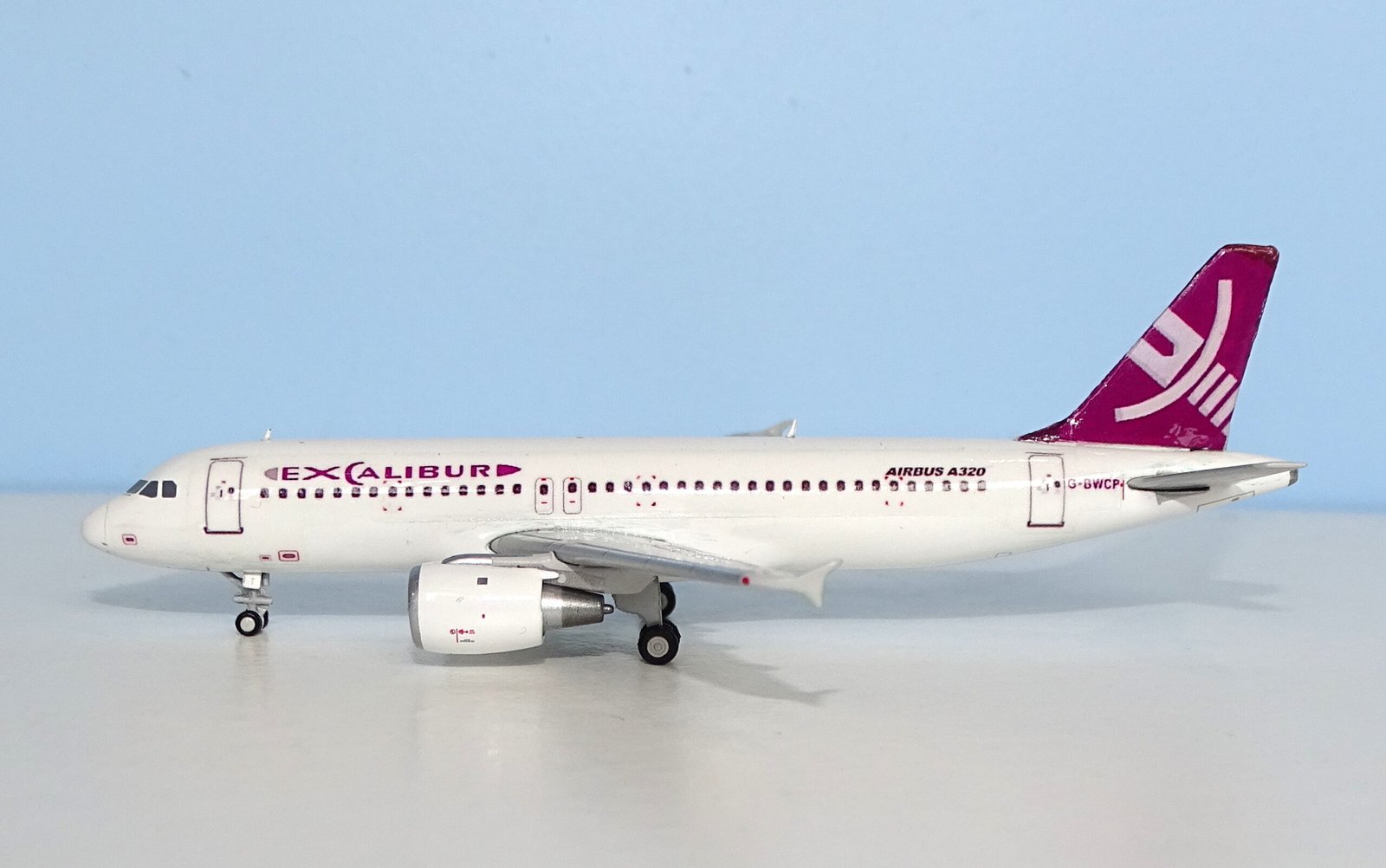
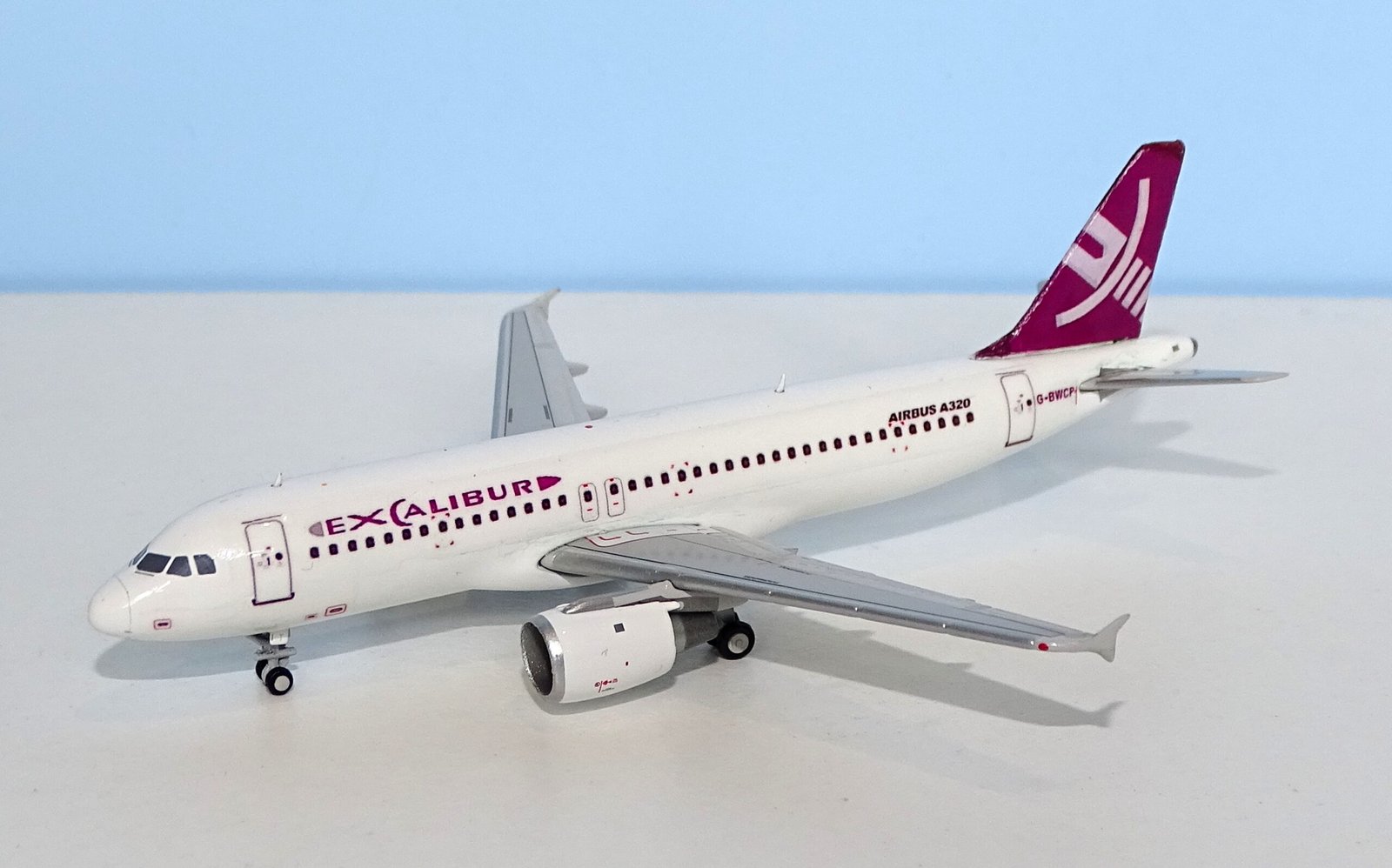
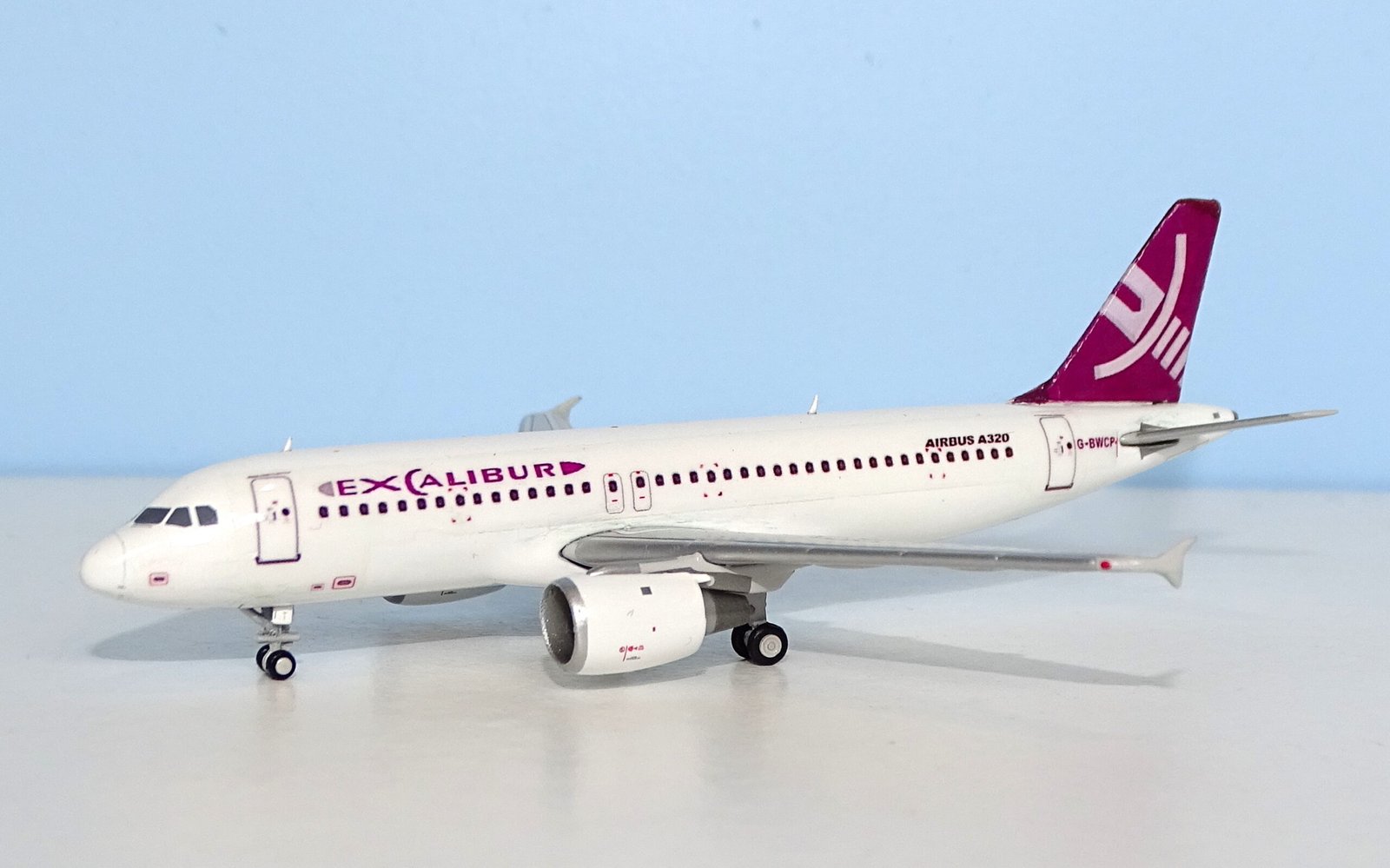
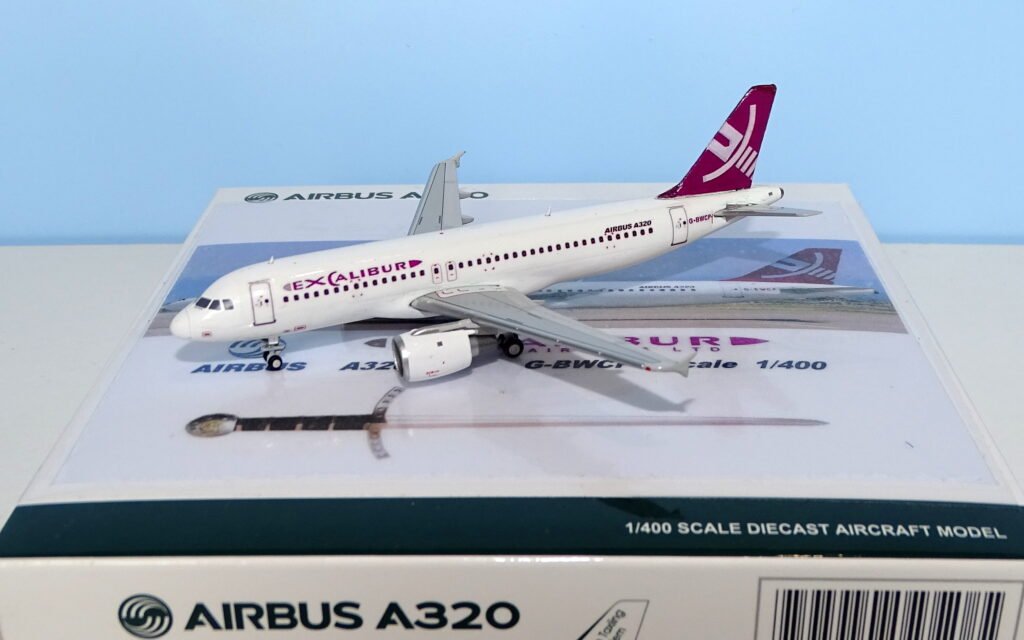
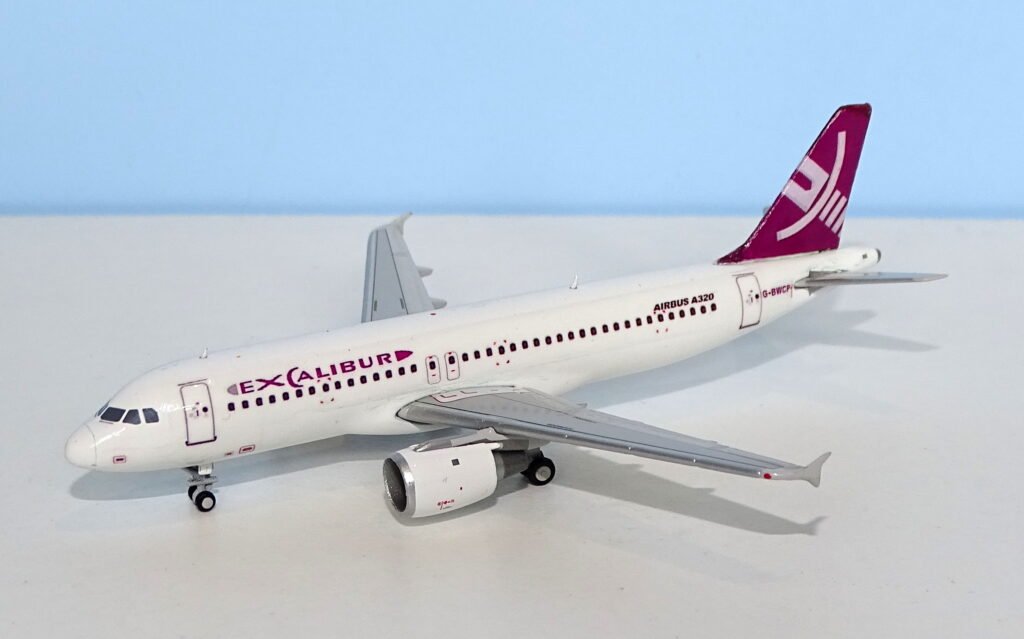
Excalibur Airways Airbus A320 G-BWCP Custom Model using JC Wings A320 mould
This post is dedicated to Mike Cage of MLC Customs who made this wonderful custom model.
The economic turbulence that went with the First Gulf War at the dawn of the 90s caused many troubles for the British charter airline scene. It led to the collapse of the parent company of Air Europe (and thus the airline itself) in March 1991, contributed to the decline and sale of Dan Air in 1992 and also saw to the Trans European (TEA) group of airlines in September 1991. Nonetheless, as brands exited the market there was no shortage of new entrants to take their place. 1991/92 saw the addition of Airtours, Ambassador, Flying Colours and Excalibur to the roster while other young charter companies like Air 2000 and Air UK Leisure grew strongly.
Excalibur was actually formed from the ashes of TEA UK (the British branch of the TEA family). TEA UK had been Birmingham based but using its remains Excalibur would be based at East-Midlands Airport, although the majority of its services flew from elsewhere. Ownership of the new airline was split between Air Malta (30%), ex-TEA UK management (40%) and a UK Capital investmet group 3i (30%).
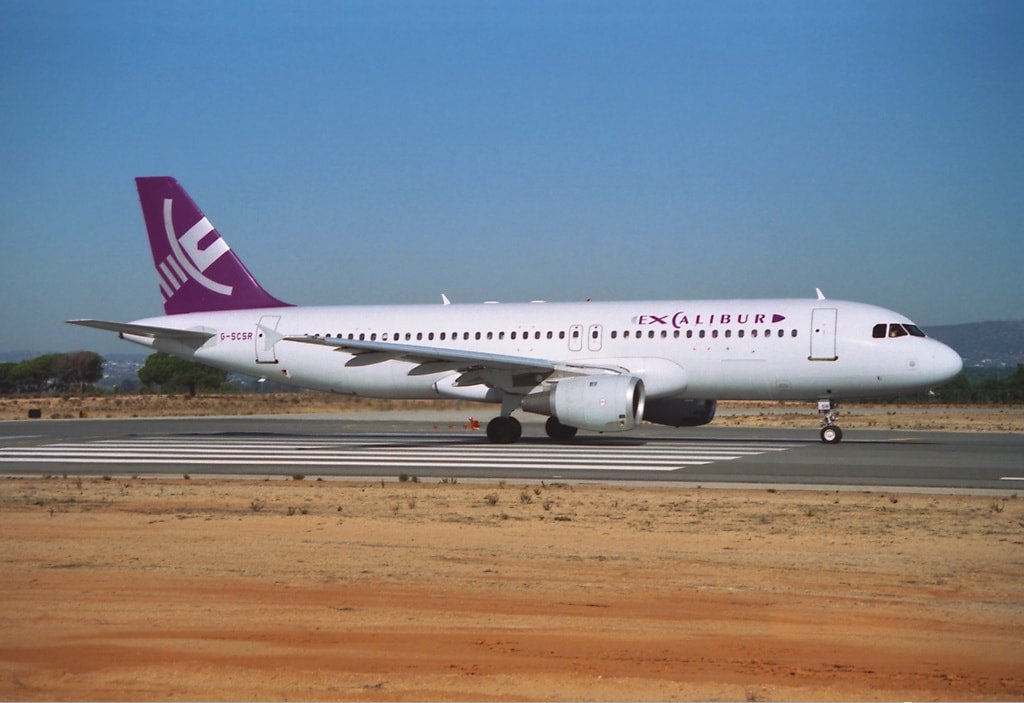
G-SCSR by Pedro Aragão, CC BY-SA 3.0 GFDL, via Wikimedia Commons
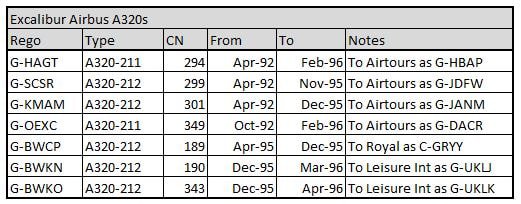
The airline’s first equipment was to be a trio of brand new Airbus A320s leased from GPA Airbus. At the time the A320 was just finding its feet and these aircraft would be the first in the UK to be used by a charter airline. Technically British Airways had used the type on charter flights before flying an old BCal contract in 1988 using G-BUSB and G-BUSC on late night charters but Excalibur was the first to use them full time this way.
Pedro Aragão, CC BY-SA 3.0 GFDL, via Wikimedia Commons
Incidentally it is worth remembering that the A320 became very popular with UK charter airlines later in the 90s being operated by almost everyone from Air 2000 to Monarch, Inter European, Flying Colours, Airtours, Airworld, Caledonian, All Leisure and Leisure International. This was of course years before the low-cost revolution and the appearance of EasyJet A320s in the early 2000s.
Excalibur Airways Airbus A320 G-BWCP Custom Model using JC Wings A320 mould
Excalibur Airways Airbus A320 G-BWCP Custom Model using JC Wings A320 mould
Excalibur Airways Airbus A320 G-BWCP Custom Model using JC Wings A320 mould
Excalibur Airways Airbus A320 G-BWCP Custom Model using JC Wings A320 mould
Excalibur Airways Airbus A320 G-BWCP Custom Model using JC Wings A320 mould
Excalibur Airways Airbus A320 G-BWCP Custom Model using JC Wings A320 mould
Excalibur Airways Airbus A320 G-BWCP Custom Model using JC Wings A320 mould
Excalibur Airways Airbus A320 G-BWCP Custom Model using JC Wings A320 mould
Excalibur Airways Airbus A320 G-BWCP Custom Model using JC Wings A320 mould
Excalibur Airways Airbus A320 G-BWCP Custom Model using JC Wings A320 mould
Excalibur Airways Airbus A320 G-BWCP Custom Model using JC Wings A320 mould
Excalibur Airways Airbus A320 G-BWCP Custom Model using JC Wings A320 mould
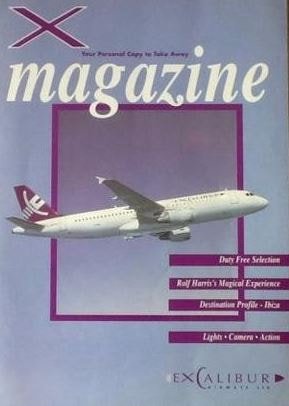
Excalibur’s first 3 A320s were based at Gatwick and Manchester for the initial summer programme, which began with the first flight on May 1, 1992. The airline’s initial callsign was Camelot and its codes were EXC (IATA) and EQ (ICAO). In keeping with the name and call-sign the smart, rather non-charter style, livery featured the hilt of King Arthur’s sword on the tail.
I remember seeing Excalibur A320s regularly at LGW during the 1992-1995 seasons and I was always interested in the rather unusual registration sequences the A320s used. Just recently I discovered the G-KMAM was registered in honour of Air Malta since KM was Air Malta’s code and AM was the initials of the Air Malta chairman Albert Mizzi. I suspect the other reg combinations have similar stories behind them.
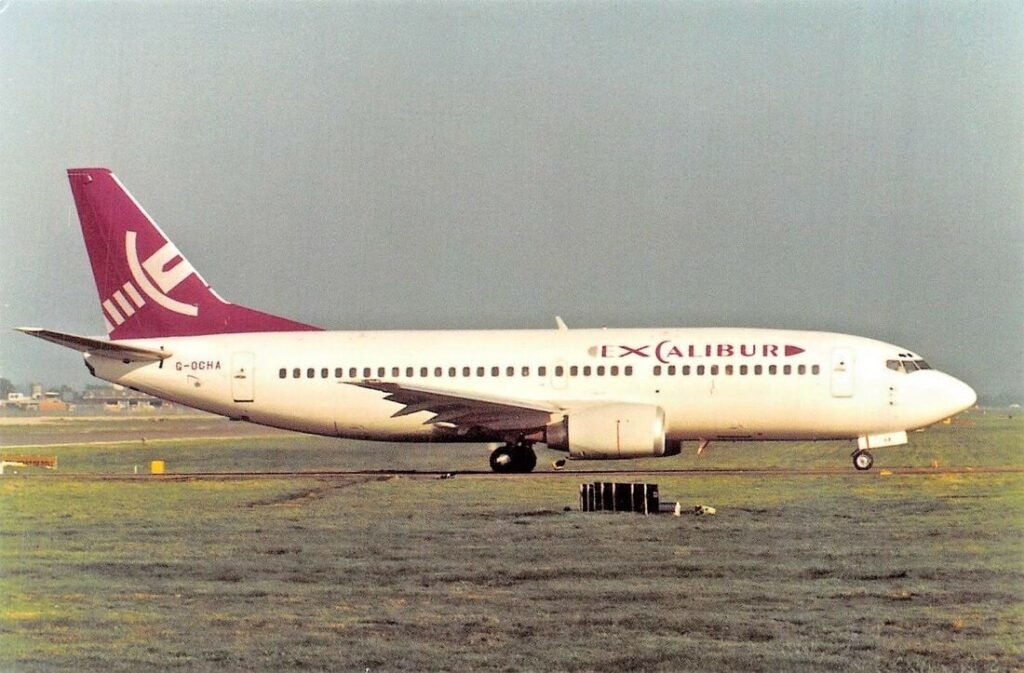
The sole 737 G-OCHA
Excalibur flew to the usual selection of Mediterranean charter flights but also flew to Egypt and Israel. A fourth A320 joined the fleet in October 1992 and together the four 320s formed the fleet for several seasons. The only deviation away from the A320 was the usage of a single ex-Dan Air Boeing 737-3Q8 leased from ILFC for the 1994 season and registered G-OCHA. This aircraft was replaced in the 1995 schedule by a 5th A320.
Excalibur offered a full service operation, which gained a good reputation so it is unfortunate that its later years are stained by such a poor one. By June 1995 passenger numbers had reached two million and that summer the airline initiated seat-only services from East Midlands to Alicante, Faro, Ibiza, Mahon and Palma.
This was the undoubted high point for the airline, which seems to have been struggling for contracts for the next season, probably due to the increasing levels of vertical integration of tour companies and their in house airlines. On November 29, 1995 it was announced that the airline had been bought by the Scottish long-haul operator Globespan for an undisclosed fee.
The A320s were to be gradually withdrawn (although a couple of extra leased aircraft joined in December 1995). The last left the fleet in April 1996. The new Excalibur was to be a long-haul charter airline but not owning any widebody aircraft itself it went to the market for some. Negotiations were advanced for a pair of DC-10-30s and the registrations G-SPNA and SPNB were reserved for them. Unfortunately at the 11th hour the deal feel through and the aircraft were sold elsewhere.
Excalibur was forced to look for a short-term sub-lease of a DC-10 when it couldn’t acquire any of its own in time for the 1996 summer season. They found one and Globespan outsourced the rest of the flying to ATA L-1011s.
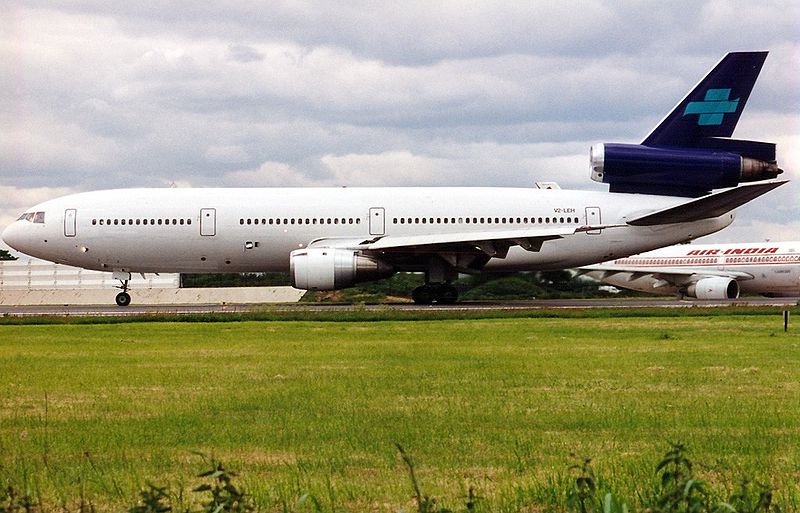
JetPix (GFDL 1.2 or GFDL 1.2 ), via Wikimedia Commons
Above: The ill-fated DC-10 in Excalibur service. It never wore the sword livery.
The aircraft sub-leased was the DC-10 V2-LEH operated by Skyjet Antigua. It was an ex-Alitalia and Aeromexico frame but proved to be disastrously unreliable. The first major incident was in early June when 91 passengers refused to reboard the aircraft when smoke filled the cabin. Two weeks later it was due to operate a Manchester to Orlando service but suffered a catalogue of problems, which resulted in an aborted take-off. Once again the passengers, 350 this time, refused to reboard the aircraft.
Excalibur was forced to charter a Laker DC-10 but the 700 passengers in Manchester and on the return flight from Orlando were delayed by 25 hours. Excalibur was pilloried for all these incidents in the British press. The day after these events Excalibur was forced to declare bankruptcy as tour operators withdrew their contracts.
The collapse of Excalibur was shockingly swift but not untypical of the struggles faced between seasons for charter airlines. Ultimately the change to long-haul operations was handled poorly but it would appear this change was necessitated by the changing structure of the IT industry in general.