Vienna Longer Haul: Austrian A340s

By the early 90s the A310s had proved their value and given Austrian the start they needed on long haul routes. In fact before the last A310 arrived Austrian had already ordered its next long haul product – the four engined A340. The first pair was ordered in September 1991 with a further pair optioned.

For part 1 of this series see: 

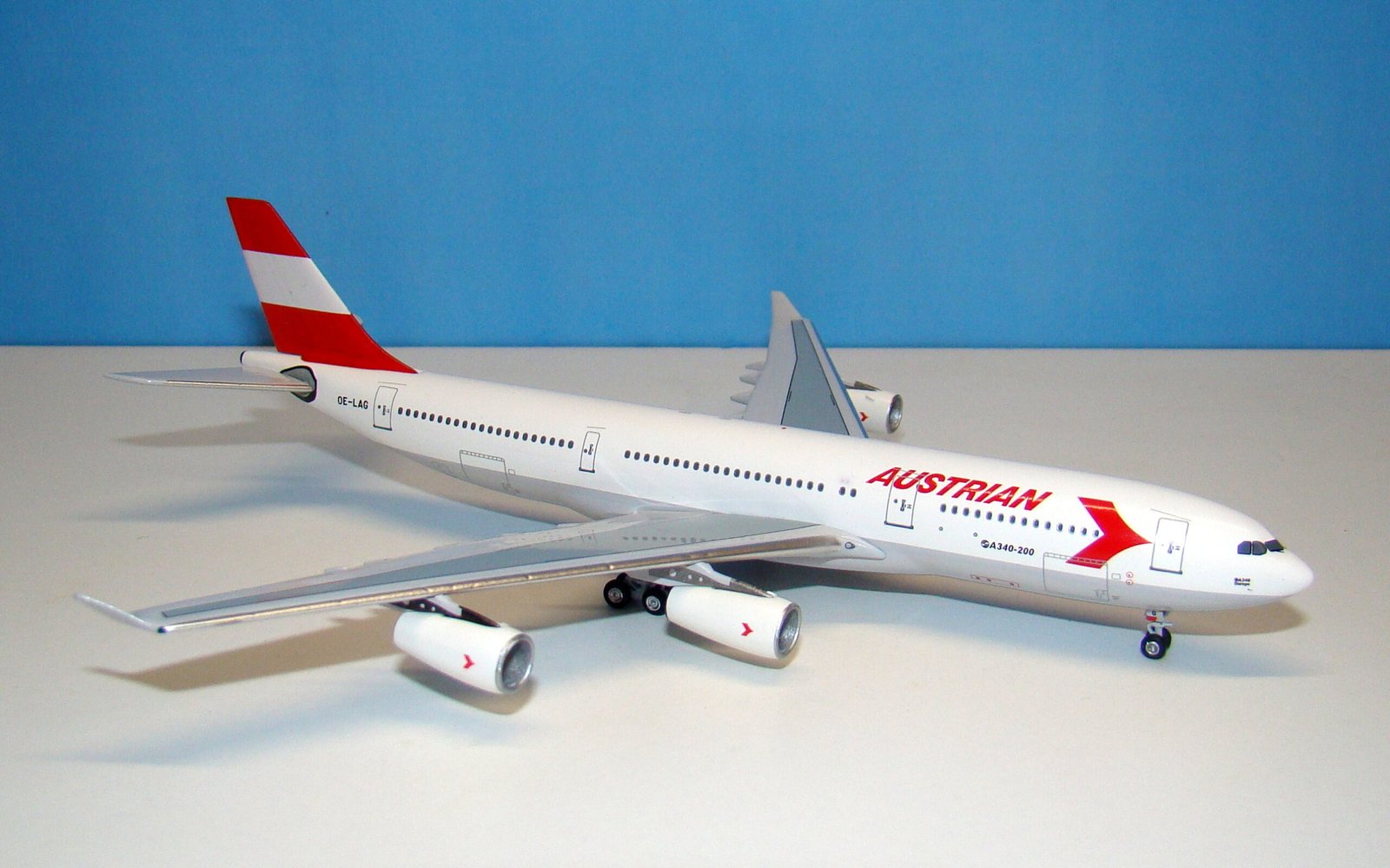
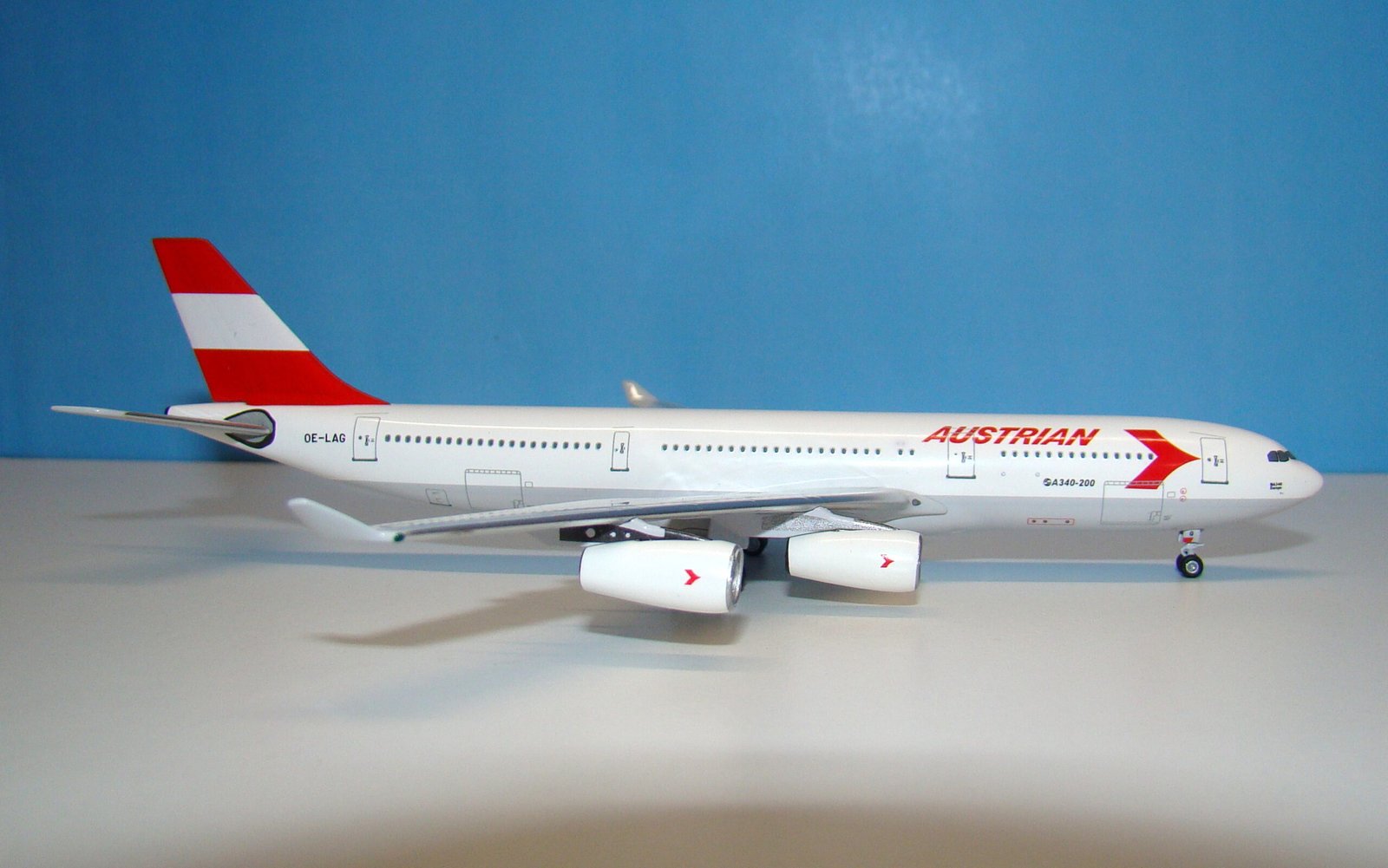
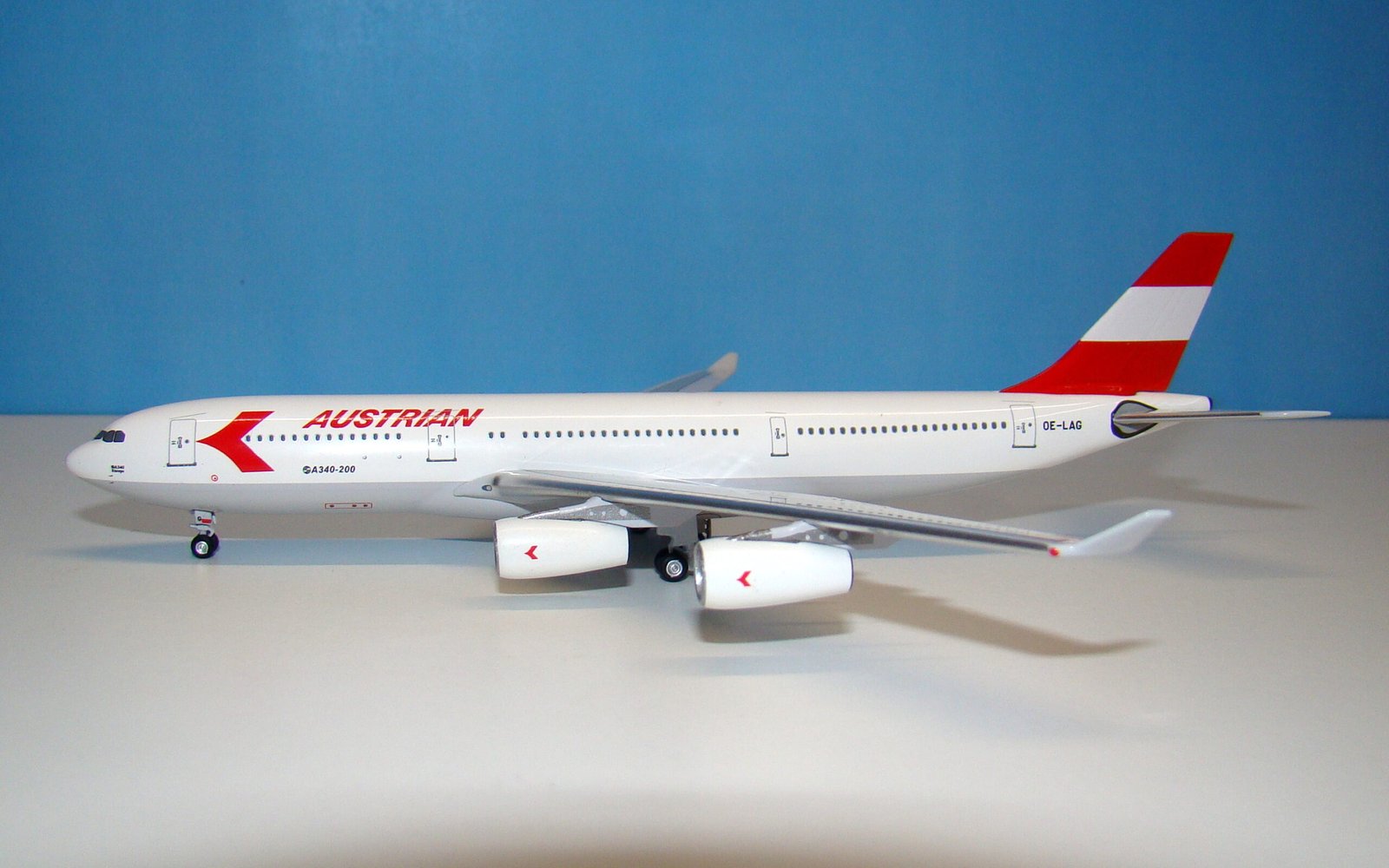
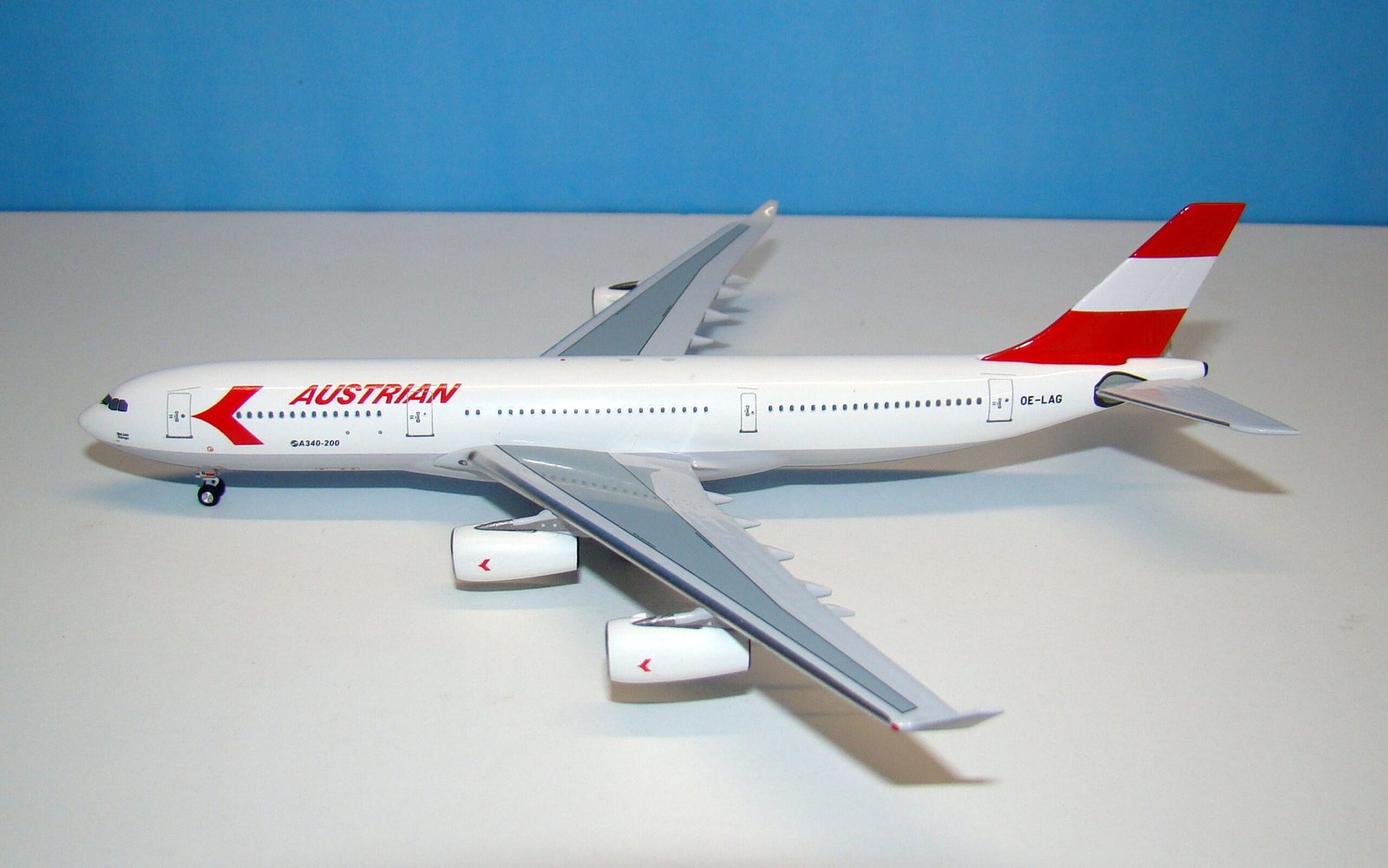
Austrian Airlines Airbus A340-200 OE-LAG Aeroclassics 1:400 Scale Model Airliner

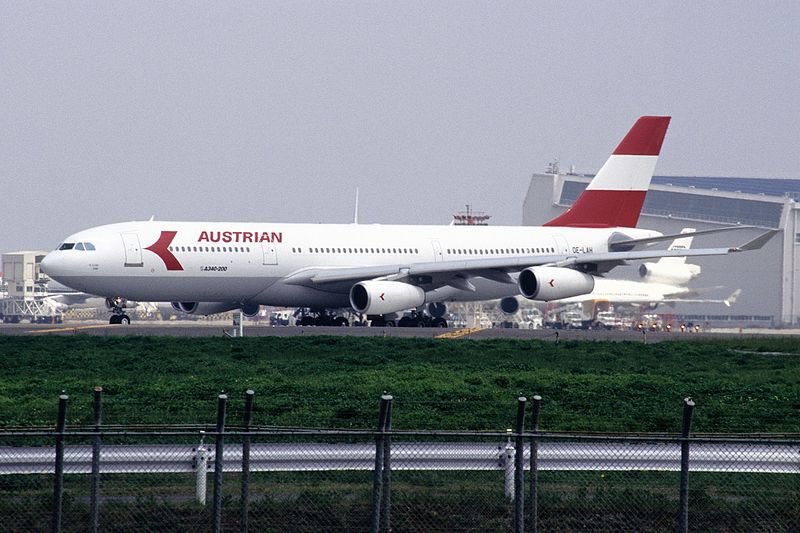
The A340s were split between two variants with first two being shorter A340-200s (OE-LAG/H) followed by a pair of longer A340-300s (OE-LAK-L). The series 200 was designed for long thin routes offering a substantial range increase over the original baseline series 300. The A340-212s arrived on March 5, 1995 but wore the classic Austrian livery only for a short period as the carrier reimagined its scheme during the year.

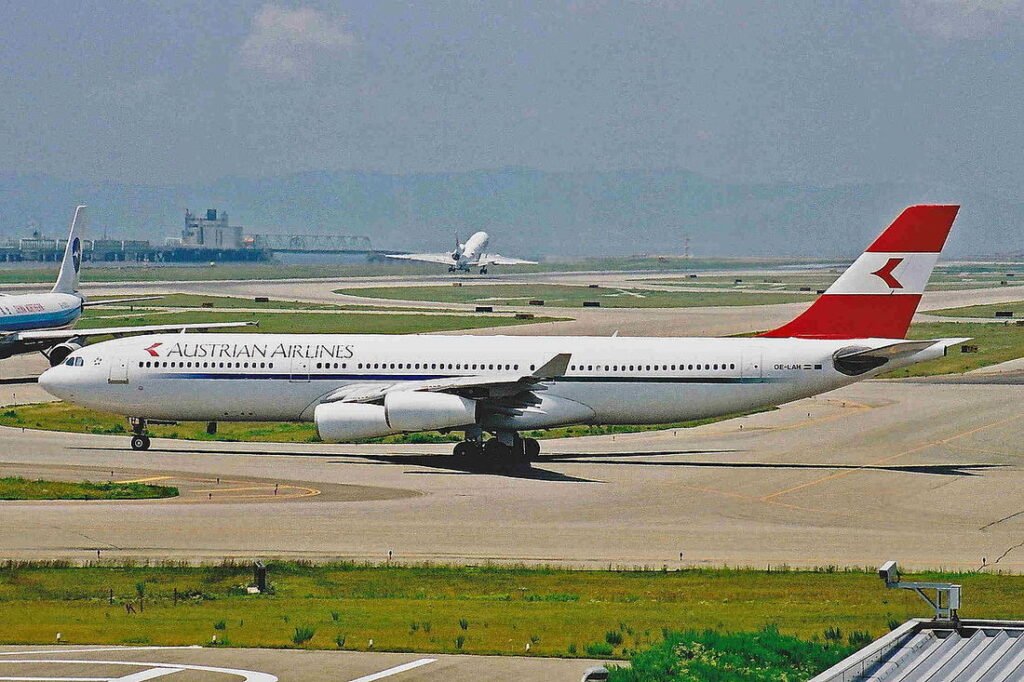
OE-LAH at Tokyo. Photo by contri from Wikipedia

The A340s tookover from the A310s on the direct Johannesburg and New York routes whilst the Chicago service was ended on March 26. On the plus side A310s begin to fly between Vienna and Beijing in partnership with Air China, and also to Washington D.C via Geneva in a three-way block spacing agreement with Delta and Swissair. Both these new routes inaugurated at the end of March.

Austrian’s A340-300s would join in 1997 and 1999 but it would be the smaller A330-200 that would signal the end of the A310s. All four left the fleet in 2000 with two leased out to Air Plus Comet. In their place came 4 new A330-223s (OE-LAM-P). The A330s were ordered as part of a joint 9 firm and 19 optioned package by Swissair, Sabena and Austrian. All three were members of Swissair’s ill-fated Qualiflyer alliance so it made sense for them to align their fleets. Accordingly all the A330s would be powered by Pratt & Whitney PW4168 engines. All three airlines also used the A330-200 to replace A310s.

Austrian took over its rival Lauda Air in 2000 and the two airlines fleets couldn’t have been more dissimilar. Whilst Austrian maintained an Airbus heavy fleet with A320 family for short haul and A330/340 for long haul Lauda operated only Boeings (737,767 and 777s). Austrian also continued to operate Lauda’s long haul network but increasingly in the early 2000s it could not do so at a profit. Fleet rationalisation was always going to be on the cards but the direction it took was somewhat surprising.

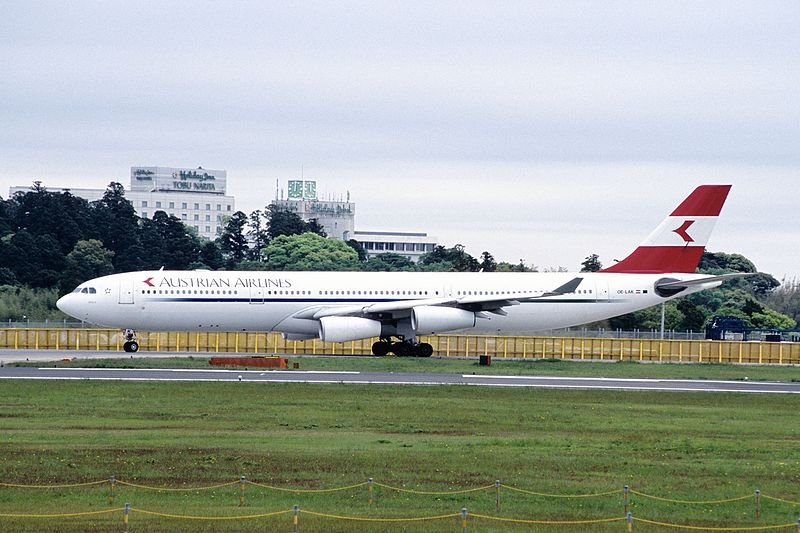
OE-LAK at Tokyo. Photo by Contri from Wikipedia

The A340-200s were always likely to be sold and in September 2005 it was announced that both were to be handed over to a French investment group. With four engines but a lower seat count than the larger A340-300 (whose later versions could also match its range) the series 200 was something of an orphan and relatively inefficient.

OE-LAH in the livery she wore for most of her Austrian career. Here at Osaka in 2001. Photo by Ken Fielding from Wikipedia
In 2006 one of the A340-300s was painted in this lovely scheme to celebrate the year of Mozart and the Austrian Philharmonic Orchestra. Photo from Wikipedia

Austrian had been looking to sell them for some time and it was not surprising that they did not go on to have further airline careers. Both were leased by the French Air Force where OE-LAG has become F-RAJA. They are well suited as military transports or executive jets. Similarly the airline’s first A310, OE-LAA, has also had a military career since leaving the fleet. She was converted to an A310-324MRTT Tanker transport and operates with CASA.

OE-LAG as F-RAJA. Photo by Bjorn Strey from Wikipedia

The sale of the A340-200s was however only the start as Austrian transitioned to an all Boeing long haul fleet (the 767s and 777s had been fitted with a new Business class and lie-flat sleeper seats). It had been announced that the pair of A340-300s would be sold in early 2007 but Austrian surprised the industry somewhat by announcing in November 2006 that they would also sell all four A330s.

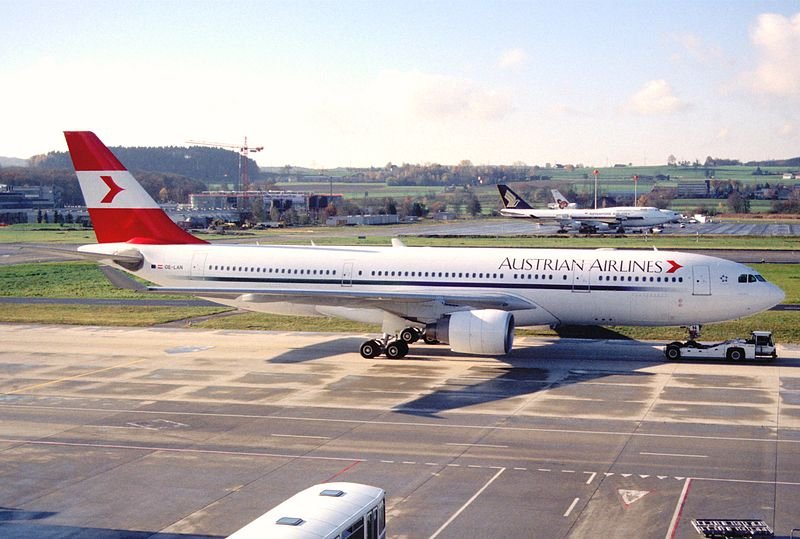
OE-LAN at Zurich in 2000. Photo by Aero Icarus from Wikipedia

As Austrian said:

“During the preparation of the quarterly balance sheet, the results of the new traffic flow system clearly showed that the Austrian long-haul programme has come under increasing commercial pressure compared to the previous year, and that this trend has produced negative results, particularly on routes with a low proportion of direct traffic. The main reason for this is a low market and economic potential of individual routes from and to Austria, even when increased catchment areas are taken into consideration. For this reason, management now views a strategic and operational repositioning of the entire long-haul programme as an unavoidable focus for the restructuring of the Austrian Group.”


As well as the sale of the A330s many international destinations were stopped (such as Shanghai, Phuket, Mauritius, Colombo, Male, Kathmandu). Austrian was the last scheduled European airlines to operate to Melbourne but that didn’t save it or the Sydney route which were both canned in March 2007. The Four A330s all joined TAP Air Portugal with whom they still serve whilst the pair of A340-313s joined Swiss International.
OE-LPC in my favourite Austrian livery. The 777s provide the main long-haul equipment nowadays. Photo by Montague Smith from Wikipedia

Despite this restructuring and further cost cutting measures, such as the removal of in-flight meals and alcohol on short haul flights, Austrian still struggled for profitability. This led to the announcement of the sale of the airline by the Austrian government to Lufthansa in November 2008. Despite investigations as to the validity of the process Lufthansa took ownership in September 2009. Even this was not the end of Austrian’s financial troubles but following much upheaval the Austrian national carrier appears to have recently finally turned a corner.

Leave a Comment

Your email address will not be published. Required fields are marked *